Connecticut roofs work through snow, ice, heavy rain, summer humidity, wind, and rapid temperature changes. That makes timing important, but the condition of the roof matters more than waiting for a perfect month. Homeowners considering roof replacement in Connecticut can look to Epic Exteriors LLC, a Southington-based exterior contractor whose roof replacement service addresses aging and storm-damaged roofing systems for homes in central Connecticut and nearby communities, including Bristol, Cheshire, Meriden, Waterbury, and Wallingford. A planned project is often easier to schedule in favorable weather, but an active leak, exposed roof deck, or serious storm damage deserves prompt attention in any season. The best replacement window balances the roof’s condition, the forecast, material requirements, and contractor availability.
Why Roof Replacement Timing Matters in Connecticut
Every season can reveal a different weakness in a roofing system. Winter can expose ice-dam problems and vulnerable flashing. Spring rain can reveal leaks. Summer heat may accelerate the discomfort caused by poor attic ventilation. Fall storms and falling branches can create sudden damage before winter arrives. Conditions also vary across Connecticut. Inland homes in areas like Waterbury and Meriden may experience colder temperatures and more persistent snow cover. In comparison, coastal areas can see milder winter temperatures, wind-driven rain, and tropical-storm effects. Connecticut’s climate includes year-round precipitation and weather extremes, as reflected in Connecticut climate information. A roof system should be evaluated for the conditions it actually faces, not just its age.
Signs a Connecticut Roof May Be Near the End
Some roof problems are easy to spot from the yard, while others appear inside the home. Schedule a professional inspection when you notice one or more of these concerns:
- Recurring leaks, ceiling stains, or damp attic insulation.
- Curled, cracked, loose, or missing shingles.
- Large amounts of shingle granules are collecting in gutters.
- Rusted, lifted, or separated flashing around chimneys, skylights, vents, and valleys.
- Sagging roof lines, soft spots, or signs of damaged decking.
- Repeated repairs in different sections of the roof.
- A roof approaching the expected service life of its particular material.
One small defect on a newer roof may be repairable. Widespread wear, recurring water entry, or structural concerns usually call for a broader evaluation.
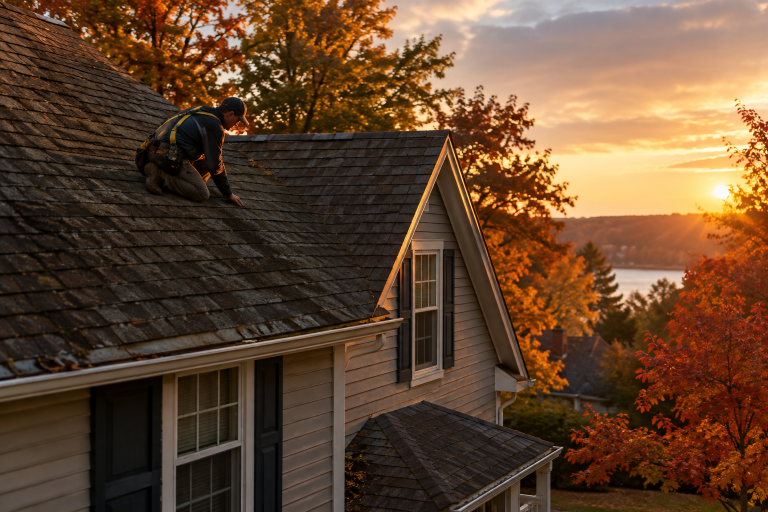
How Each Connecticut Season Affects Roof Work
Spring: Inspect for Winter Damage
Spring is a practical time to assess what winter left behind. Freeze-thaw cycles can loosen shingles and flashing, while ice dams may leave moisture damage near eaves, ceilings, or attic spaces. Spring rain can also make hidden leaks more noticeable in Connecticut homes. It is often wise to arrange inspections early in the season, before summer schedules become crowded. However, homeowners should allow flexibility because wet weather can delay exterior work.
Summer: Longer Days, Higher Demand
Summer often provides longer workdays and generally dependable installation conditions. It is a popular season for planned replacements in Connecticut, particularly for households that want the project completed before autumn leaves and winter weather arrive. The tradeoff is demand. Contractor calendars may fill quickly, and very hot days can affect work pace and material handling. Requesting an inspection and written estimate well ahead of the preferred installation date gives homeowners more options.
Fall: Prepare Before Snow and Ice
Early fall can be an excellent window for a planned roof replacement in Connecticut. Moderate temperatures can support efficient work, and completing the project before snow and freezing rain reduces the risk of entering winter with known weaknesses. Do not wait until late fall if the roof already leaks or has widespread shingle failure. A minor issue can become more disruptive when water enters during a winter storm.
Winter: Focus on Urgent Protection
Winter roofing in Connecticut can be more complicated because of snow, ice, cold temperatures, wind, and reduced daylight. Still, emergency work may be necessary after a fallen branch, major wind event, or leak that exposes the home to ongoing water damage. If water is entering the house, seek prompt professional evaluation and appropriate temporary protection rather than waiting for spring. Safety comes first, so homeowners should not climb onto an icy or snow-covered roof.
Repair or Replacement: Which Option Fits?
- Repair may fit when damage is isolated, the roof is relatively young, and surrounding materials remain in good condition.
- Replacement may fit when shingle deterioration is widespread, leaks keep returning, the deck is compromised, or storm damage affects a large area.
- An inspection should come first when the extent of damage is unclear from the ground or attic.
Repeated small repairs can become inefficient when problems appear across multiple roof sections. A thorough inspection helps distinguish a targeted repair from a roof that has reached the end of its practical service life.
What to Check After a Connecticut Storm
- Look from the ground for missing shingles, displaced vents, fallen branches, or debris.
- Check ceilings, upper walls, and attic areas for fresh stains or dampness.
- Photograph visible conditions without climbing onto the roof.
- Move valuable belongings away from an active interior leak when it is safe to do so.
- Contact a qualified roofing professional if water is entering or if the roof materials appear exposed.
- Review insurance requirements before authorizing major repairs related to a claim.
For storm planning, documentation, and coverage questions, homeowners can use the Connecticut Insurance Department’s preparedness and resiliency guidance to understand better weather risks and steps for protecting property.
How to Plan a Roof Replacement in Connecticut
- Start with an inspection. Determine whether repair, partial work, or full replacement is appropriate.
- Request a written scope. It should address materials, tear-off, flashing, ventilation, cleanup, disposal, and possible decking repairs.
- Compare qualified contractors. Ask about insurance, supervision, references, artistry coverage, and material warranties.
- Choose materials for the home. Consider roof pitch, drainage, wind exposure, snow, attic ventilation, and architectural style.
- Build weather flexibility into the schedule. Rain, high winds, and concealed damage can affect timing.
- Prepare the property. Move vehicles, protect attic storage, remove fragile wall décor, and make a plan for children and pets.
Questions to Ask Before Hiring a Roofing Contractor
- Is the contractor properly registered, insured, and experienced with Connecticut homes?
- Who will supervise the project and communicate updates?
- Does the proposal explain flashing, ventilation, disposal, and possible deck repairs?
- How will landscaping, siding, windows, and driveways be protected?
- What happens if rain or high winds interrupt the work?
- Which warranties apply to materials and artistry?
- How will unexpected damage and added costs be documented?
Common Questions About Roof Replacement in Connecticut
What is the best season to replace a roof in Connecticut?
Late spring, summer, and early fall are often useful for planned projects in Connecticut. However, urgent damage should be addressed promptly regardless of the season.
Can a roof be replaced during winter in Connecticut?
It can be possible under suitable conditions, especially when damage is urgent, but winter weather in Connecticut can create additional scheduling, safety, and installation challenges.
How long does roof replacement take?
Timing depends on roof size, pitch, material, weather, tear-off requirements, crew size, and whether damaged decking is discovered after removal.
Final Takeaway
The right time to replace a Connecticut roof is before a manageable problem turns into interior water damage, structural concerns, or a more extensive repair. Homeowners should watch for visible signs of aging, including missing or damaged shingles, worn flashing, sagging areas, granule loss, moss growth, and recurring leaks. Even when damage appears minor, investigating it quickly can help determine whether a targeted repair or a full replacement makes more sense. Planning also gives homeowners time to compare contractors, materials, warranties, and project costs rather than making a rushed decision after a major failure. Because Connecticut roofs face changing temperatures, rain, snow, ice, and seasonal storms, regular inspections can help identify developing problems early. A professional inspection provides a clearer assessment of the roof’s actual condition. It can help homeowners choose a practical replacement timeline based on the roof’s age, remaining service life, and repair needs.
©2026 The Dedicated House. All rights reserved. No part of this blog post may be used or reproduced without the written consent of the copyright owner.
Click the links below for any posts you have missed:
 How Pest Control Companies Can Turn Local Expertise Into Online Trust
 Fayetteville, Arkansas Exterior Painting Guide: Colors, Prep, and Weather-Smart Planning
 Work Zone Crashes Climb as Road Season Winds Down
 The Contractor’s Guide to Measuring Roofing Material Value Beyond the Bid
 Home Gym Maintenance Plan for St. Louis, Missouri: Simple Care that Keeps Equipment Ready
 Are Class 4 Impact-Resistant Shingles Worth It? A Homeowner’s Guide
I’d love for you to join my email list! You’ll receive a notification straight to your inbox which will include links to my latest home project posts! Simply enter your address below.
Thanks for stopping by! Have a wonderful day/night depending on where you are in the world! Go with God and remember to be kind to one another!
Toodles,

Leave a Reply