A home can look ideal in listing photos and still create friction every day. The right Washington, DC neighborhood should make work trips, errands, downtime, parking, and household routines easier. For a block-by-block perspective, Washington, DC, real estate agent Tom Daley provides home-search tools, neighborhood guides, property valuation resources, and local market guidance across the District, Maryland, and Virginia. Tom Daley is an associate broker and luxury real estate professional licensed throughout the region, making his site a useful starting point when comparing areas such as Georgetown, Cleveland Park, Bethesda, Arlington, and Old Town. The best location is rarely the one with the most buzz or the largest kitchen. It is the one that works on an ordinary Tuesday, when you need to get to work, pick up groceries, walk the dog, get to school, find parking, or relax at home without a long commute.
Create a Shortlist Based on Your Priorities
Before comparing neighborhoods, convert general preferences into a short list of non-negotiables and nice-to-haves. This keeps your search focused and makes it easier to spot compromises that matter.
- Home type: Decide whether a condo, co-op, rowhouse, townhome, or detached home suits your household.
- Monthly comfort level: Set a target payment that leaves cash reserves for repairs, moving costs, and daily expenses.
- Commute ceiling: Identify the longest realistic trip you are willing to make several days each week.
- Practical features: Note needs for parking, an elevator, storage, a yard, a home office, or step-free access.
- Daily access: Rank the importance of transit, restaurants, parks, schools, grocery stores, and healthcare.
- Property character: Consider whether you prefer historic details, newer construction, renovation potential, or lower-maintenance living.
Compare Neighborhoods by Commute, Not Map Distance
A neighborhood that appears close on a map can still involve a slow or unpredictable trip. Traffic patterns, bridge crossings, transit transfers, weather, parking availability, and station access all affect the real experience. Test travel times at the hours you expect to travel, not only on a quiet Sunday afternoon. Compare driving, walking, biking, bus, and rail routes. The WMATA Metro system overview is a helpful resource for understanding the regional rail, bus, and paratransit network serving the District, Maryland, and Virginia. Also check late-night options, elevator or escalator access if relevant, transfer points, bike storage, and the walk from your front door to the station or stop.
Review Housing Stock on a Street-by-Street Basis
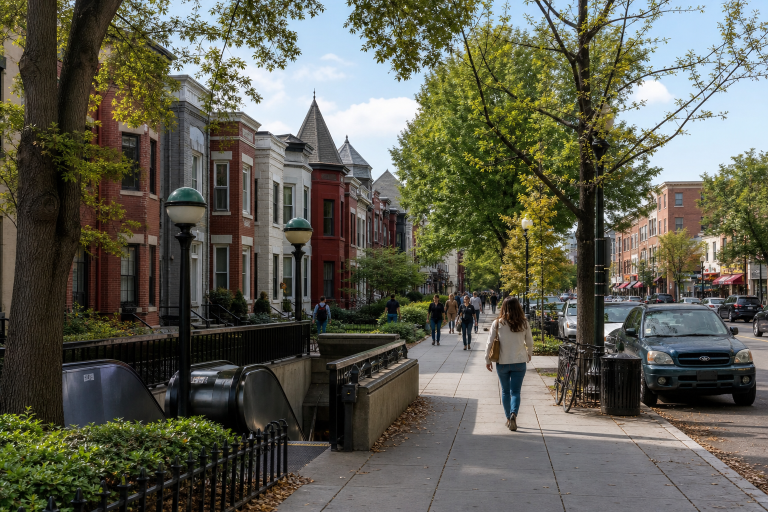
Neighborhood names are useful, but they do not tell the whole story. One block may offer quiet rowhouses with rear parking, while a few streets away, you may find busy traffic corridors, active construction, apartment density, or limited street parking. Visit the exact streets where you may buy or rent.
What to Look For
- The age, visible condition, and likely maintenance needs of homes and buildings.
- Typical floor plans, ceiling heights, lot sizes, and usable outdoor space.
- Condo, co-op, or homeowners association fees, rules, reserves, and possible special assessments.
- Parking arrangements, loading access, storage limitations, and guest parking.
- Renovation possibilities, historic-review requirements, and permit considerations.
- Traffic, delivery activity, nightlife, school pickup patterns, and nearby construction.
Build a Full Monthly Housing Budget
The asking price is only one part of affordability. A lower-priced property with high dues, parking fees, or costly repairs may be less comfortable financially than a more expensive home with fewer ongoing obligations. Build your budget using realistic monthly figures, then leave room for change.
- Estimate principal and interest based on your likely down payment and loan terms.
- Add property taxes and homeowners, condo, or renters insurance.
- Include association dues, special assessments, utilities, internet, and parking.
- Set aside money for routine maintenance, repairs, furnishings, and future rate or fee increases.
- Compare the total monthly cost across every neighborhood, not just the purchase price.
Check Neighborhood Plans and Future Changes
Planned development can reshape a location over time. New housing, retail, parks, schools, road work, or transit improvements may add convenience and value. They can also create temporary construction noise, traffic changes, or more activity on a formerly quiet block. Review zoning, permit activity, public meetings, and nearby projects before deciding. The District’s neighborhood planning resources can help you review place-based plans, studies, and projects across all eight wards. Use those materials as a starting point, then ask questions about the exact block and property you are considering.
Visit at More than One Time of Day
A thorough visit is one of the most valuable parts of the search. Schedule more than one trip and treat each one as a small test of daily life.
- Visit during the morning commute and again after work.
- Walk the area on a weekend, including the route to groceries, parks, and transit.
- Return after dark to observe lighting, noise, foot traffic, and parking.
- Listen for sirens, restaurant activity, deliveries, construction, trains, and building noise.
- Try the commute in the mode you expect to use most often.
Compare DC With Nearby Maryland and Virginia Options
Washington, DC, Maryland, and Virginia can each offer strong choices, but broad stereotypes are not enough for a sound decision. Compare the exact homes and routines available within your budget. A larger lot or more parking may come with a longer commute. A closer-in location may offer walkability and transit but less space or higher monthly ownership costs. Review total taxes, insurance, utilities, commuting expenses, local services, property types, and household needs. If access to city amenities is essential, a District location may be the best fit. If space, a garage, or a quieter setting matters more, nearby communities may deserve equal consideration.
Use a Simple Neighborhood Scorecard
After every visit, score each neighborhood from one to five before your impressions fade. Use the same criteria each time:
- Commute convenience and reliability
- Monthly housing value and projected costs
- Home condition and maintenance demands
- Transit access and walkability for errands
- Parking, outdoor space, and storage
- Noise level and comfort on the block
- Future development and flexibility for changing needs
- Your personal comfort after several visits
Questions to Ask Before Choosing
- Can the household reach work or school without an exhausting trip?
- Does the home remain affordable after taxes, insurance, fees, and maintenance?
- Could the property still work if space needs change later?
- Are major repairs, building projects, or assessments likely ahead?
- What does the exact block feel like on a normal weekday and after dark?
- Will planned changes improve the area, create disruption, or both?
Common Mistakes to Avoid
Avoid choosing solely because of a low asking price, a popular ZIP code, or an attractive listing. Do not overlook co-op rules, condo reserves, maintenance needs, parking limits, or special assessments. Test a commute more than once, visit after dark, and avoid assuming newer construction will be maintenance-free. Focus on property features, costs, services, and your real routine rather than assumptions about who a neighborhood is for.
Choose the Place that Works on an Ordinary Tuesday
A confident neighborhood decision balances comfort, cost, commute, housing condition, and future flexibility. Define your priorities, narrow the search to a manageable list, calculate the complete monthly cost, and visit each area repeatedly. When a location supports the rhythms of everyday life, it is far more likely to feel like home long after the excitement of the initial tour has passed. A home can look ideal in listing photos and still create friction every day. The right Washington, DC neighborhood should make work trips, errands, downtime, parking, and household routines easier. For a block-by-block perspective, Washington, DC, real estate agent Tom Daley provides home-search tools, neighborhood guides, property valuation resources, and local market guidance across the District, Maryland, and Virginia. Tom Daley is an associate broker and luxury real estate professional licensed throughout the region, making his site a useful starting point when comparing areas such as Georgetown, Cleveland Park, Bethesda, Arlington, and Old Town. The best location is rarely the one with the most buzz or the largest kitchen. It is the one that works on an ordinary Tuesday, when you need to get to work, pick up groceries, walk the dog, get to school, find parking, or simply relax at home without a long commute. Evaluating neighborhoods through the lens of everyday life rather than occasional excitement can help buyers choose a home that remains practical, comfortable, and enjoyable for years to come.
Conclusion
The best Washington, DC neighborhood is not always the one with the highest profile or the most attractive listing. It is the one that fits your daily routine, budget, commute, and long-term goals. By comparing total housing costs, evaluating neighborhoods block by block, testing real travel times, and researching future development, buyers can make a more informed decision. Taking the time to visit each area more than once and focusing on how a location supports everyday life helps reduce costly surprises and increases the likelihood of choosing a home that remains comfortable, practical, and rewarding for years to come.
©2026 The Dedicated House. All rights reserved. No part of this blog post may be used or reproduced without the written consent of the copyright owner.
Click the links below for any posts you have missed:
 Ensuring Clean Water with Advanced Filtration Systems
 Planning a Group Trip ? Choose Manhattan Charter Bus Rental for Safe Group Travel
 6 Licensed West Palm Beach Commercial Roofers for the 2026 Storm Season
 How Hardwood Flooring Impacts Athletic Performance
 Why San Antonio Homes Need Proactive Termite Inspections Before Damage Appears
 Back-to-School Begins at Home: OVIOS Reimagines Everyday Living for a New Season
I’d love for you to join my email list! You’ll receive a notification straight to your inbox which will include links to my latest home project posts! Simply enter your address below.
Thanks for stopping by! Have a wonderful day/night depending on where you are in the world! Go with God and remember to be kind to one another!
Toodles,

Leave a Reply