Chicago’s intricate water infrastructure, much like its storied architecture, carries a rich history. For over a century, the city’s municipal code mandated the use of lead service lines for connecting homes to the water main. This practice continued until the federal ban on lead pipes in 1986. Consequently, a significant portion of Chicago’s housing stock, particularly single-family homes and two-flats built before this era, still relies on lead for water delivery. Beyond lead, galvanized steel pipes, while not inherently lead-based, can accumulate lead from upstream lead pipes or solder, posing a similar risk. The city does employ corrosion control measures, adding phosphates to the water to create a protective coating inside pipes, which helps reduce lead leaching. However, this is not a foolproof solution, and the sheer volume of lead infrastructure means vigilance is paramount.
For residents seeking to understand their specific risk, resources like the WBEZ lead pipe map Chicago offer invaluable insights. This interactive tool allows individuals to check their address and visualize the prevalence of lead lines in their immediate vicinity. While the problem is citywide, certain areas, including Northwest Side neighborhoods like Norwood Park, Edison Park, and Jefferson Park, are significantly affected. Even in some surrounding suburban areas, where infrastructure might seem newer, the legacy of older connection practices or shared water systems can mean lead concerns persist, extending to communities like Park Ridge, Niles, and Des Plaines.
The Scope of Chicago’s Lead Pipe Crisis
Chicago grapples with the largest lead pipe problem in the United States. Estimates indicate that a staggering 412,000 of the city’s roughly 491,000 water service lines are either known or suspected to contain lead, or are galvanized lines requiring replacement due to potential lead contamination. This translates to an alarming 84% citywide average of lines needing attention.
The burden of this crisis is not evenly distributed. Our analysis, drawing from recent data, reveals profound environmental justice implications. Majority-Latino census tracts, for instance, show that 92% of service lines require replacement. In majority-Black tracts, this figure stands at 89%. This contrasts sharply with majority-white census tracts, where 74% of lines require replacement, and majority-Asian tracts, at 65%. These disparities underscore how historical inequities in infrastructure development continue to disproportionately affect communities of color.
The geographic concentration of this problem is stark. Nine of the ten community areas with the highest percentage of pipes requiring replacement are located on the South Side. The tenth is Belmont Cragin, a predominantly Latino neighborhood on the Northwest Side. This means residents in these areas face a heightened risk of lead exposure daily. For example, in one Southeast Side neighborhood, 94% of water service lines are confirmed or suspected to contain lead, while downtown in the Loop, that number drops to just 16%. Even affluent areas are not immune; Forest Glen, with the second-highest median household income in the city, still has 91% of its service lines requiring replacement.
The health implications, particularly for children, are deeply concerning. A 2024 study by researchers at Johns Hopkins and Stanford universities found that nearly 70% of Chicago children under the age of six live in homes where tap water contains detectable levels of lead. While the city’s health department reported that about 4% of Chicago children aged 1 to 3 tested in 2024 had lead levels above the state’s threshold for an elevated result, experts emphasize that there is no safe level of lead exposure. Even low levels can cause irreversible neurological damage, developmental delays, learning difficulties, and behavioral challenges, impacting a child’s cognitive development and overall well-being.
How the WBEZ Lead Pipe Map Differs from City Tools
The WBEZ lead pipe map, developed in collaboration with Grist and Inside Climate News, represents a significant step forward in public transparency regarding Chicago’s lead infrastructure. Its data is rooted in the city’s official service line inventory, which was submitted to the Illinois EPA on April 14, 2025. This comprehensive dataset forms the backbone of both the WBEZ map and the city’s own lookup tools.
However, the WBEZ map distinguishes itself by offering unique insights and functionalities. Crucially, it is the first public tool to overlay lead service line data with demographic distributions of race and poverty at both the census tract and community area levels. This feature allows residents and researchers alike to visualize the intersection of environmental risk with socioeconomic factors, powerfully illustrating the environmental justice concerns inherent in Chicago’s lead crisis. While the city’s official lookup tool provides address-specific information, it generally lacks this integrated demographic analysis, making the WBEZ map a more comprehensive resource for understanding systemic disparities.
The interactive nature of the WBEZ map allows users to enter their Chicago address to view the status of their service line components. It categorizes lines into four types: “Lead,” “Galvanized Requiring Replacement,” “Suspected Lead,” and “Non-Lead.” It also provides details on the three key components of a service line: the “gooseneck” (a small, flexible connection near the water main), the “public-side line” (from the water main to the property line), and the “private-side line” (from the property line into the home).
While extensive, the inventory used by the WBEZ map, like the city’s own data, may have limitations. Some addresses might not appear directly on the map. This can occur because a single service line sometimes serves multiple households, or because older records logged lines by nearest intersection rather than precise street address. In such cases, the WBEZ tool intelligently allows users to view nearby lines to infer potential risks for their location. This granular detail, combined with its unique demographic overlays, positions the WBEZ map as an invaluable resource for Chicago residents seeking to understand their home’s lead risk in a broader community context.
Protecting Your Home with Advanced Water Filtration Systems
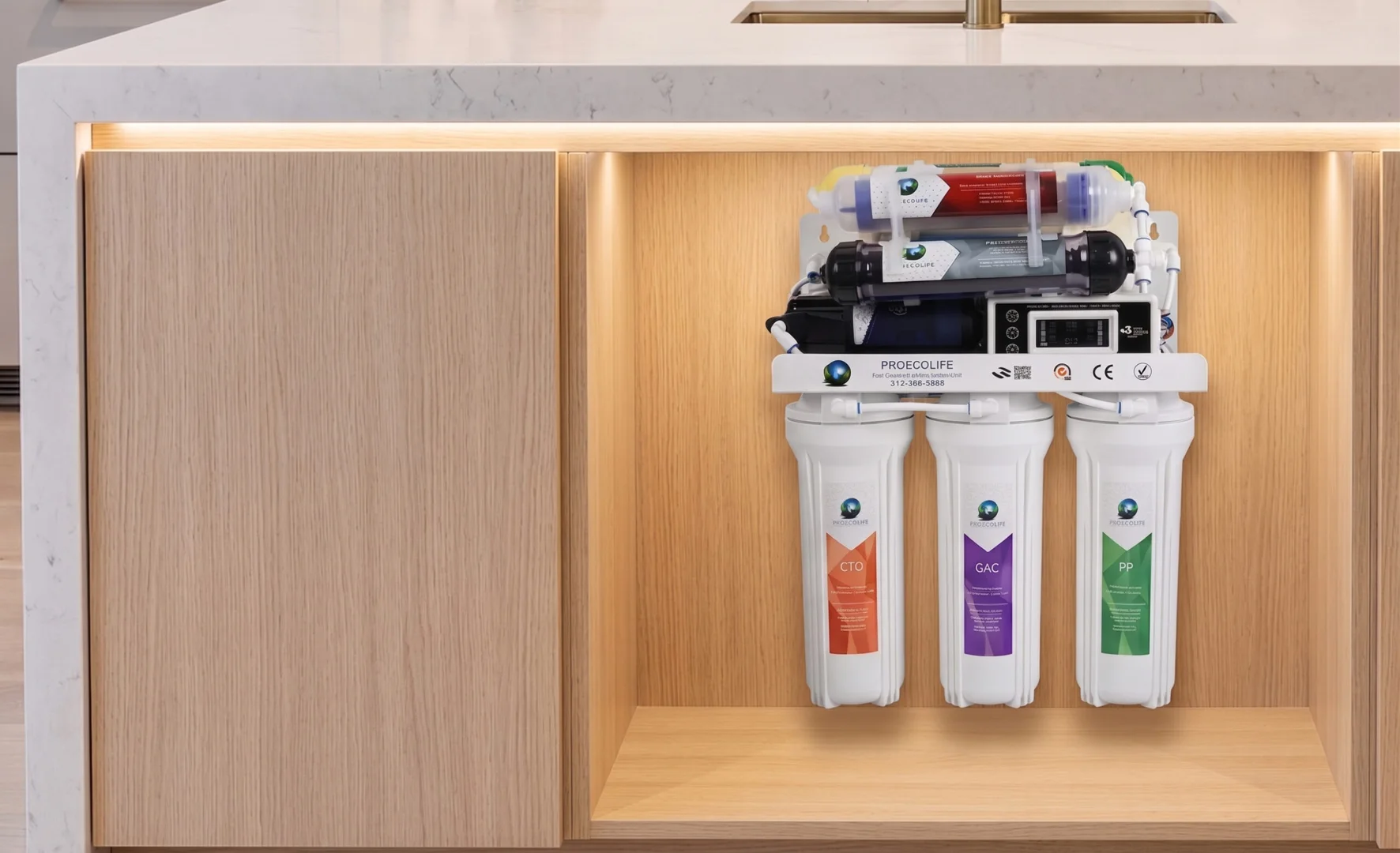
Given the pervasive nature of lead service lines in Chicago, relying solely on municipal treatment and replacement timelines can leave residents vulnerable. This is where advanced water filtration systems become an indispensable layer of protection for your household. These systems are designed not just to improve taste and odor, but critically, to reduce or remove harmful contaminants like lead, heavy metals, and chlorine byproducts.
When considering filtration, it’s helpful to understand the two main categories: point-of-use (POU) and point-of-entry (POE) systems. Point-of-use systems, such as under-sink filters or faucet-mounted units, treat water at a specific tap where it’s used for drinking and cooking. Point-of-entry systems, also known as whole-house filters, treat all the water entering your home, providing protection at every faucet and showerhead.
Regardless of the type, the most crucial factor is ensuring the system is certified by reputable organizations like NSF/ANSI. For lead reduction, look for certification to NSF/ANSI Standard 53 (for lead and other contaminants) and NSF/ANSI Standard 58 (for reverse osmosis systems, which are highly effective at lead removal). These certifications guarantee that the filter performs as claimed. Beyond lead, advanced systems can tackle a range of issues, from reducing chlorine taste and odor to addressing hard water minerals, which are a common concern in many areas, including the Northwest suburbs like Skokie, Glenview, Arlington Heights, and Morton Grove, where water sources can vary.
The PEL75 9-Stage RO System for Targeted Lead Removal
At ProEcoLife, we understand the unique water quality challenges faced by Chicago residents. With our roots in the Chicago area since 2014, founded by Karol Dolega, we have been dedicated to providing effective and reliable water purification solutions tailored to our community. Our proprietary technology is exemplified in our flagship product, the PEL75 9-Stage RO System, specifically engineered for targeted lead removal and comprehensive water purification.
The PEL75 system utilizes a sophisticated multi-stage purification process, with the reverse osmosis (RO) membrane at its core. This semi-permeable membrane effectively removes up to 99% of dissolved solids, including lead, arsenic, fluoride, nitrates, and other heavy metals. But the PEL75 goes beyond standard RO. Its nine stages include pre-filters to remove sediment and chlorine, ensuring the RO membrane’s longevity and efficiency. Post-filters further refine the water, removing any residual tastes or odors, and often include stages for mineralization or pH balancing to enhance water quality and taste.
This multi-stage approach ensures not only superior lead reduction but also significant chemical contaminant reduction, providing a much higher level of purity than basic filtration methods. The result is consistently clean, great-tasting water directly from your tap, offering peace of mind for families concerned about lead exposure and other waterborne impurities.
Whole House Filtration and Well Water Conditioning
While point-of-use systems like the PEL75 are excellent for drinking and cooking water, a Whole House Filtration system offers comprehensive protection for all water used in your home. These systems are installed at the main water line entry point, treating every drop of water that flows through your pipes. This means filtered water for bathing, showering, laundry, and all other household uses, protecting against skin and respiratory exposure to chlorine and other contaminants.
For homes in areas relying on private wells, particularly in some of the more rural parts of the Chicago suburbs, Well Water Conditioning is essential. Well water can present its own set of challenges, including bacteria, nitrates, pesticides, and often, high levels of hardness and iron. Our Well Water Conditioning solutions are customized to address these specific issues, providing effective iron removal and softening to prevent hard water scaling that can damage appliances and plumbing.
Beyond these primary systems, we also offer specialized solutions such as our Shower Filter System, designed to reduce chlorine and other irritants for healthier skin and hair. For businesses, our Commercial Water Filtration Systems provide robust solutions for various industrial and commercial applications, ensuring high-quality water for operations and employees. All our systems are backed by professional installation and ongoing system maintenance, ensuring optimal performance and longevity. We believe that investing in a quality filtration system is an investment in your family’s health and the longevity of your home’s plumbing.
What to Do If Your Home Has a Lead Service Line
Discovering your home has a lead service line can be concerning, but there are immediate and long-term steps you can take to protect your family. The first step is to confirm the presence of lead.
You can often perform a visual inspection of the pipe where it enters your home, typically in the basement or utility area. Lead pipes are generally dull gray in color, soft enough to scratch with a key (which will leave a metallic streak), and non-magnetic. Be cautious when handling pipes and avoid disturbing them excessively. If you suspect lead, do not attempt to cut or alter the pipe yourself.
For definitive confirmation and to assess your water’s lead levels, we highly recommend requesting a free water testing kit from the city. You can register for Chicago’s Water Quality Study or call 311 to request a kit. Following the instructions precisely is crucial for accurate results.
While awaiting replacement or test results, incorporating protective habits is vital:
- Flushing Pipes: After periods of non-use (e.g., overnight or after work), lead can accumulate in stagnant water. Run your cold water tap for at least 5 minutes before using it for drinking or cooking. This flushes out water that has been sitting in your service line.
- Cold Water Usage: Always use cold water for drinking, cooking, and preparing baby formula. Hot water can dissolve lead more quickly from pipes.
- Aerator Cleaning: Regularly clean the aerators on your faucets, as small lead particles can accumulate there.
City Replacement Programs and Long-Term Timelines
Chicago has initiated programs to address the lead service line crisis, including subsidized replacements for eligible low-income residents. The city also prioritizes replacements for high-risk locations such as parks, schools, and hospitals. However, the scale of the problem is immense, and the city’s timeline for full replacement is a significant concern.
The current plan aims to replace all lead service lines by 2076, completing approximately 8,300 replacements annually. This timeline is a staggering 30 years beyond the federal deadline, leaving hundreds of thousands of residents vulnerable for decades to come. As of April 2026, only about 62,000 of the 900,000 required notices about potential lead pipes had been sent to residents, indicating a major lag in informing at-risk households.
For homeowners, the cost of replacing the private-side service line can be substantial. Estimates for private-side replacement alone can range upwards of $26,000, a prohibitive expense for many families. While the city offers some financial assistance, the slow pace and high costs mean that many residents will live with lead service lines for the foreseeable future.
Given these realities, professional plumbing assessments can help homeowners understand their specific situation and potential costs. More importantly, implementing proactive filtration strategies, such as installing NSF-certified point-of-use or whole-house systems, becomes a critical interim and long-term solution to safeguard household water quality while awaiting city-led replacements.
Frequently Asked Questions About Water Filtration Systems
How do I check if my Chicago home has a lead service line?
To determine if your Chicago home has a lead service line, we recommend several steps. First, utilize the WBEZ interactive map Chicago, which allows you to enter your address and view the status of your service line components based on the city’s inventory. This map also provides valuable context by overlaying demographic data. Additionally, consider the age of your home; if it was built before 1986, there’s a high likelihood of having a lead service line. You can also consult construction records if available. For a definitive answer, consider a professional inspection by a qualified plumber who can visually confirm the pipe material or recommend further testing.
Can standard pitcher filters remove lead from Chicago tap water?
Some standard pitcher filters can remove lead, but it’s crucial to check for specific certifications. For effective lead removal, a pitcher filter must be certified to NSF/ANSI Standard 53 (for lead reduction). Even with certification, pitcher filters have limitations. Their filter lifespan is typically shorter, requiring frequent and consistent replacement to maintain effectiveness. The flow rate can also be slow, and they only treat small batches of water. For comprehensive and continuous lead removal, systems like reverse osmosis (RO) are significantly more efficient. The PEL75 9-Stage RO System, for example, uses a multi-stage purification process that includes an RO membrane, making it highly effective at removing lead and a wide array of other contaminants, far surpassing the capabilities of most pitcher filters.
Why is hard water a common issue in the Chicago suburbs?
Hard water is indeed a prevalent issue throughout the Chicago metropolitan area, including many of its suburbs. This is primarily due to the region’s water sources. While Chicago itself draws its water from Lake Michigan, which can have varying levels of hardness, many surrounding suburbs rely on deep well water. These underground aquifers often contain high concentrations of dissolved minerals, particularly calcium and magnesium, which are the primary culprits behind hard water. As this water percolates through rock and soil, it picks up these minerals. The result is the familiar problem of calcium deposits, limescale buildup on fixtures and appliances, soap scum, and reduced lathering of soaps and detergents. For homes experiencing these issues, especially those on well water, specialized Well Water Conditioning solutions, including water softeners, are highly effective at addressing hardness and improving overall water quality.
Conclusion
Ensuring the safety and quality of our drinking water is a fundamental priority for every household. As we’ve explored, Chicago’s extensive lead service line infrastructure presents a significant and ongoing challenge, with disproportionate impacts on vulnerable communities. While the city works towards a long-term solution, proactive protection remains essential.
Understanding your home’s specific risk, utilizing tools like the WBEZ lead pipe map, and implementing effective filtration strategies are critical steps in safeguarding your family’s health. Advanced water filtration systems, particularly those certified for lead reduction like our PEL75 9-Stage RO System, offer a reliable and immediate solution for clean, safe drinking water.
We believe that every Chicago resident deserves access to pure water. That’s why ProEcoLife is committed to providing expert guidance, comprehensive water testing, and state-of-the-art filtration solutions tailored to your unique needs. Don’t leave your family’s health to chance. We invite you to take control of your water quality today. For professional consultation or to schedule a water test, please contact our Chicago water experts at (312) 889-8888 or visit our website.
©2026 The Dedicated House. All rights reserved. No part of this blog post may be used or reproduced without the written consent of the copyright owner.
Click the links below for any posts you have missed:
 Planning a Group Trip ? Choose Manhattan Charter Bus Rental for Safe Group Travel
 6 Licensed West Palm Beach Commercial Roofers for the 2026 Storm Season
 How Hardwood Flooring Impacts Athletic Performance
 Why San Antonio Homes Need Proactive Termite Inspections Before Damage Appears
 Back-to-School Begins at Home: OVIOS Reimagines Everyday Living for a New Season
 Understanding the Role of Masonry in Sustainable Home Design
I’d love for you to join my email list! You’ll receive a notification straight to your inbox which will include links to my latest home project posts! Simply enter your address below.
Thanks for stopping by! Have a wonderful day/night depending on where you are in the world! Go with God and remember to be kind to one another!
Toodles,

Leave a Reply