Whether your company has one service van or several work trucks, safer driving practices can protect employees, customers, schedules, and cash flow. Pairing clear internal procedures with commercial auto insurance for small business in Utah can help owners manage the risks that come with daily business driving.
A fleet safety program does not need to be complicated or expensive. The goal is to create consistent habits: assign qualified drivers, inspect vehicles, schedule maintenance, address risky behavior early, and make sure everyone knows what to do after an incident.
Why Fleet Safety Matters for Small Businesses
One crash can disrupt far more than a single delivery or service call. It may lead to vehicle downtime, missed appointments, employee injuries, repair costs, customer frustration, and lost revenue. These problems can hit a small company especially hard because there may be no backup vehicle or spare driver available.
Fleet safety applies to any business that uses cars, pickups, vans, trailers, or trucks for work, including personal vehicles used for errands and client visits. Distracted driving deserves immediate attention. The National Highway Traffic Safety Administration reports that distracted driving was linked to 3,208 deaths and 315,167 injuries in 2024. Review the agency’s distracted driving guidance when setting a phone-use policy and discussing the consequences with drivers.
Step One: List Every Vehicle Used for Work
Start with a complete inventory of company-owned, leased, rented, trailers, and personal vehicles used for work. Identify drivers, including owners, employees, temporary workers, and contractors. Record year, make, model, VIN, current mileage, assigned driver, service area, and business use. This list supports maintenance, insurance, driver, and replacement planning.
Step Two: Set Clear Driver Rules
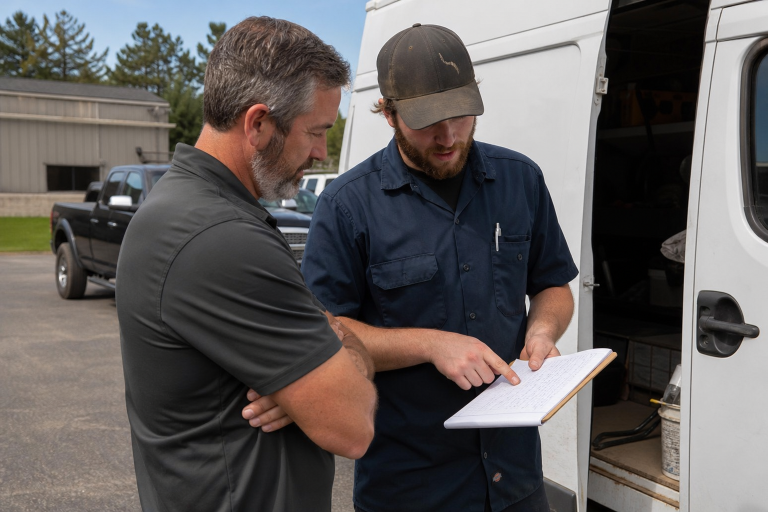
Keep the written policy short enough that employees will actually read it. At a minimum, state that drivers must wear seat belts, obey speed limits, avoid texting and handheld phone use, and never drive while impaired, overly tired, or unwell.
- Only approved drivers may operate business vehicles.
- Routes, messages, and navigation should be handled before the vehicle moves.
- Drivers must promptly report citations, damage, unsafe behavior, and mechanical concerns.
- Tools, cargo, and materials must be secured before travel.
- Serious policy violations should have clear, consistently applied consequences.
Step Three: Screen and Train Drivers
Confirm that every driver holds the right valid license for the vehicle and work involved. Review the driving history before assigning regular duties, then provide basic defensive driving instruction and explain the company’s specific rules.
Training should also cover how to report a crash, a near miss, vehicle damage, or a defect. Provide extra coaching when patterns emerge, such as repeated speeding alerts, harsh braking, poor parking habits, backing damage, or delayed incident reporting. The purpose is to correct risk before it becomes a serious loss.
Step Four: Build a Simple Vehicle Inspection Routine
Before the Trip
- Check tires, lights, mirrors, windows, fluids, brakes, and dashboard warning indicators.
- Look for leaks, visible damage, unusual noises, or loose equipment.
- Confirm that cargo is balanced, within vehicle limits, and properly secured.
- Make sure required emergency supplies are present and accessible.
After the Trip
Drivers should record new defects before another employee uses the vehicle. They should also note mileage, fuel concerns, warning lights, and any damage found during the day. Remove loose items and trash from the cab, then send urgent safety issues to the person responsible for repairs.
Step Five: Create a Preventive Maintenance Calendar
Waiting for a breakdown is usually more expensive than planning maintenance. Schedule service by mileage, engine hours, or date, based on the manufacturer’s recommendations and the vehicle’s workload. Track oil changes, tires, brakes, batteries, lights, fluids, belts, registrations, and safety equipment.
Use a simple record for each vehicle that lists the service date, mileage, work completed, next due date, invoice details, and the person who approved the repair. Unsafe vehicles should be removed from service until repairs are complete. Businesses operating regulated commercial motor vehicles should also review the FMCSA inspection and maintenance guidance for recordkeeping and repair responsibilities.
Step Six: Reduce Common Road Risks
Focus on the risk drivers encountered most often. Avoid unrealistic schedules that encourage fatigue or speeding. Adjust travel plans for snow, ice, heavy rain, extreme heat, or poor visibility. In tight spaces, require slow backing, full mirror checks, cameras when available, and spotters when practical.
Parking and loading also matter. Choose well-lit parking areas, remove keys from unattended vehicles, and avoid leaving valuable tools in plain sight. Never exceed vehicle weight limits, and secure ladders, equipment, and materials so they cannot shift during braking or turns.
Step Seven: Use Technology with a Clear Purpose
GPS tracking, dash cameras, electronic inspection forms, maintenance reminders, and telematics reports can all be useful. However, technology works best when it addresses a defined problem. A small company may benefit more from a dependable inspection form and a monthly driver review than from an expensive system no one checks.
If telematics detects speeding, hard braking, rapid acceleration, or excessive idling, use the information to provide fair coaching rather than automatic punishment. Explain what data is collected, who can view it, and how it will be used.
Step Eight: Prepare a Crash Response Plan
Every vehicle should carry a simple emergency card. Tell drivers to move to a safe location when possible; call emergency services if anyone is hurt or traffic is blocked; exchange the required information; take photos; and notify the company contact as soon as it is safe.
Drivers should avoid admitting fault or making promises at the scene. They should write down what happened while details are fresh, including the time, location, road conditions, witnesses, and visible damage.
How Often Should a Fleet Safety Program Be Reviewed?
- Weekly: Review open defects and urgent repair needs.
- Monthly: Check mileage, service records, incidents, and driver concerns.
- Quarterly: Review driver records, coaching needs, and repeated risk patterns.
- Annually: Update the policy, vehicle list, emergency plan, and training materials.
Common Questions About Small Business Fleet Safety
Does a business with one vehicle need a safety plan?
Yes. A one-vehicle business still faces driver, vehicle, and liability risks. A short written policy establishes expectations from the beginning.
What is the best first step?
Create a vehicle and driver list, then implement a one-page policy, a basic inspection form, and a maintenance calendar. These practical steps provide a strong foundation without requiring a large transportation department.
Conclusion
Small business fleet safety is built through consistent, repeatable actions. Clear rules, qualified drivers, regular inspections, planned maintenance, and a calm crash-response process can reduce risk and keep operations moving. Start with the basics, review them regularly, and strengthen the program as your business grows.
©2026 The Dedicated House. All rights reserved. No part of this blog post may be used or reproduced without the written consent of the copyright owner.
Click the links below for any posts you have missed:
 Essential Roofing Trends for Luxury Homes
 What Years of Moving and Decorating Taught Me About Choosing the Right House
 How to Choose a Washington, DC Neighborhood that Fits Your Daily Life in 2026
 Ensuring Clean Water with Advanced Filtration Systems
 Planning a Group Trip ? Choose Manhattan Charter Bus Rental for Safe Group Travel
 6 Licensed West Palm Beach Commercial Roofers for the 2026 Storm Season
I’d love for you to join my email list! You’ll receive a notification straight to your inbox which will include links to my latest home project posts! Simply enter your address below.
Thanks for stopping by! Have a wonderful day/night depending on where you are in the world! Go with God and remember to be kind to one another!
Toodles,

Leave a Reply