The median owner-occupied home in the United States is now 42 years old, up from 31 years in 2005, according to 2024 American Community Survey data analyzed by the National Association of Home Builders. In raw terms, that means the typical American home was built in an era when most of its major mechanical systems, including HVAC, water heater, electrical panel, and plumbing stack, have already cycled through one or two full replacement intervals, or are approaching the end of one.
That shift in the stock’s age profile drives maintenance exposure, repair frequency, and demand for home services directly. The effect shows up in the transaction data of companies operating at sufficient scale to see it. Choice Home Warranty, one of the largest home warranty companies in the country, sees that demand directly in its annual service volume, which skews heavily toward aging systems past their original design life.
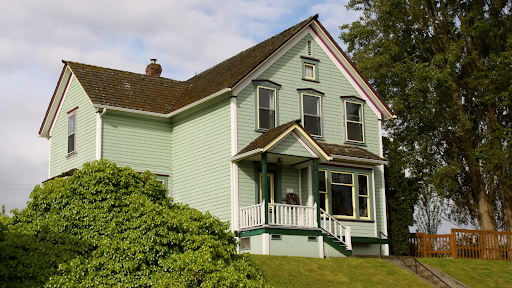
Why the U.S. Housing Stock Keeps Getting Older
The country hasn’t built enough to keep the stock young. The data behind it runs back four decades.
Annual construction of entry-level single-family homes, the segment that historically renewed the accessible ownership market, fell from approximately 418,000 units per year in the late 1970s to roughly 65,000 in 2020, according to Freddie Mac’s housing supply research. Entry-level starts represented 34 percent of all new single-family homes in the late 1970s. By 2020, the share had dropped to less than one-fifth of that level.
The downstream consequence: when entry-level supply doesn’t materialize, buyers absorb older inventory. Redfin’s May 2025 analysis found that the median age of homes sold hit a record 36 years in 2024, nine years older than the 2012 median, and climbing. Only 9 percent of homes currently on the market were built in the 2010s, the lowest decadal construction share since the 1940s. The 2020s are on track to be the second-lowest decade for residential construction volume since the 1940s.
The NAHB’s tracking of owner-occupied stock tells the same story from a different angle: roughly 60 percent of the owner-occupied housing inventory was built before 1980, and the share of homes at least 53 years old grew from 29 percent in 2012 to 35 percent in 2022. New construction added only 2 percent to the total owner-occupied stock between 2020 and 2022, far too little to change the overall age trajectory.
Where Aging Housing Stock and Repair Exposure Collide
The national median obscures geographic variation that matters for understanding where repair demand concentrates.
New York state’s median owner-occupied home is 64 years old. Massachusetts and Rhode Island each sit at 59 years. Half of all owner-occupied homes in the District of Columbia were built more than 80 years ago. Pennsylvania, Vermont, and Connecticut follow closely. In these markets, the housing stock carries the age of its physical components along with the maintenance history of every owner who held it before, including the gaps.
At the metro level, the divergence is starker. Redfin found that the median home sold in Buffalo in 2024 was 69 years old; Pittsburgh’s median was 68; Syracuse, Springfield, and Cleveland each came in at 65. Cities like these typify the Northeast and Rust Belt’s housing inventory; older stock of this vintage is the regional norm.
The Sun Belt runs the other direction. Nevada’s median owner-occupied home is 25 years old. Texas sits at 28. South Carolina and Georgia are each at 29. Fourteen of the fifteen Sun Belt states fall below the national 42-year median, and it shows in their repair profiles: newer stock, more efficient systems, longer remaining service life on most mechanical components.
The gap between markets like Buffalo and markets like Austin isn’t going to close anytime soon. Sun Belt states are building; they’ll stay young relative to the national median. Northeast and Rust Belt states aren’t building at replacement pace, so their stock ages in place. The structural divergence in the housing supply picture has been building for decades and reflects long-term construction patterns that neither region is positioned to quickly reverse.
What Aging Housing Stock Actually Costs to Own
The Census Bureau’s 2023 analysis of American Housing Survey data puts the maintenance burden in direct financial terms. New owners of older homes, those who’d moved in within the previous two years, spent a median of $3,900 per year on upkeep. Longtime owners of those same properties, who had lived in them for at least ten years, averaged about $1,500 annually. The gap isn’t random: new owners inherit the deferred maintenance of the previous occupant, which concentrates spending in the first years of ownership.
Routine annual maintenance, covering painting, plumbing, roofing repairs, and similar recurring costs, averaged $540 per year for owners of older homes in the 2019-2021 period the survey covered. Sixty-one percent undertook at least one improvement project, spending a median of $4,100 across those two years. The most common projects: water heater replacement, window and door replacements, and roofing work. Each of those is a major system replacement, not a discretionary improvement.
These figures are now several years old, drawn from survey data collected before labor and materials costs ran up substantially. The homes surveyed are also two years older than they were when those figures were captured. Both factors point the same direction.
The standard financial planning guideline, a reserve of one to two percent of home value per year, was calibrated to a younger, cheaper stock. On a $350,000 home, one percent is $3,500. The Census Bureau’s median for new owners of older homes already exceeds that before a major system replacement enters the picture. Add one HVAC replacement or a roof section, and the math changes considerably.
Buyers in older-stock markets are acquiring these homes primarily because the price differential makes newer inventory inaccessible. Redfin found that homes less than five years old carried a median price of $425,000 in 2024, about 32 percent above the $323,000 median for homes 30 years old or older. For most first-time buyers, that gap settles the question before the maintenance exposure is even part of the conversation.

How Home Warranty Demand Scales with Aging Housing Stock
The home warranty category converts unpredictable per-incident repair costs into a fixed annual fee. Its growth tracks the aging of the housing stock for a simple operational reason: older homes generate more claims.
Choice Home Warranty is a home warranty company founded in 2008 with a mission to make home ownership simple and affordable. It processes between 1.3 million and 1.4 million service calls annually,. CHW leads the industry by distributing coverage plans directly to consumer through two primary plan options, Basic and Total, giving homeowners the ability to file a claim with a simple click or call.
At that volume, CHW’s claims data is a running operational measure of how often covered systems fail across the age profile of the homes it covers. HVAC systems built in the late 1980s and early 1990s are reaching or past the end of their service life. Water heaters and plumbing in homes built in the same era are on similar trajectories. Each failure that generates a service call shows up in the 1.3-to-1.4-million annual figure. The aging stock converts those calls from a statistical projection into an active dispatch queue that needs to be filled.
CHW’s highly automated platform matched the right service technician to each incoming claim 90 percent of the time in 2025, a dispatch efficiency built on contractor network scale and claims routing technology. Choice Home Warranty has earned more than 100,000 five-star reviews across platforms including BestCompany, ConsumerAffairs, and Trustpilot, a performance record in a category where the customer experience is measured entirely at the moment of the claim.
The Supply Constraint Isn’t Clearing
The housing supply deficit Freddie Mac documented at 3.8 million units in 2020 hasn’t been resolved. New construction in the 2020s continues to run below household formation in many markets. The Sun Belt is building, but it’s also absorbing migration at rates that partially offset the relative youth of its stock. In the Northeast and Rust Belt, older inventory is available because newer inventory doesn’t exist in sufficient volume to change the market’s age composition.
The practical result for buyers: the resale market keeps delivering older homes, because that’s what the inventory consists of. And the practical result for the home services market: demand for products that manage the maintenance exposure of aging homes will grow alongside the stock generating that demand.
The NAHB’s data traces a housing stock getting older faster than it’s being renewed. Redfin’s sales data shows buyers absorbing that stock at record median ages. The Census Bureau’s maintenance data shows what that absorption costs in upkeep spending. And service call volumes at companies like Choice Home Warranty show what it generates in repair demand. Four data sets, four angles of view, one underlying condition.
©2026 The Dedicated House. All rights reserved. No part of this blog post may be used or reproduced without the written consent of the copyright owner.
Click the links below for any posts you have missed:
 Energy-Efficient Air Conditioning: Tips for a Cooler, Greener Home
 Punitive Damages In Houston DUI Accident Cases
 Santa Barbara Real Estate Trends for 2026
 How Does Barn Door Hardware Alignment Affect Sliding Performance?
 How to Talk to Your Doctor About Joining a Clinical Trial
 Advanced Plumbing Solutions for Modern Homes
I’d love for you to join my email list! You’ll receive a notification straight to your inbox which will include links to my latest home project posts! Simply enter your address below.
Thanks for stopping by! Have a wonderful day/night depending on where you are in the world! Go with God and remember to be kind to one another!
Toodles,

Leave a Reply