A garage door problem can interrupt a busy morning in Statesville, whether the issue appears after a rainy night, a power outage, or an ordinary trip out of the driveway. Before trying to force a stuck door, focus on keeping people clear of the opening and identifying what the system is doing. For concerns that go beyond simple checks, homeowners may need garage door repair from a qualified professional.
Garage doors are heavy moving systems with springs, cables, tracks, rollers, and an opener working together. A calm, safety-first response can help prevent an inconvenience from becoming property damage or an injury. Start with basic observations, but stop immediately if the door looks crooked, unstable, or unusually heavy.
Some problems indicate a repair, while others may arise when a door is older, has been repeatedly damaged, or no longer fits the garage opening. In those cases, planning for garage door installation can be more practical than continuing to address separate failures.
Start with Safety
Keep children, pets, vehicles, and bystanders away from a door that is moving improperly. Do not stand beneath a door stuck in the open position, and do not touch springs, cables, rollers, or high-mounted hardware. A loud bang, a sharp snapping sound, a shaking movement, or a visible lean is a reason to stop using the opener.
Springs and cables can store significant force, and a door can become difficult to control when those parts fail. Automatic residential garage door operators are subject to a mandatory federal consumer product safety standard, but safety features do not make a visibly damaged door safe to operate. Treat a damaged or unstable door as an active hazard until it has been assessed.
Identify What the Door Is Doing
Describing the symptom clearly can make the next step easier. Notice whether the door does not move at all, the opener runs while the door remains closed, or the door opens but will not close. Other useful details include a door that reverses before touching the floor, stops halfway, rises unevenly, or makes grinding, popping, scraping, or snapping sounds.
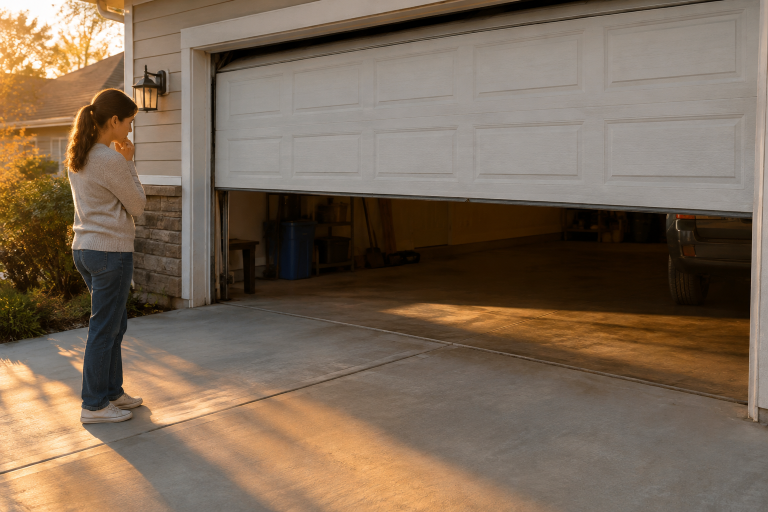
If the remote works only at a very short distance, the problem may be as simple as a weak battery. If one side of the door hangs lower than the other, or the door seems to bind in the tracks, do not continue operating it repeatedly.
Safe Checks Homeowners Can Make
These basic checks are appropriate only when the door appears level, intact, and stable. Stop at once if anything looks bent, broken, loose, or out of place.
- Confirm that the opener is plugged in and that the appropriate circuit breaker has not tripped.
- Try the wall-mounted control to determine whether the issue is limited to the remote.
- Replace the remote battery if its range has become inconsistent.
- Check for toys, leaves, tools, or other objects near the tracks and door opening.
- Look for objects that block the photo-eye sensor’s path near the bottom of the door.
- Gently clean sensor lenses with a soft, dry cloth.
- Check whether the wall control has a lock feature that disables remotes.
- Review the opener manual if the unit displays a blinking light pattern or error code.
Do not remove the opener cover, change spring tension, pull on cables, bend tracks, or alter force settings unless you are trained to do so. Those actions can create additional mechanical or electrical problems.
Common Reasons a Garage Door Stops Working
Blocked or Misaligned Safety Sensors
Photo-eye sensors help prevent a closing door from moving into an obstruction. Dirt on the lenses, an object in the path, or sensor alignment issues may prevent the door from closing properly. A door that closes only while the wall button is held may indicate a sensor or control issue that needs further attention.
Power, Remote, or Opener Problems
A dead remote battery, an unplugged opener, a tripped breaker, a storm-related outage, or a worn opener component can interrupt normal operation. Test the wall control before assuming that the motor unit has failed. Avoid opening electrical housings or attempting internal motor repairs.
Broken Springs, Cables, Tracks, or Rollers
A broken spring can leave the door extremely heavy. A damaged cable may cause one side to sag, while worn rollers or damaged tracks can create scraping, shaking, and uneven travel. Forcing the opener when these parts are compromised can worsen damage to the door, tracks, or opener.
Warning Signs that Need Professional Attention
- A loud bang followed by a door that will not lift.
- A visible gap in a spring.
- A loose, frayed, or hanging cable.
- A crooked door or a door that has come off its tracks.
- A collapsed, cracked, or separated door panel.
- A door that suddenly feels much heavier than usual.
- Repeated reversal, grinding, or violent shaking.
- A door that will not remain open during a careful manual check.
Problems involving tension, weight, structural damage, or unstable movement are not routine do-it-yourself tasks. Keep the area clear and arrange for trained help rather than attempting a temporary fix.
What to Do During a Power Outage
Power interruptions can happen during storms in the Statesville area, leaving an automatic opener unavailable. First, make sure the door is fully closed if possible. Consult the opener manual before using the emergency release, and lift the door manually only if it moves smoothly, remains balanced, and does not feel unusually heavy. Do not force a binding, tilting, or dropping door. When power returns, reconnect the opener only after confirming the door appears stable.
Garage Door Repair Mistakes to Avoid
- Continuing to press the remote when the door is jammed.
- Climbing a ladder to reach springs or high hardware.
- Installing a spring simply because it looks similar to the old one.
- Pulling the emergency release while the door is open and unstable.
- Hammering or forcing a bent track back into position.
- Spraying lubricant on sensors, electrical parts, or the opener motor.
- Ignoring new noises because the door still completes a cycle.
Simple Maintenance for Fewer Problems
Regular observation can reveal changes before the door stops operating altogether. Each month or season, watch one complete opening-and-closing cycle, listen for unfamiliar sounds, and inspect visible hinges, rollers, tracks, and cables from a safe distance. Keep sensor areas clear and remove clutter from the doorway.
Test the automatic reversing feature according to the opener manufacturer’s instructions. If the door becomes slower, noisier, rougher, or less even in its movement, schedule an inspection before a minor wear issue becomes a complete failure.
Common Homeowner Questions
Can a homeowner fix a garage door that will not close?
Checking power, the remote battery, the wall control, and the sensor path can be reasonable. A door with damaged hardware, irregular movement, or repeated reversing should not be forced.
Is it safe to open a garage door by hand?
Manual operation is safest when the door is closed, balanced, and free of visible damage. Do not try to lift a heavy, crooked, tilted, or unstable door.
How can someone tell if a spring is broken?
Common clues include a loud snap, a visible separation in the coil, a door that suddenly feels very heavy, or an opener that runs without lifting the door.
Should a noisy garage door be repaired right away?
New grinding, popping, scraping, or squealing deserves attention. These sounds can indicate wear, loose hardware, roller problems, track damage, or spring strain.
Final Takeaway
When a garage door stops working, begin with simple, low-risk checks and keep everyone away from a door that seems heavy, uneven, or damaged. Avoid repairs involving springs, cables, tracks, or unstable panels. A careful response protects the household and helps prevent a garage door issue from becoming a larger problem.
©2026 The Dedicated House. All rights reserved. No part of this blog post may be used or reproduced without the written consent of the copyright owner.
Click the links below for any posts you have missed:
 How to Spot Hidden Water Leaks in St. George, Utah Homes
 A Practical Guide to Tax Installments for Canadian Business Owners
 What Does Professional Gutter Cleaning Include? A Homeowner’s Walkthrough
 How Can You Help a Dog in Pain at Home? A Practical Guide for Pet Owners
 Decorating for the Seasons: How to Refresh Your Home Without Replacing Everything
 How to Choose Paintings for Your Living Room
I’d love for you to join my email list! You’ll receive a notification straight to your inbox which will include links to my latest home project posts! Simply enter your address below.
Thanks for stopping by! Have a wonderful day/night depending on where you are in the world! Go with God and remember to be kind to one another!
Toodles,

Leave a Reply