In July 2026, our homes are expected to be more than just places to live; they are intelligent spaces that offer comfort, efficiency, and advanced security.

If your home still relies on outdated electrical systems and manual controls, you might be overlooking valuable opportunities to enhance your lifestyle and increase your property’s value. Modern buyers increasingly anticipate connected living, lower energy bills, and built-in technology.

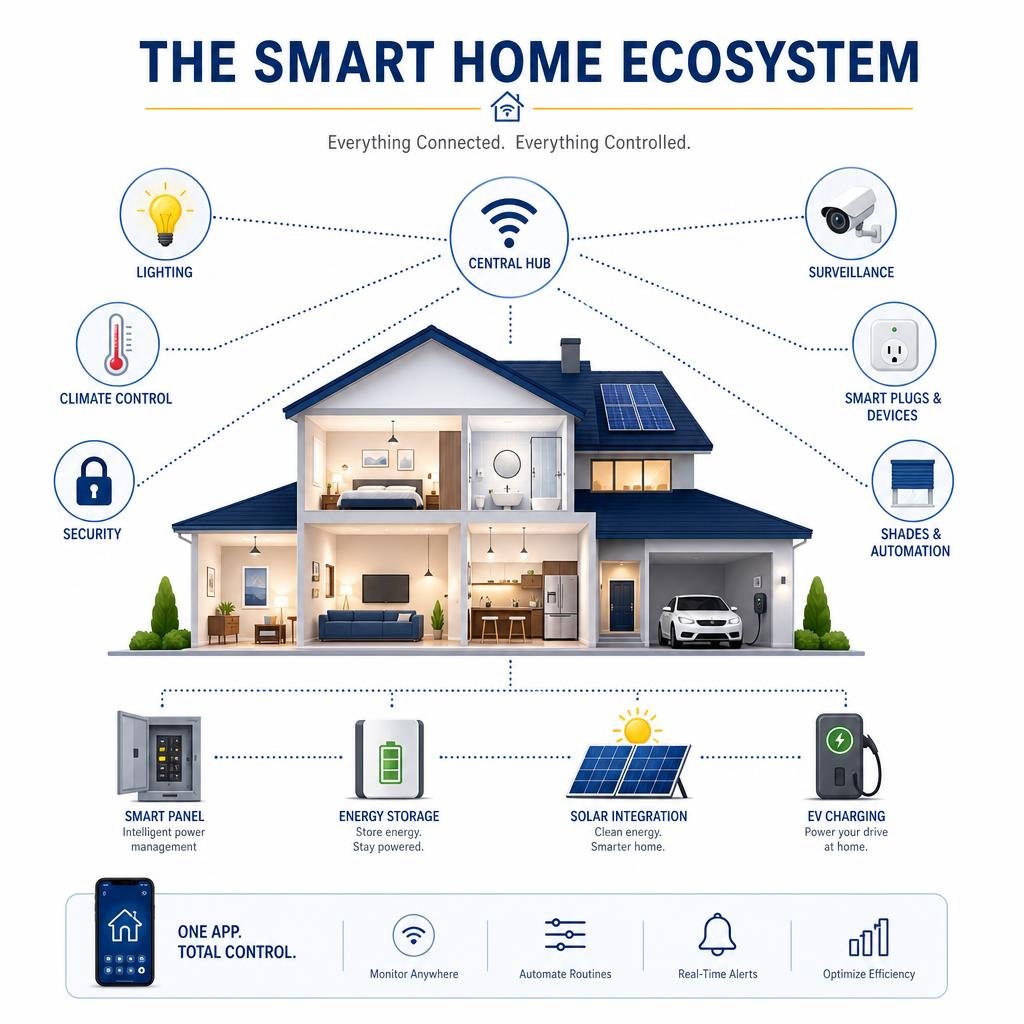
This comprehensive guide is designed to help you navigate home electrical and automation upgrades. We will explore the most impactful smart home technologies that boost resale value, like advanced smart panels and battery storage systems that revolutionize energy management. We’ll also examine the differences between wired and wireless automation, crucial electrical considerations for older homes, and the real costs involved in these upgrades.
We believe that understanding these changes is key to making informed decisions. We’ll highlight how to future-proof your electrical system for upcoming innovations like EV chargers, heat pumps, and solar integration, ensuring your home remains cutting-edge for years to come. For any significant electrical work, from installing smart switches to upgrading your entire service panel, seeking professional residential electrical services is vital to ensure safety, efficiency, and compliance with all codes.
Join us as we uncover how smart electrical and automation upgrades can transform your home into a more intelligent, valuable, and enjoyable living space.
In today’s competitive housing market, especially looking ahead to 2026, buyers are increasingly seeking homes that offer more than just square footage. They desire connected comfort, lower energy bills, and built-in technology that simplifies daily life. Investing in home electrical and automation upgrades isn’t just about personal convenience; it’s a strategic move to significantly increase your home’s resale value and appeal. Professional smart home installations have been shown to add 3-5% to home values, making them a worthwhile investment. The focus for high-impact upgrades should be on solutions that provide tangible benefits like energy management, enhanced security, and seamless control, all while preparing the home for future technological advancements.
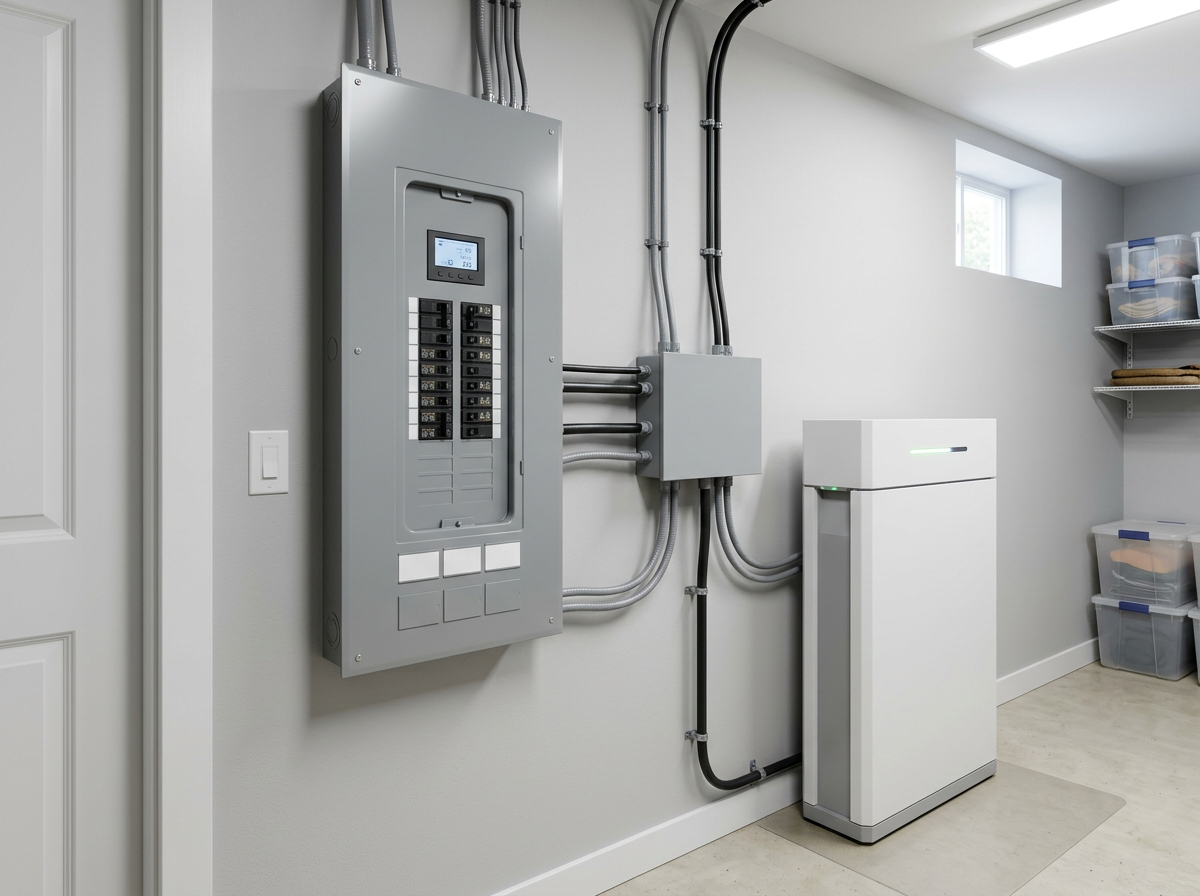
Smart Panels and Battery Storage Systems
The electrical panel, once a passive component of our homes, is now evolving into an intelligent hub. Smart panels, such as the SPAN Panel, are transforming how we interact with our home’s energy. These advanced panels provide unmatched visibility into your home’s energy consumption, allowing for real-time monitoring of every circuit from a smartphone app. This level of granular control means we can identify energy hogs, prioritize power usage, and make informed decisions to lower our utility bills. Some homeowners have reported reducing their monthly energy expenses by up to 15% through smart insights provided by these systems.
Beyond daily energy management, smart panels offer critical advantages during grid outages. When integrated with battery storage systems, like a Tesla Powerwall, they act as the “brain” of your home’s backup power. They can dynamically prioritize essential circuits, ensuring critical appliances remain powered for longer. The SPAN Panel, for instance, can extend a home battery’s backup life by up to 40% during an outage by intelligently shedding non-essential loads. This capability is invaluable for peace of mind and maintaining comfort during unexpected power interruptions.
Furthermore, smart panels are pivotal for future-proofing our homes. As we embrace electrification with EV chargers, heat pumps, and induction stoves, the demand on our electrical systems increases. A smart panel can automatically balance these high loads, potentially helping homeowners avoid costly utility service upgrades that can sometimes run into tens of thousands of dollars. One real-world example highlighted how a smart panel saved a homeowner $70,000 in avoided utility infrastructure upgrade costs. By providing precise circuit control and real-time load shaping, these systems ensure our homes are ready for the energy demands of tomorrow, significantly boosting their appeal and value to prospective buyers.
Energy-Efficient Smart Lighting and Climate Control
Among the most impactful smart home upgrades for both energy savings and buyer appeal are intelligent lighting and climate control systems. These solutions offer immediate benefits in terms of comfort and cost reduction, making them highly attractive features for any home.
Smart thermostats are a prime example of an upgrade with excellent return on investment. They do more than just allow remote temperature adjustments; they learn our preferences, create personalized schedules, and optimize heating and cooling based on occupancy and external weather conditions. This intelligent management can lead to substantial energy savings, with smart thermostats capable of reducing energy costs by up to 23% annually. Considering the average household spends over $2,000 per year on energy bills, these savings quickly add up. Buyers in 2026 are keenly aware of energy efficiency, and a smart thermostat signals a modern, cost-conscious home.
Similarly, smart lighting systems offer significant advantages. Replacing traditional incandescent bulbs with LED smart lighting is a foundational step, as LEDs use at least 75% less energy and last much longer. Beyond the bulbs themselves, smart switches and dimmers allow for sophisticated control, enabling homeowners to:
- Create ambiance: Adjust light levels and color temperatures to suit different moods or activities.
- Enhance security: Program lights to turn on and off automatically, mimicking occupancy when we’re away, adding a layer of perceived security.
- Improve convenience: Control lights via voice commands, mobile apps, or occupancy sensors, eliminating the need to fumble for switches in the dark.
These systems not only reduce electricity consumption but also contribute to a home’s overall aesthetic and functionality. Buyers appreciate the ability to customize their living environment with ease, and the energy savings are a clear financial incentive. The integration of smart lighting and climate control into a cohesive system enhances the overall smart home experience, making a property stand out in the market.
Infrastructure and Future-Proofing: Wired vs. Wireless and Next-Gen Tech
When embarking on home automation upgrades, a fundamental decision involves choosing between wired and wireless systems. Each approach offers distinct advantages and considerations regarding reliability, security, and installation complexity. Understanding these differences is crucial for building a robust and future-proof smart home.
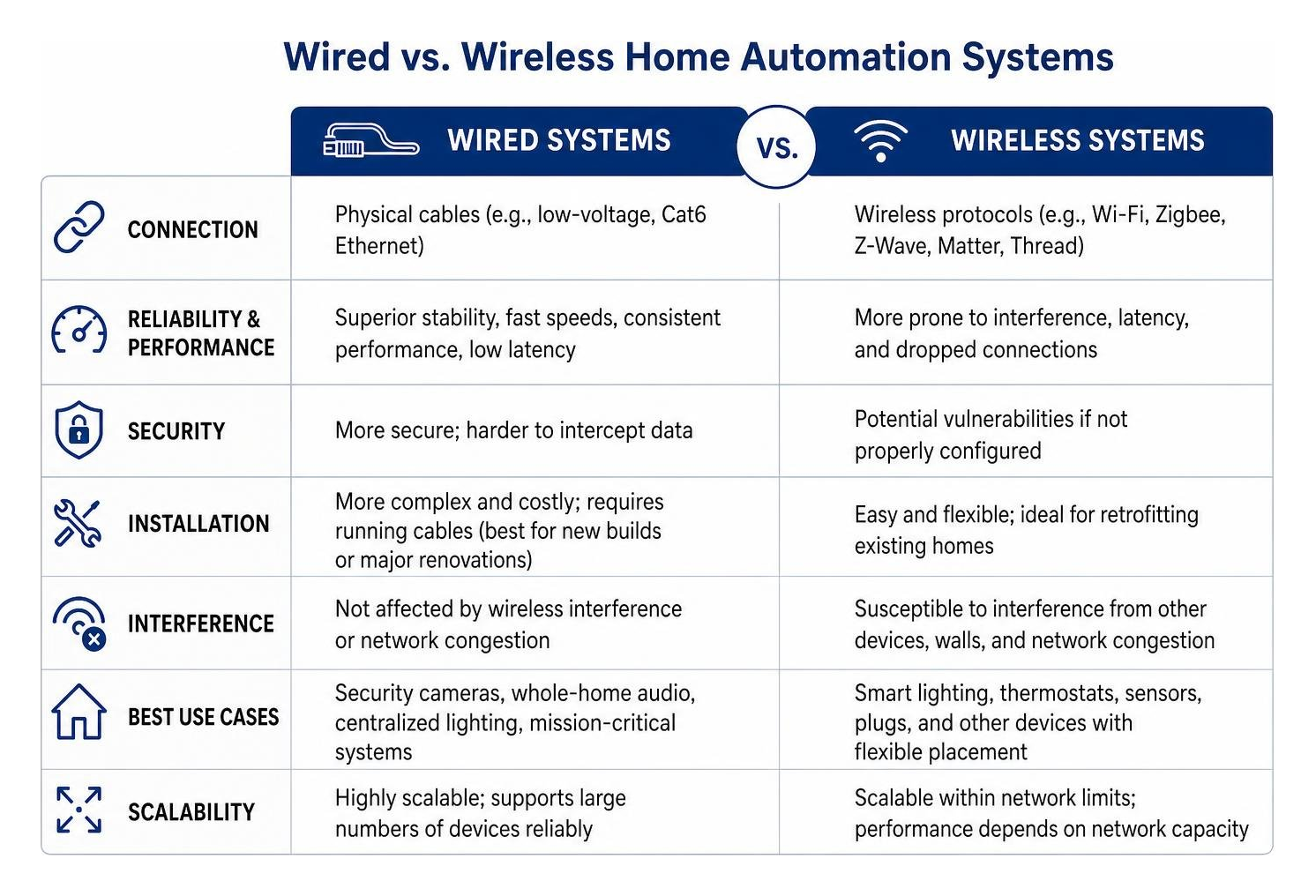
Wired vs. Wireless Home Electrical and Automation Upgrades
Wired systems connect devices using physical cables, such as low-voltage wiring and Cat6 Ethernet cables. This approach offers superior stability, speed, and security. Wired connections are less susceptible to interference from other wireless devices, physical obstructions, or network congestion, ensuring consistent performance and faster response times for critical systems like security cameras, whole-home audio, and centralized lighting control. Data security is also enhanced, as wired connections are harder to intercept than wireless signals. However, wired systems are more complex and costly to install, especially in existing homes, as they require running cables through walls and ceilings. This is often best done during new construction or major renovations.
Wireless systems, on the other hand, rely on protocols like Wi-Fi, Zigbee, Z-Wave, Matter, and Thread to connect devices. Their primary advantage is flexibility and ease of installation, as they don’t require extensive cabling. This makes them ideal for retrofitting existing homes. Wireless mesh networks can extend coverage throughout a property, allowing devices to communicate with each other and the central hub. While convenient, wireless systems can be prone to signal interference, latency issues, and potential security vulnerabilities if not properly configured. An overloaded Wi-Fi network with numerous smart devices can also lead to dropped connections and unreliable performance.
For optimal performance and reliability, a hybrid approach often proves most effective. Critical infrastructure, such as smart home hubs, security cameras, and high-bandwidth entertainment systems, can benefit from wired connections, while less critical devices like smart bulbs and sensors can leverage wireless protocols. Ensuring a strong, dedicated network infrastructure, potentially with structured wiring for data, is a best practice. For homeowners looking to integrate complex systems or ensure maximum reliability, consulting with professionals specializing in smart-home and smart-building installation can provide tailored solutions that combine the best of both wired and wireless technologies. They can design a system that minimizes signal interference, prioritizes local control (so systems still function during internet outages), and ensures seamless communication across all devices.
Retrofitting Pre-1990 Homes with Neutral Wires
One of the most common electrical considerations for homeowners in older properties, particularly those built before 1990, is the absence of a neutral wire in many switch boxes. Most modern smart switches and dimmers require a neutral wire to function correctly, as it provides a continuous low-voltage path for the device’s internal electronics. Without it, smart switches may buzz, flicker, or simply not operate.
The National Electrical Code (NEC) has mandated the inclusion of a neutral wire in switch boxes for new construction since the mid-1970s, but homes built prior to this standard often lack it. This presents a challenge for DIY enthusiasts attempting to install smart lighting controls. Attempting to install smart switches without a neutral wire can lead to operational issues, potential safety hazards, and even damage to the devices or existing wiring.
Retrofitting older homes to accommodate smart switches often requires the expertise of a licensed electrician. They can assess the existing wiring, determine if a neutral wire can be safely pulled to the switch box, or suggest alternative solutions. In some cases, specialized “no-neutral” smart switches are available, though they may come with limitations or require bypass loops. Another innovative solution can be modular switches, where the high-voltage backplate is installed by an electrician, and the smart module can be swapped out by the homeowner later without direct electrical work. However, the foundational electrical work remains critical. Any work involving existing electrical wiring, especially in older homes, should always be performed by a qualified professional to ensure safety and compliance with local codes.
Integrating EV Chargers, Solar, and Heat Pumps
The electrification of our homes is rapidly accelerating, driven by the growing adoption of electric vehicles (EVs), solar energy systems, and high-efficiency heat pumps. These technologies represent significant advancements in sustainability and energy independence, but they also place substantial new demands on our home’s electrical system. Future-proofing your electrical infrastructure for these innovations is a critical upgrade for any homeowner in 2026.
EV chargers, particularly Level 2 chargers, require dedicated 240-volt circuits, similar to those used by electric clothes dryers or ovens. Installing one often necessitates a review of your home’s overall electrical capacity. Many older homes, and even some newer ones, may have a 100-amp service panel that is insufficient to handle the additional load of an EV charger alongside existing appliances. Upgrading to a 200-amp service panel is a common requirement to safely accommodate these high-draw devices.
Similarly, heat pumps, which are becoming a popular, energy-efficient alternative to traditional furnaces and air conditioners, also have significant electrical requirements. While they offer substantial energy savings on heating and cooling, their initial power draw during operation needs a robust electrical supply.
Integrating solar panels and battery storage systems further complicates the electrical landscape. Solar arrays feed electricity into your home, and battery systems like the Tesla Powerwall store excess energy for later use or backup during outages. Managing these diverse power flows—from the grid, solar, and battery—requires intelligent electrical infrastructure. Smart panels become invaluable here, acting as the central nervous system to monitor, control, and optimize energy distribution. They ensure that your home can seamlessly switch between power sources, prioritize loads during an outage, and even charge batteries during off-peak utility hours to save money.
The key takeaway is that these modern technologies are not isolated additions; they are interconnected components of an evolving energy ecosystem. Planning for their integration involves assessing current electrical capacity, potentially upgrading the service panel, and implementing smart load management solutions to avoid overloads and maximize efficiency. This proactive approach ensures your home is ready for a sustainable future and adds significant value to environmentally conscious buyers.
Whole-Home Surge Protection and Smart Power Management
In an era where our homes are filled with increasingly sophisticated and expensive electronics, from smart TVs and computers to smart home hubs and connected appliances, whole-home surge protection is no longer a luxury but a necessity. A single power surge, whether from lightning strikes, utility grid fluctuations, or even internal appliance cycling, can instantly damage or destroy sensitive electronic components, leading to costly repairs or replacements.
Whole-home surge protectors are installed directly at the electrical service panel, providing a first line of defense against transient voltage spikes. Unlike individual power strips, which offer limited protection to only the devices plugged into them, a whole-home system safeguards all connected electronics throughout your property. This is particularly crucial for smart home automation systems, which rely on a network of interconnected devices that are vulnerable to electrical disturbances. Protecting this investment ensures the longevity and reliability of your smart home ecosystem.
Beyond surge protection, smart power management extends to individual circuits and outlets. Smart outlets allow us to remotely control power to specific devices, turning them on or off from anywhere via a mobile app. This capability offers several benefits:
- Energy savings: Easily cut power to “vampire” devices that draw standby power even when not in use.
- Safety: Remotely shut off forgotten appliances like curling irons or space heaters, preventing potential fire hazards.
- Convenience: Set schedules for lamps, holiday lights, or other devices to operate automatically.
By combining whole-home surge protection with smart outlets, homeowners can achieve comprehensive power management. This not only protects valuable electronics but also enhances energy efficiency, improves safety, and provides an unparalleled level of control over the home’s electrical consumption. Such features are highly attractive to buyers who prioritize safety, efficiency, and modern convenience.
Cost Breakdown and Professional Installation vs. DIY Risks
Understanding the financial investment required for home electrical and automation upgrades is crucial for planning. While the benefits are clear, the costs can vary widely based on the scope of the project, the type of technology chosen, and whether professional installation is utilized. It’s important to approach budgeting with a clear understanding of the factors influencing the price.
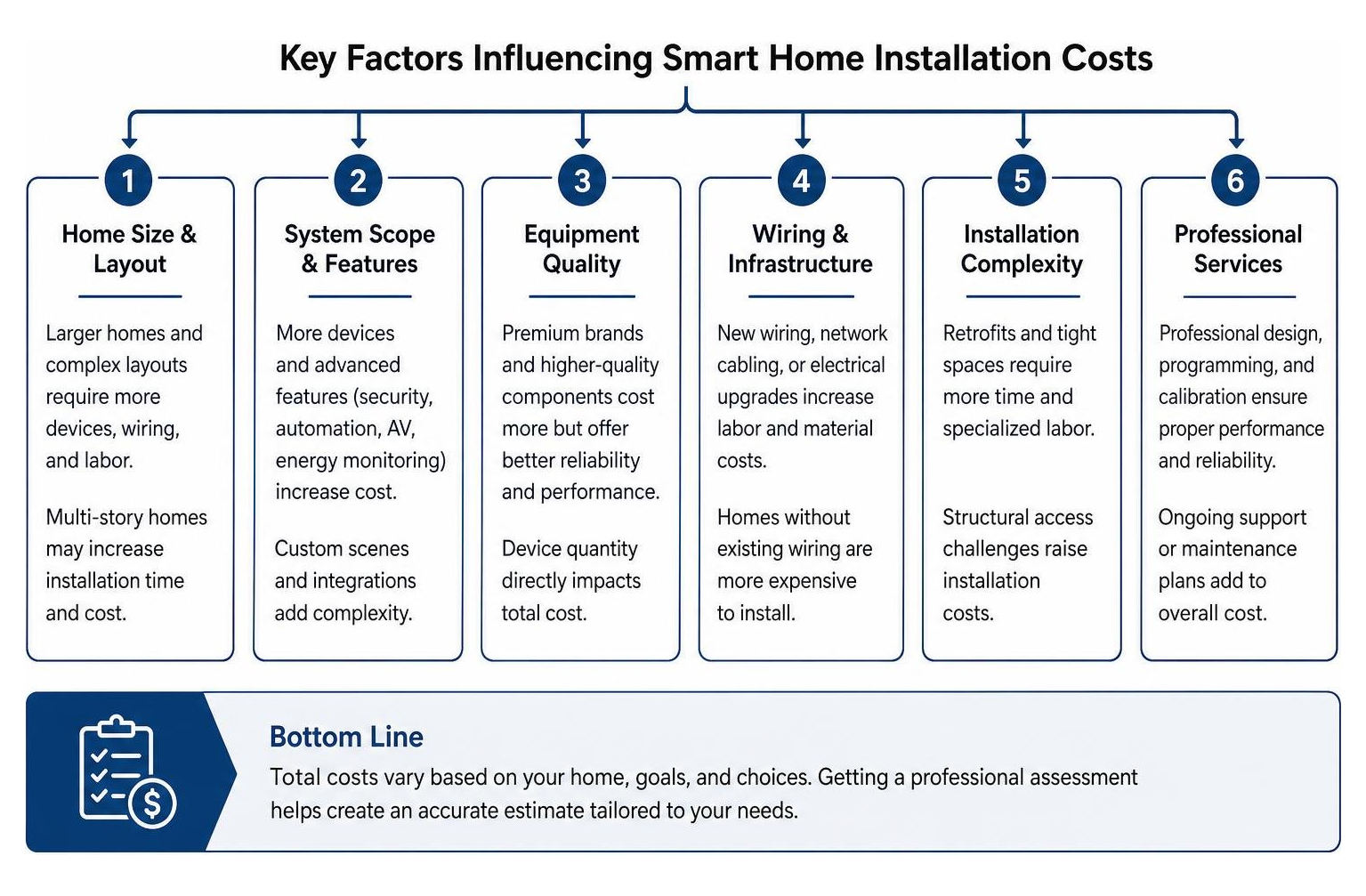
Budgeting for Home Electrical and Automation Upgrades
The cost of smart home automation and electrical upgrades can range significantly, reflecting the spectrum from basic enhancements to full, custom whole-home integration. We can generally categorize these costs into tiers:
- Starter Packages (Basic Setup): For core devices in select rooms (e.g., a few smart switches, a smart thermostat, a video doorbell, and a couple of cameras), homeowners can expect to pay between $2,000 and $6,000. This often includes hardware and basic installation.
- Mid-Level Automation (Broader Integration): Expanding smart features across multiple rooms, including more extensive smart lighting, enhanced security, and climate control, typically ranges from $5,000 to $20,000. This tier often involves more complex wiring or system integration.
- Luxury or Full Custom Automation (Whole-Home System): For comprehensive whole-home solutions with advanced features like integrated audio-visual systems, automated shades, sophisticated energy management, and high-end security, costs can range from $15,000 to $100,000+. These projects often involve extensive pre-wiring and custom programming.
Several key factors influence these price ranges:
- Hardware Costs: The brand and quality of smart devices (e.g., Lutron vs. generic smart switches, Tesla Powerwall vs. smaller battery systems) significantly impact the overall expense.
- Labor Costs: Professional installation fees vary based on the complexity of the wiring, the number of devices, and the time required for setup and programming.
- Home Age and Condition: Older homes (pre-1990) may require additional electrical work, such as neutral wire retrofits or panel upgrades, which adds to the cost.
- System Complexity: Integrating diverse devices from different manufacturers into a cohesive system often requires more specialized expertise.
- Permitting and Code Compliance: Depending on the scope of work (especially for panel upgrades or new circuits), permits may be required, incurring additional fees.
For example, in a market like Frisco, TX, home automation costs can range from $3,000 to $50,000+, depending on the system’s scope. A starter package might include Lutron lighting, a smart thermostat, four cameras, and a video doorbell for $2,500-$6,000. Budgeting for these upgrades should always include a buffer for unforeseen electrical challenges, particularly in older properties.
The Safety and Compliance Benefits of Professional Installation
While the allure of DIY smart home installations can be strong, especially for seemingly simple devices, the inherent risks associated with electrical work make professional installation by a licensed electrician paramount. This is particularly true for any smart device that connects directly to your home’s electrical infrastructure, such as smart switches, outlets, smart panels, and EV chargers.
Common mistakes and safety hazards of DIY smart home installations include:
- Improper Wiring: Incorrect connections can lead to flickering lights, device malfunctions, or, more dangerously, overloaded circuits and fire hazards. Forgetting to verify the presence of a neutral wire in older homes, which most smart switches require, is a frequent DIY error that can cause buzzing dimmers or burned-out controllers.
- Code Violations: Electrical work must adhere to the National Electrical Code (NEC) and local building codes. DIY installations often overlook these critical standards, potentially leading to unsafe conditions, failed home inspections, and issues with insurance coverage.
- Overloaded Circuits: Adding multiple high-draw smart devices without understanding the circuit’s capacity can lead to frequent breaker trips or, worse, electrical fires.
- Lack of Proper Grounding: Inadequate grounding can create shock hazards and leave expensive smart electronics vulnerable to power surges.
- System Incompatibility: Without professional guidance, homeowners might purchase devices that are incompatible with each other or with their existing electrical system, leading to frustration and wasted money.
Hiring a licensed electrician, especially for residential electrical services that involve permanent wiring, offers numerous benefits. They possess the expertise to:
- Ensure Safety: Professionals are trained to handle electrical systems safely, minimizing risks of injury or property damage.
- Guarantee Code Compliance: They are knowledgeable about local building codes and NEC standards, ensuring all installations are legal, safe, and pass inspections.
- Proper System Design: Electricians can assess your home’s existing electrical capacity, recommend necessary upgrades (like a 200A service or a smart panel), and design a system that meets your current and future needs.
- Seamless Integration: They can integrate various smart devices and systems, ensuring they communicate effectively and operate cohesively.
- Peace of Mind: Professional installation often comes with warranties for both parts and labor, providing assurance that the work is done correctly and reliably.
The small upfront savings from a DIY installation pale in comparison to the potential costs of electrical fires, damaged property, or compromised safety. For any smart home upgrade involving your home’s electrical wiring, a licensed professional is an indispensable partner.
Frequently Asked Questions
As homeowners increasingly explore smart electrical and automation upgrades, several common questions arise. We aim to address these concerns to provide clarity and empower informed decision-making.
What is the average ROI for smart home upgrades?
The return on investment (ROI) for smart home upgrades can be substantial, manifesting in both tangible financial savings and increased home value. Professional smart home installations typically add 3-5% to a home’s resale value. This increase is driven by several factors:
- Buyer Appeal: In 2026, buyers expect modern conveniences. Homes equipped with integrated smart systems for lighting, climate, and security are perceived as more desirable, technologically advanced, and move-in ready. This can lead to faster sales and higher offers.
- Energy Savings: Many smart upgrades directly reduce utility costs. Smart thermostats, for instance, can cut heating and cooling expenses by up to 23% annually, while LED smart lighting uses 75% less energy than traditional bulbs. These ongoing savings are a significant selling point.
- Enhanced Security and Convenience: Features like smart security cameras, video doorbells, and automated locks provide peace of mind and simplify daily routines, which are highly valued by prospective buyers.
- Future-Proofing: Homes with smart panels and the infrastructure to support EV chargers or solar integration are seen as prepared for future energy demands, adding long-term value.
While the exact ROI can vary based on location, the specific upgrades, and the quality of installation, the trend clearly indicates that smart home technology is a valuable investment that enhances both lifestyle and property worth.
Do smart switches work without a neutral wire?
The vast majority of modern smart switches and dimmers do require a neutral wire to function properly. A neutral wire provides the constant power supply needed for the smart switch’s internal electronics (Wi-Fi module, micro-controller, etc.) to operate, even when the light is off. Without it, the switch cannot maintain a connection to your smart home network or respond to commands.
Homes built before approximately 1990 often lack a neutral wire in the switch box, as it was not a requirement in earlier electrical codes. In these older homes, the switch typically only interrupts the “hot” wire to turn the light on or off, with no neutral conductor present at the switch location.
While some manufacturers offer “no-neutral” smart switches, these often come with compromises:
- Bypass Loops: They might require a capacitor or “bypass loop” installed at the light fixture to draw a tiny amount of power, which can sometimes cause flickering with certain LED bulbs.
- Limited Compatibility: They may not work with all types of lighting loads or bulbs.
- Reliability Issues: Their performance can sometimes be less stable compared to neutral-wire-dependent switches.
For homeowners in older properties, the best approach is to have a licensed electrician assess the wiring. They can determine if a neutral wire can be safely pulled to the switch box, or recommend suitable “no-neutral” alternatives if retrofitting is too complex or costly. Attempting to install a smart switch designed for a neutral wire in a non-neutral setup can lead to damage, malfunctions, and potential safety hazards.
How long does a whole-home automation installation take?
The duration of a whole-home automation installation varies significantly based on the complexity of the system, the size of the home, and whether it’s a new construction project or a retrofit in an existing home.
- Basic Smart Device Installation: Installing a single smart device, such as a smart thermostat or a video doorbell, typically takes up to an hour for a professional.
- Starter Smart Home Package: For a basic setup involving a few smart switches, a thermostat, and security cameras in select rooms, the installation usually takes 1-2 days. This might include setting up a central hub and integrating a few key devices.
- Mid-Level Automation System: Expanding smart features across multiple rooms, including more extensive lighting control, enhanced security, and climate management, can take 3-5 days. This often involves more wiring, configuration, and integration of different subsystems.
- Comprehensive Whole-Home Automation System: For luxury or full custom automation that integrates virtually every aspect of the home—including advanced energy management, automated shades, multi-room audio/video, and sophisticated security—the installation can take a week or longer. These projects often require extensive pre-wiring (in new construction), custom programming, and thorough testing.
Factors that can extend the installation timeline include:
- Older Homes: Retrofitting existing homes, especially those built before 1990, may require additional electrical work like pulling neutral wires or upgrading the electrical panel, adding to the duration.
- Customization: Highly customized systems with complex scenes and automations require more programming time.
- Integration Challenges: Integrating various brands or legacy systems can sometimes present unforeseen challenges that extend the timeline.
Professional installers typically provide an estimated timeline after an initial consultation and assessment of your home’s specific needs and existing infrastructure. This ensures a realistic expectation for project completion.
Conclusion
Modernizing our homes with electrical and automation upgrades is no longer a luxury but a strategic investment in comfort, efficiency, and future value. As we’ve explored, from the intelligent management offered by smart panels and battery storage to the energy-saving benefits of smart lighting and climate control, these upgrades significantly enhance our living spaces. We’ve also highlighted the critical importance of robust infrastructure, whether through wired systems or carefully planned wireless networks, and the unique considerations for older homes.
Preparing our homes for the demands of new technologies like EV chargers, solar integration, and heat pumps, alongside safeguarding our valuable electronics with whole-home surge protection, ensures longevity and adaptability. While the costs vary, the long-term benefits in energy savings, increased resale value, and unparalleled convenience make these investments worthwhile. Crucially, we understand that for any significant electrical work, the safety and compliance benefits of professional installation by a licensed electrician cannot be overstated.
By embracing these advancements, we transform our houses into intelligent, responsive, and sustainable homes, ready for the connected future of 2026 and beyond.
©2026 The Dedicated House. All rights reserved. No part of this blog post may be used or reproduced without the written consent of the copyright owner.
Click the links below for any posts you have missed:
 Why Your Patio Has Dark Outlines Where the Furniture Used to Sit
 Preparing Your HVAC System for Extreme Weather
 Zoned Out: Why South Boston Businesses Need HVAC Zoning Systems
 A Seasonal Home Pest Checkup: What to Inspect In Every Room
 Affordable Same-Day Junk Removal for Homes, Offices, and Cleanouts
 What to Consider Before Building a Custom Cottage
I’d love for you to join my email list! You’ll receive a notification straight to your inbox which will include links to my latest home project posts! Simply enter your address below.
Thanks for stopping by! Have a wonderful day/night depending on where you are in the world! Go with God and remember to be kind to one another!
Toodles,

Leave a Reply