A shower door is more than just a functional barrier. It greatly influences the overall look and feel of your bathroom. An outdated or inefficient shower door can detract from even the most beautiful space.
Replacing your shower door offers a significant opportunity. It can instantly elevate your bathroom’s design and enhance daily usability. It’s an upgrade that brings both style and practical benefits.
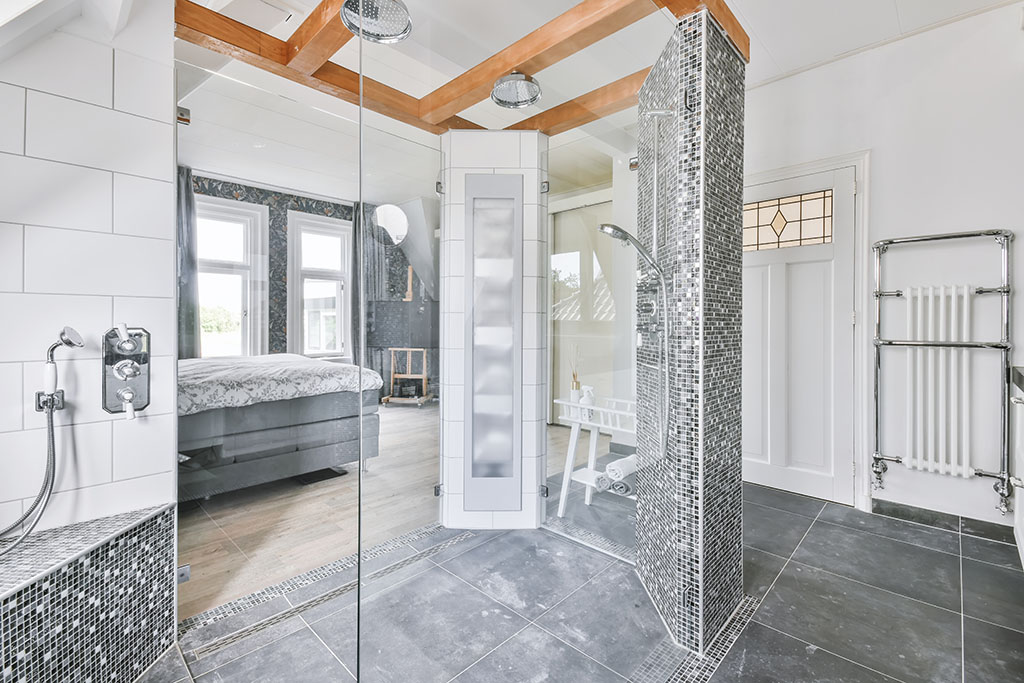
In this guide, we will explore everything about Bathroom Shower Door Replacement. We will look at the clear signs it’s time for an upgrade. We will also dive into the transformative power of custom glass enclosures. These specialized solutions are often designed and installed by professionals who customizes and installs glass shower doors, ensuring a perfect fit and a modern aesthetic. We will cover different door types, the installation process, and how to choose the best option for your home.
Recognizing when your shower door needs replacement, rather than just a repair, is crucial for maintaining both the aesthetics and functionality of your bathroom. Often, a replacement solves more than just a cosmetic issue, addressing underlying problems that can lead to more significant damage. Here are the key indicators that it’s time to consider a new shower door:
- Foggy or Stained Glass: Over time, hard water deposits and soap scum can etch into the glass, leading to a cloudy, foggy, or permanently stained appearance that no amount of cleaning can fully resolve. This not only looks unappealing but can also reduce the feeling of spaciousness in your bathroom.
- Corroded or Rusted Frames: For framed and semi-frameless doors, metal frames can suffer from corrosion or rust, especially in humid bathroom environments. This not only compromises the door’s appearance but can also weaken its structural integrity, making it difficult to clean and a potential breeding ground for mold and mildew. Once metal frames begin to corrode significantly, a full replacement is often more cost-effective than attempting repairs.
- Leaking Seals and Gaskets: Worn-out or cracked seals and gaskets are a common culprit for water leaking onto your bathroom floor. This can cause significant damage to flooring, subflooring, and even adjacent walls, leading to costly repairs down the line. Consistent leaks are a clear sign that your door’s protective barriers are failing.
- Cracked or Chipped Tempered Glass: While tempered glass is designed to be highly durable and shatter safely into small, dull pieces, any crack or chip is a serious safety hazard. Tempered glass cannot be repaired; once compromised, the entire panel can shatter spontaneously and unpredictably. This necessitates an urgent replacement to ensure safety.
- Sticking, Squeaking, or Difficult-to-Operate Tracks/Hinges: If your sliding door constantly sticks, squeaks loudly, or if a hinged door drags or doesn’t close properly, it indicates issues with rollers, tracks, or hinges. This makes daily use frustrating and can suggest misalignment or wear that will only worsen over time.
- Outdated Style: Many bathrooms still feature shower doors from the 1990s or early 2000s, often characterized by heavy, brass-framed enclosures. While functional, these styles can make a bathroom feel dated and cramped. Upgrading to a modern design, particularly frameless glass, can dramatically refresh the space and significantly enhance its aesthetic appeal and property resale value.
- Wrong-Size or Poorly Installed Glass: Sometimes, a shower door might have been incorrectly measured or installed, leading to gaps, poor functionality, or an unappealing fit. Replacing it with a precisely measured and professionally installed unit can correct these issues, ensuring optimal performance and appearance.
Replacing a shower door is most effective when it addresses layout, daily usability, and opening measurement errors, rather than merely swapping cosmetic components. If you notice any of these signs, it’s likely time to consider a professional shower door replacement.
Designing Custom Glass Shower Enclosures for Modern Bathrooms
Upgrading your shower door is an opportunity to redefine your bathroom’s aesthetic and functionality. Custom glass shower enclosures offer a sleek, modern look that can significantly enhance visual space and property value. When designing your new enclosure, you’ll encounter several key choices, including the type of door, glass thickness, and hardware finishes.

The primary types of shower doors are framed, semi-frameless, and frameless. Each offers distinct advantages and contributes differently to your bathroom’s design and budget.
Feature / Type Framed Shower Doors Semi-Frameless Shower Doors Frameless Shower Doors Appearance Visible metal frame around all glass edges. Minimal metal framing, usually on perimeter. No metal frame around glass edges. Glass Thickness Thinner, typically 1/4 inch (6mm). Medium, typically 1/4 to 3/8 inch (6-10mm). Thicker, typically 3/8 or 1/2 inch (10-12mm). Structural Support Relies heavily on metal frame. Mix of frame support and glass rigidity. Relies on heavy glass, hinges, and clamps. Cost Generally the most affordable. Mid-range pricing. Generally the most expensive. Maintenance More tracks/crevices for mold/mildew. Fewer tracks than framed, easier to clean. Easiest to clean, minimal mold traps. Visual Impact Can make bathroom feel smaller. More open feel than framed. Maximizes visual space, modern, luxurious. Installation Often simpler, more forgiving for out-of-plumb. Requires more precision than framed. Requires precise measurements and professional skill. Out-of-Plumb Adj. Good, frame can hide minor wall imperfections. Moderate, some adjustment possible. Limited, often requires custom cuts for perfect fit. For a truly modern bathroom, many homeowners are choosing to upgrade from a framed shower door to a frameless one. This is often cited as the single most impactful visual upgrade for a bathroom without undergoing a full remodel. The removal of bulky metal tracks and frames instantly creates a more open, airy feel, enhancing the perception of space. This upgrade requires prepping and patching existing screw holes or adhesive marks left behind on the tile or wall, but the result is a seamless, contemporary look.
When considering glass thickness, 3/8-inch (10mm) tempered glass is a popular choice for frameless enclosures, offering an excellent balance of structural integrity and cost. For a truly luxurious feel and enhanced durability, 1/2-inch (12mm) tempered glass is also available. All shower door glass must be tempered for safety, shattering into small, dull pieces if broken.
Hydrophobic coatings, often referred to as water-repellent surface treatments, are an excellent investment. Brands like KOHLER’s CleanCoat+ technology repel water and prevent dirt and minerals from collecting, making it significantly easier to remove hard water spots and soap scum. These coatings are typically applied to the inside face of the glass and require specific care to maintain their effectiveness; harsh chemical cleaners can damage them.
Finally, hardware finishes play a crucial role in complementing your bathroom’s overall design. Popular choices in 2026 include classic chrome, versatile brushed nickel, sleek matte black, and elegant brass or champagne bronze. Selecting a finish that matches your existing fixtures or introduces a stylish contrast can tie the entire bathroom together.
Configuration Styles: Sliding, Hinged, and Fixed Panels
The configuration of your shower door is determined by your bathroom layout, shower opening size, and personal preference for access and aesthetics.
- Sliding Shower Doors: Ideal for larger openings, sliding (or bypass) systems consist of two or more glass panels that slide past each other. Frameless sliding doors, like the KOHLER Levity, offer a sleek look with smooth, quiet roller designs. These are particularly useful in bathrooms where a hinged door would obstruct other fixtures or pathways. However, sliding doors require a specific minimum shower curb or base threshold width (typically 4 to 5 inches) to properly seat the bottom track and guides. That while some frameless bypass systems offer out-of-plumb adjustability, the walk-through clearance might be slightly less than the total opening width. For example, a 74-inch high door might have a walk-through height of around 66.7 inches, which could feel restrictive for taller individuals.
- Hinged Shower Doors: These doors pivot open, similar to a standard room door. They are excellent for creating a wide, unobstructed entry point and are common in smaller alcove showers. Hinged doors can be either frameless or semi-frameless, with frameless options typically using pivot hinges directly attached to the wall or an adjacent glass panel. Models like the Aston Belmore offer built-in adjustment for out-of-plumb walls, which is a significant advantage when dealing with existing tile.
- Fixed Panels: For a truly minimalist and open feel, fixed glass panels create a walk-in shower experience without any moving parts. These are often used in conjunction with a small hinged door or as a standalone barrier in larger shower spaces. They offer the easiest cleaning and the most expansive visual appeal, though they require adequate space to prevent water splash-out.
When choosing, consider your bathroom’s footprint, the location of toilets and vanities, and your desired walk-through clearance. Space optimization is key, especially in urban residential environments where every inch counts.
Structural Benefits of Custom Glass Shower Enclosures
Beyond their aesthetic appeal, custom glass shower enclosures offer significant structural and practical advantages that contribute to a more durable, cleaner, and valuable bathroom.
- Heavy Tempered Glass: The use of 3/8-inch or 1/2-inch heavy tempered glass in frameless and semi-frameless designs provides superior structural rigidity. This robust glass eliminates the need for bulky metal frames, contributing to the minimalist aesthetic while ensuring stability and safety.
- Elimination of Mold-Collecting Tracks: One of the most significant benefits of frameless designs is the absence of metal tracks and channels that are common in older framed doors. These tracks are notorious for collecting water, soap scum, and mold, making them difficult to clean and a potential health concern. Frameless enclosures drastically reduce these problem areas, leading to a more hygienic and easier-to-maintain shower.
- Out-of-Plumb Wall Accommodation: While custom frameless doors require precise measurements, professional installers can often accommodate minor out-of-plumb (uneven) walls through careful measurement and custom fabrication. Some pre-fabricated frameless hinged doors also offer up to 1 inch of adjustment for uneven walls, which is a key consideration for retrofits.
- Seamless Aesthetics and Visual Space Enhancement: The clean lines and transparent nature of custom glass enclosures create a seamless look that makes even small bathrooms feel larger and more open. This visual expansion is a major draw for modern bathroom design.
- Property Resale Value: Investing in a high-quality, custom glass shower enclosure is a smart upgrade that can positively impact your property’s resale value. Modern, well-maintained bathrooms are a significant selling point, and a frameless glass shower is a clear indicator of a contemporary and well-cared-for home. Upgrading outdated 1990s and 2000s brass-framed enclosures to frameless matte black or brass modern hardware, for example, can refresh bathroom aesthetics and attract potential buyers.
The Custom Enclosure Replacement and Installation Process
Replacing a shower door, especially with a custom glass enclosure, is a process that requires precision, expertise, and careful planning. While the physical installation is relatively quick, the overall timeline involves several stages to ensure a perfect fit and lasting quality.
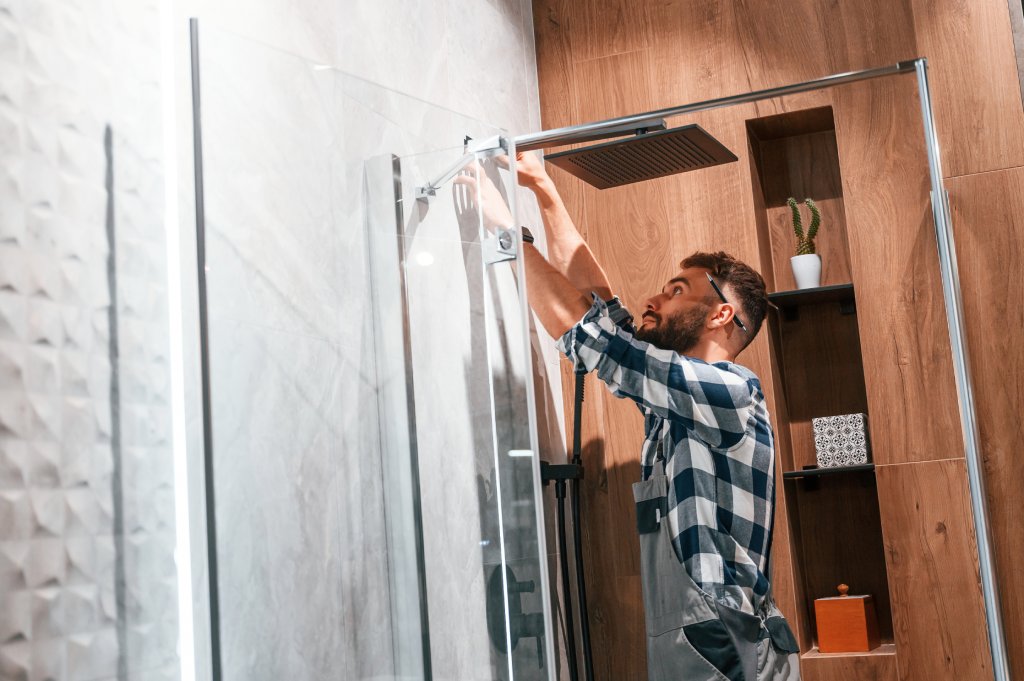
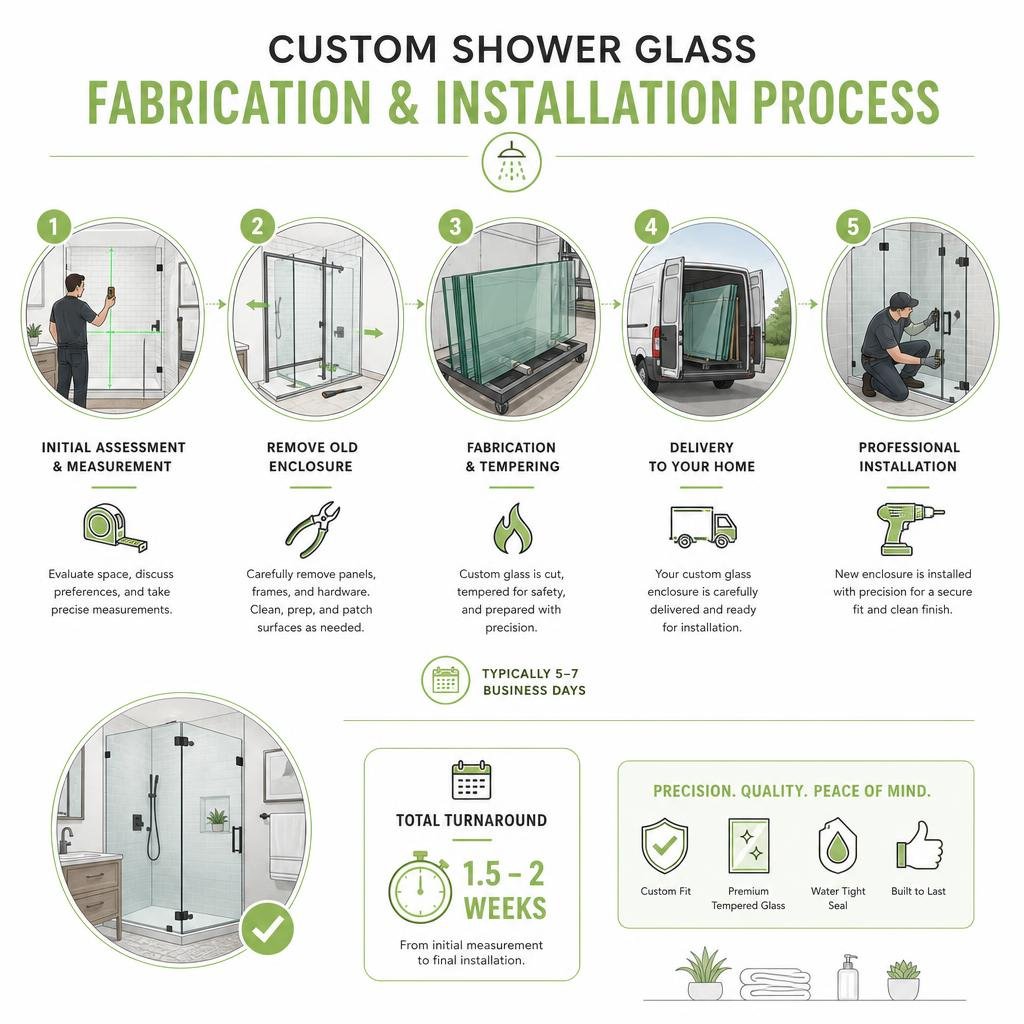
The journey typically begins with an initial field assessment. A professional will visit your home to evaluate your existing shower space, discuss your design preferences, and take preliminary measurements. This is followed by the removal of your old shower door, which includes carefully detaching the panels, frames, and any associated hardware. If you’re upgrading from a framed door, this stage involves cleaning, prepping, and patching existing screw holes or adhesive marks left behind on the tile or wall to preserve wall integrity.
Once the space is prepared and precise measurements are taken, your custom glass panels are fabricated. This process, including tempering the glass for safety, typically takes 5 to 7 business days. After fabrication, the new custom enclosure is delivered and installed. The physical on-site removal of the old door and installation of the new one generally takes 2 to 4 hours, though this can vary based on complexity. The full turnaround, from initial measurement to final installation, usually ranges from 1.5 to 2 weeks.
Precision Measurement for Custom Glass Shower Enclosures
Accurate measurement is the cornerstone of a successful custom glass shower door replacement. Unlike off-the-shelf units, custom enclosures are designed to fit your specific opening perfectly, often accounting for slight irregularities in your bathroom’s construction.
Professionals use specialized tools, such as laser levels, to determine the exact dimensions of your shower opening. They meticulously check the plumbness (vertical straightness) of your walls and the level of your shower curb or pan. This is crucial because even minor out-of-plumb variances can lead to gaps, leaks, or an improperly functioning door with heavy glass. Base custom glass cuts on finished field conditions rather than rough measurements. This ensures that the tempered glass, which cannot be recut once fabricated, fits flawlessly. The goal is to achieve a tight, secure fit that prevents water leakage and provides a clean, seamless appearance.
Protecting Existing Tile and Shower Pans
A common concern during shower door replacement is the potential for damage to existing tile or the shower pan. Professional installers take specific precautions to protect these surfaces.
When removing the old door, care is taken to prevent chipping or scratching tiles. If old screw holes need to be patched, a professional will use appropriate fillers and sealants that match your tile or grout as closely as possible. For areas where the new door’s hardware will be installed, masonry drill bits are used to create clean holes without cracking tiles.
Ensuring the integrity of your shower pan and its waterproofing membrane is also paramount. New silicone sealant is meticulously applied around the base of the enclosure and any wall-mounted hardware to create a watertight barrier. This attention to detail safeguards your bathroom against future water damage and ensures the longevity of your investment.
Professional Installation vs. DIY Considerations
The decision to install a shower door yourself or hire a professional is a critical one, heavily influenced by the complexity of the door type and your skill level. While some pre-fabricated, framed shower doors might be within the realm of an experienced DIYer, custom frameless glass enclosures almost always warrant professional installation.
Here’s why:
- Glass Weight and Handling: Frameless shower doors utilize heavy tempered glass, often weighing over 100 pounds for a single panel (e.g., the KOHLER Levity door weighs 111.4 lbs). Maneuvering these large, heavy, and fragile panels requires specialized equipment, such as heavy-duty suction cups, and often a team of two or more experienced installers. Mishandling can lead to costly damage or, more importantly, serious injury.
- Structural Safety: Proper installation is paramount for safety. Frameless doors rely on precisely drilled holes, robust hinges, and secure clamps to hold the heavy glass in place. An improperly installed door can sag, become unstable, or even detach, posing a significant hazard. Professionals ensure that all components are securely fastened to wall studs or reinforced blocking.
- Specialized Tools and Expertise: Achieving a perfect, watertight seal and ensuring the door operates smoothly requires specialized tools and expertise in working with glass. This includes precise measurement tools, masonry drill bits for tile, and knowledge of proper sealing techniques.
- Warranty Protection: Many manufacturers’ warranties on shower doors are contingent upon professional installation. Attempting a DIY installation might void your warranty, leaving you responsible for any defects or issues that arise.
- Building Logistics: In high-density urban residential environments, such as co-ops and condos, there are often building access requirements. This can include obtaining Certificates of Insurance (COI), scheduling elevator bookings, and adhering to specific work hour constraints. Professional installers are typically familiar with these logistics and can handle the necessary paperwork and coordination.
While a DIY approach might seem to save money upfront, the risks associated with improper installation, potential damage, and voided warranties often make professional installation the more cost-effective and safer choice in the long run.
Frequently Asked Questions about Shower Door Replacement
We often encounter common questions from homeowners considering a shower door replacement. Here are some of the most frequent inquiries, along with our expert insights.
How long does a custom shower door replacement take from start to finish?
The entire process for a custom shower door replacement typically spans 1.5 to 2 weeks. This timeline accounts for several stages:
- Initial Measurement and Consultation: This usually takes a few hours for the professional to assess your space and take precise measurements.
- Custom Fabrication and Tempering: Once measurements are finalized, the glass panels are custom-cut and tempered for safety. This process alone usually takes 5 to 7 business days.
- Delivery and On-Site Installation: After fabrication, the new door is delivered. The physical removal of your old door and the installation of the new custom enclosure generally takes 2 to 4 hours.
While the on-site work is relatively quick, the lead time for custom glass fabrication is the primary factor in the overall timeline.
Can I replace an old framed door with a frameless model without damaging my tile?
Yes, absolutely. Upgrading from a framed to a frameless shower door is a popular and achievable renovation without damaging your existing tile, provided it’s done by experienced professionals.
The process involves:
- Careful Frame Removal: The old framed door and its tracks are meticulously removed, taking care not to chip or scratch the surrounding tile.
- Tile Cleaning and Patching: Any adhesive residue or screw holes left behind by the old frame are cleaned, prepped, and patched. Professionals are skilled at matching grout or using appropriate fillers to make these areas nearly invisible.
- Waterproofing Preservation: Existing waterproofing behind the tile is carefully preserved or reinforced as needed.
- Professional Retrofitting: New frameless hardware is installed with precision, often requiring new, carefully drilled holes. The goal is to leave your existing tile pristine while giving your bathroom a modern, open aesthetic.
How do I properly maintain hydrophobic coatings on new glass shower doors?
Hydrophobic coatings, like those found on reputable brands such as KOHLER Levity doors, are designed to repel water and minimize hard water spots, making cleaning much easier. To ensure the longevity and effectiveness of these coatings, follow these maintenance best practices:
- Daily Squeegee Use: The most effective way to prevent water spots and maintain the coating is to use a shower squeegee on the glass after every shower. This removes most of the water before minerals can dry and adhere to the surface.
- Regular Cleaning with Mild Solutions: For weekly cleaning, a 50/50 mixture of white vinegar and water is highly effective and safe for most coated glass. Spray it on, let it sit for a few minutes, then wipe with a soft cloth or sponge.
- Avoid Abrasive Cleaners: Never use abrasive cleaners, scouring pads, or harsh chemical solvents (like some strong glue removers) on coated glass. These can strip or damage the hydrophobic layer, rendering it ineffective. Manufacturer customer support has even recommended natural oils (like vegetable oil or peanut butter) to remove stubborn adhesive residue without damaging factory coatings.
- Soap Scum Prevention: Using liquid soap instead of bar soap can reduce soap scum buildup, further easing maintenance.
By following these simple steps, you can significantly extend the life and performance of your shower door’s hydrophobic coating, keeping your glass looking clear and pristine for years to come.
Conclusion
Elevating your bathroom with a custom glass shower enclosure is an investment that pays dividends in both aesthetics and functionality. From recognizing the subtle signs that indicate a need for replacement to understanding the transformative power of frameless designs, we’ve explored how a new shower door can redefine your space.
The craftsmanship involved in custom glass fabrication, coupled with the precision of professional installation, ensures long-term durability and a seamless, modern aesthetic. By choosing the right configuration, glass thickness, and hardware, you can achieve a bathroom that not only looks luxurious but also enhances daily usability and cleanliness. In August 2026, the trend towards sleek, easy-to-maintain, and visually expansive shower solutions continues to grow, making a custom glass shower door replacement one of the most impactful upgrades you can make to your home. It’s an investment that significantly boosts your bathroom’s appeal and contributes lasting value to your property.
©2026 The Dedicated House. All rights reserved. No part of this blog post may be used or reproduced without the written consent of the copyright owner.
Click the links below for any posts you have missed:
 Home Electrical Safety Checklist in Whiteland, Indiana
 A Room-By-Room Guide to Choosing Window Coverings In 2026
 Ensuring Safety and Compliance: Commercial Facility Maintenance and Environmental Control
 How to Assess and Address Emergency Roof Damage in a Storm
 Understanding the Benefits of Quality Gardening Equipment
 How Different Types of Materials are Sourced for Construction
I’d love for you to join my email list! You’ll receive a notification straight to your inbox which will include links to my latest home project posts! Simply enter your address below.
Thanks for stopping by! Have a wonderful day/night depending on where you are in the world! Go with God and remember to be kind to one another!
Toodles,

Leave a Reply