Choosing window treatments is about more than finding a color that works with the walls. The right blinds, shades, shutters, or curtains can change how a room handles daylight, privacy, temperature, glare, and everyday routines. A thoughtful plan starts with the way each room is actually used.
For homeowners comparing centennial window coverings, the most useful approach is to identify the main challenge at every window before selecting a style. A room that needs darkness for sleep will call for a different solution than one that needs easy cleaning near a sink or better visibility during a workday.
Start with the Room’s Main Job
No single window covering is ideal everywhere. Before considering fabric, finishes, or patterns, decide what the space needs most. Is privacy the priority? Does afternoon sun create uncomfortable glare? Is the goal to darken the room, reduce drafts near the glass, or make cleaning easier?
Also consider how frequently the treatment will be adjusted, whether the window is hard to reach, and who uses the room. Children, pets, guests, and older adults may all affect the best control option. Nearby furniture, moisture, cooking residue, and direct sun are equally important practical details.
Living Room Window Coverings
Living rooms usually need a balance of daylight, privacy, and style. Light-filtering shades soften bright sun while keeping the room open. Solar shades can reduce glare and preserve much of the outdoor view, while adjustable blinds provide more precise control as sunlight moves across the room.
Layering is especially useful here. Pair a shade with curtains for a finished appearance and more flexibility in the evening. For example, a west-facing living room may benefit from solar or light-filtering shades during the afternoon, then curtains for nighttime privacy. Shutters are another strong choice when a structured, architectural look and adjustable light control are desired.
Bedroom Window Coverings
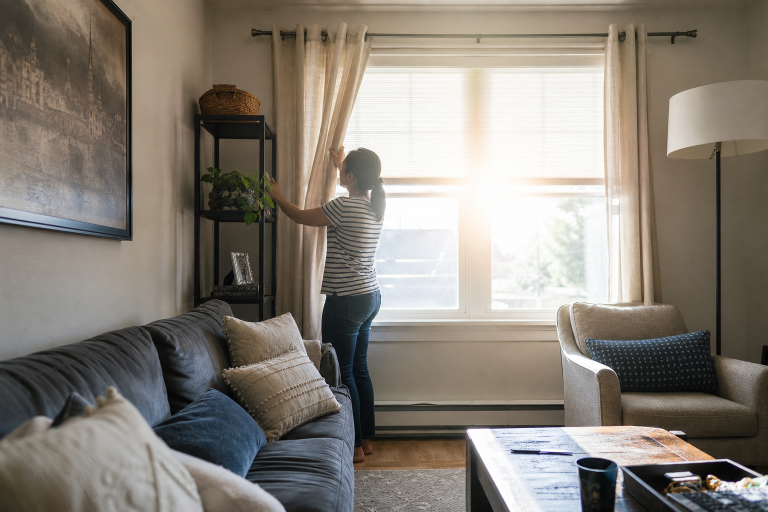
Bedrooms benefit from privacy, darkness, insulation, and quiet operation. Room-darkening and blackout shades can reduce early-morning light, while cellular shades can add an insulating layer at drafty windows. Top-down, bottom-up operation is useful when you want daylight from above without exposing the lower part of the room.
Remember that blackout fabric does not automatically create total darkness. Light can enter through gaps at the sides, top, or bottom, particularly with an inside mount. A well-fitted shade, an outside mount, or layered curtains can improve the result. Cordless and motorized controls also make nighttime adjustments simple and discreet.
Kitchen and Bathroom Options
Kitchen Considerations
Kitchens need materials that tolerate frequent cleaning. Faux wood, vinyl, aluminum, and wipeable roller shades are practical near cooking areas because they are less likely to hold grease, odors, or dust than heavily textured fabric. Keep controls clear of sinks, stoves, and busy food-prep zones.
Bathroom Considerations
Bathrooms require privacy and moisture resistance. Choose simple treatments that do not crowd a small room and can handle humidity. Faux wood, vinyl, and moisture-resistant shades are often easier to maintain than natural wood. Ensure the treatment still allows ventilation, especially in rooms where condensation is common.
Home Office Window Coverings
A home office should support screen visibility, comfort, and a professional video-call setting. Solar shades can reduce reflections while allowing some daylight and outdoor visibility. Adjustable blinds can redirect sunlight away from monitors, while layered treatments offer bright daytime conditions and stronger privacy after work.
Test the room at several times of day before committing. A window that feels comfortable at 9 a.m. may cause harsh glare by midafternoon. Motorized controls can be helpful for multiple windows or for quick adjustments without interrupting a meeting.
Large Windows and Sliding Doors
Wide glass openings and sliding doors need coverings that move smoothly and stay out of the walking path. Consider vertical blinds, sliding panels, wide roller shades, drapery panels, or a layered system. The best option depends on door traffic, handle placement, furniture layout, and whether the covering must fully clear the opening.
Check that the product can support the width and weight of the opening. For hard-to-reach or heavily used doors, motorized operation may make daily use easier while helping the treatment remain neatly aligned.
Light, Heat, and Energy Use
Window coverings can help manage glare and comfort near the glass, but they work alongside the window itself rather than replacing good window performance. The U.S. Department of Energy notes that glazing, frames, coatings, orientation, and air leakage all affect a window’s energy behavior. Review its guidance on window energy efficiency when comparing larger efficiency upgrades.
South- and west-facing windows often need more attention due to direct sunlight. Cellular shades, lined drapery, and exterior shading can help manage solar heat and drafts. Avoid expecting a single universal energy bill reduction, since results vary by climate, window condition, installation, and how consistently treatments are used.
Cord Safety and Smart Operation
Safety should be a core buying factor in homes where young children or pets live or visit. The Consumer Product Safety Commission advises that cordless coverings are the safest choice when young children are present, as exposed cords and loops can pose a strangulation hazard. Its window covering cord safety guidance also recommends moving cribs, beds, furniture, and toys away from window cords.
- Choose cordless or motorized operation when practical.
- Inspect older blinds for loose or looped cords.
- Install required tension devices and anchors correctly.
- Place climbable furniture away from windows and controls.
Measurements, Materials, and Maintenance
Accurate measurements prevent many ordering mistakes. Measure width at the top, middle, and bottom, then measure height on the left, center, and right. Record frame depth, trim, handles, locks, vents, and nearby walls before choosing an inside or outside mount.
Fabric offers softness and a range of light-control levels. Wood adds warmth but needs more care in damp rooms. Faux wood and vinyl are durable, wipeable choices for busy areas. Aluminum blinds are lightweight and adjustable, while woven materials add texture but often provide more filtered light.
A Simple Decision Guide
- Strong privacy: Consider room-darkening shades, shutters, lined curtains, or layered treatments.
- Reduced glare: Consider solar shades, adjustable blinds, or dual-layer systems.
- Better insulation: Consider cellular shades, lined drapery, and exterior shading.
- Easy cleaning: Consider faux wood, vinyl, aluminum, or washable fabrics.
- Child and pet safety: Consider cordless or motorized options.
- Large glass doors: Consider sliding panels, vertical systems, or wide roller shades.
Common Questions
Should Every Room Use The Same Window Covering?
No. Bedrooms may need darkness, kitchens need easy-clean materials, and offices need glare control. A coordinated look is possible without using the same product everywhere.
Are Curtains Or Shades Better For Privacy?
Both can work well. Privacy depends on fabric opacity, fit, lining, and whether the interior is brighter than outdoors. Layering often provides the most control.
Are Motorized Window Coverings Worth Considering?
They are especially useful for large, tall, hard-to-reach, or frequently adjusted windows. They also provide a cordless option and can simplify operation across several windows.
Final Thoughts
The best window coverings solve everyday problems first. Evaluate each room’s lighting, privacy, temperature, safety, maintenance, and access needs, then choose a treatment that supports how the space is used. That approach creates a home that feels more comfortable, functional, and intentional in 2026.
©2026 The Dedicated House. All rights reserved. No part of this blog post may be used or reproduced without the written consent of the copyright owner.
Click the links below for any posts you have missed:
 Ensuring Safety and Compliance: Commercial Facility Maintenance and Environmental Control
 How to Assess and Address Emergency Roof Damage in a Storm
 Understanding the Benefits of Quality Gardening Equipment
 How Different Types of Materials are Sourced for Construction
 Simple Upgrades that Boost Your Home Sale Value
 How Music Can Help Ease Anxiety for Young Students at Home
I’d love for you to join my email list! You’ll receive a notification straight to your inbox which will include links to my latest home project posts! Simply enter your address below.
Thanks for stopping by! Have a wonderful day/night depending on where you are in the world! Go with God and remember to be kind to one another!
Toodles,

Leave a Reply