Packing works best when every belonging receives the level of protection it actually needs. A few books, a framed mirror, and a sofa should not be packed with the same materials or in the same way. A thoughtful approach to professional moving and packing can also help households understand which supplies and services make sense for a particular move.
Before buying boxes, take stock of what you own and consider four questions: Is it heavy or light? Is it fragile, flexible, or rigid? Could moisture or temperature affect it? Would replacement be difficult or costly? Those answers create a more useful packing plan than buying a random assortment of cartons.
Also consider how each item will be handled at both ends of the move. Belongings that must travel up stairs, through narrow hallways, or across long driveways may need smaller boxes or more secure wrapping. Set aside items you will transport personally, such as passports, jewelry, family records, or irreplaceable photographs, so they are not accidentally loaded with general household goods.
Start with the Item, Not the Box
Sort belongings by room, then group them by handling needs. Books, records, canned goods, and tools are dense, so they belong in small, sturdy cartons. Bedding, pillows, lampshades, and towels take up more room without adding much weight, making them better candidates for large boxes.
This item-first method also reveals what needs specialty protection. A basic inventory can identify glassware, electronics, artwork, furniture, important papers, and sentimental belongings before packing becomes rushed.
Build a Basic Packing Supply Kit
A practical kit usually includes small, medium, and large moving boxes; clean packing paper; bubble wrap or foam cushioning; strong tape; markers; labels; scissors; a box cutter; stretch wrap; and furniture pads or clean blankets. Keep these supplies together in a portable packing station so tape, labels, and padding are not misplaced between rooms.
It can also help to keep a marker, a notepad, a measuring tape, and an extra tape dispenser within reach. Measuring unusually shaped items before purchasing cartons can prevent last-minute improvisation. A small trash bag or recycling bin near the packing station makes it easier to discard damaged tape backing, broken-down packaging, and materials that cannot be reused.
Use boxes that are clean, dry, and structurally sound. Reinforce the bottom seam with packing tape, especially when packing dense items. Label each carton with its destination room and a brief description of the contents, placing the label on more than one side for easier identification after boxes are stacked.
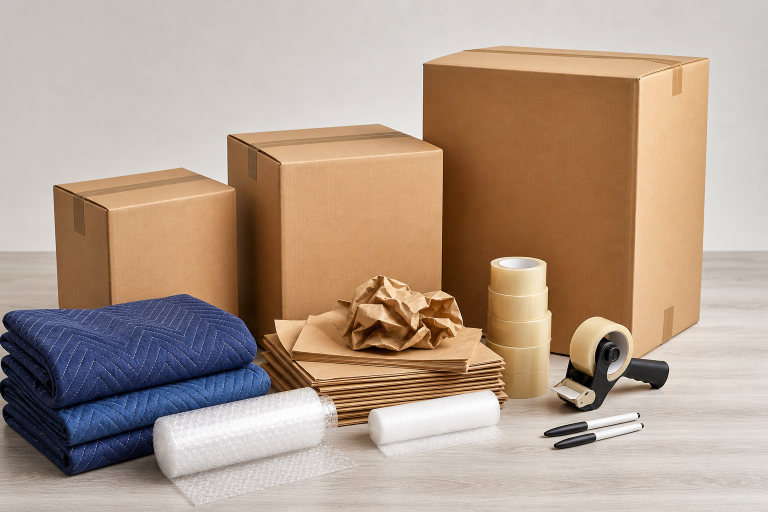
Choose Box Sizes by Weight and Shape
The largest box is not automatically the most useful box. It can become awkward to carry when filled with heavy items, and an oversized carton may leave too much room for belongings to shift.
- Small boxes: Books, hand tools, pantry goods, records, and compact kitchen items.
- Medium boxes: Shoes, toys, folded clothing, office supplies, and small appliances.
- Large boxes: Pillows, blankets, towels, lampshades, and other lightweight items.
- Specialty boxes: Mirrors, artwork, televisions, hanging clothes, and fragile dishware.
Fill every box firmly enough to prevent movement, but stop before it becomes difficult to lift safely. If a carton feels too heavy, divide its contents into two smaller boxes.
Balance matters as much as total weight. Place denser objects near the bottom of a box and use lighter items to fill the upper area when appropriate. Avoid creating cartons that are top-heavy or unevenly loaded, since they are more likely to tip, strain the bottom seam, or be difficult to stack securely in a vehicle.
Use Layers for Fragile Belongings
Fragile packing is a layered process. First, wrap the surface to reduce scratches. Next, add cushioning that can soften bumps. Separate individual items so they do not strike one another, then fill empty spaces with paper or other suitable void fill. Finally, seal the box and clearly mark it.
For dishes and glassware, wrap pieces individually and use firm cushioning at the bottom, sides, and top of the carton. Plates are commonly packed on edge rather than flat in a tall stack. Glassware should remain upright when practical, with enough separation to prevent contact.
Check each fragile box before sealing it by gently moving it from side to side. If contents rattle, shift, or touch the carton walls, add more cushioning or void fill. Do not rely on a “Fragile” label alone; the internal packing should be strong enough to protect the contents during ordinary lifting, carrying, loading, and unloading.
Electronics, Artwork, and Mirrors
Original electronics packaging can be useful because it was designed around the item’s shape. When it is unavailable, pack devices in a snug box with clean cushioning, secure loose cables separately, and follow manufacturer guidance for batteries. Artwork and mirrors need corner protection, a flat carton sized for the piece, and clear handling labels. Never force a large flat item into an undersized box.
Before packing electronics, take a quick photo of cable connections if reassembly may be confusing. Place cords, remotes, adapters, screws, and small accessories in labeled bags, then keep them with the related device. For framed artwork, avoid placing tape directly on finished surfaces, glass, or frames, where adhesive could leave residue or cause damage.
Protect Furniture and Clothing
Furniture pads, clean blankets, stretch wrap, and edge guards can help reduce surface scratches, dents, and dirt during handling. Wrap drawers or removable parts so they do not open or separate in transit, but avoid trapping moisture against wood, upholstery, or fabric.
Folded clothing can go in standard cartons, while wardrobe boxes can keep hanging garments organized. Plastic garment covers or clean bags can provide short-term dust protection, particularly when items will pass through garages, loading areas, or storage spaces.
When disassembling furniture, place hardware in clearly labeled bags and, when practical, tape the bag to a protected, non-visible part of the item. Keep assembly instructions, specialty tools, and spare parts together so beds, shelves, and desks can be rebuilt without searching through multiple cartons.
Plan for Moisture, Heat, and Transit Time
A short local move and a long-distance or storage move present different risks. Rain, wet sidewalks, unconditioned garages, and extended time in a truck can affect cartons and sensitive belongings. Keep cardboard off wet floors, do not pack damp textiles, and use moisture-resistant containers or covers for documents and sensitive electronics when conditions call for them.
Leave room for adequate airflow around belongings placed in long-term storage, and avoid storing items that are still damp. Before loading, check that boxes are closed securely and that fragile cartons are easy to identify.
Temperature-sensitive belongings deserve extra attention. Candles, cosmetics, certain musical instruments, batteries, and delicate media may be affected by prolonged heat or cold. When possible, keep these items out of direct sunlight and avoid leaving them in a parked vehicle for longer than necessary.
Reduce Waste Without Reducing Protection
Reusable bins, durable cartons, clean towels, blankets, and paper-based cushioning can all reduce the amount of single-use material needed for a move. Towels and blankets work well around some furniture and soft goods, but delicate glass, artwork, and electronics may still need dividers or purpose-made cushioning.
After unpacking, flatten clean cardboard and confirm what your local recycling program accepts, since local recycling rules can differ for cardboard, plastic film, and other materials. Reuse boxes when possible, or offer sturdy cartons to another household preparing for a move.
Decide Between DIY Packing and Professional Help
DIY packing may suit smaller moves, flexible schedules, and households that can sort and pack gradually. Professional help may be worthwhile for large homes, tight deadlines, fragile collections, office relocations, or situations where lifting and packing are difficult. Ask what a service includes, including materials, labeling, specialty-item handling, unpacking, and removal of used supplies.
Create a Simple Packing Schedule
- Three to four weeks before moving: Sort belongings, donate unwanted items, and gather supplies.
- Two weeks before moving: Pack storage areas, books, decor, and seasonal items.
- One week before moving: Pack most rooms and prepare fragile belongings.
- One to two days before moving: Finish daily-use items and prepare an essentials bag.
- Moving day: Keep documents, medications, valuables, chargers, and basic clothing with you.
Use the schedule as a guide rather than a rigid rule. Start with items that are rarely used, and leave enough time to clean, sort, and label as you go. A clearly marked “open first” box for toiletries, simple tools, paper towels, snacks, and basic cleaning supplies can make the first evening in a new home more manageable.
Protect the Move with Clear Records
Photograph valuable items before packing and keep a basic inventory of box numbers and contents. At delivery, note visible damage before paperwork is finalized. For interstate moves, review household goods guidance for estimates, valuation options, and moving paperwork before moving day.
Frequently Asked Questions
What is the best packing material for fragile items?
No single material fits every item. A dependable setup combines surface wrapping, cushioning, separation, and void fill.
Should heavy items go in large boxes?
Usually, no. Heavy belongings are generally easier to manage in smaller, stronger cartons. Large boxes are better for light items that occupy more space.
When is professional packing worth it?
It can be a practical choice when time, physical ability, valuable belongings, or packing complexity create a challenge. Compare the included services, not only the price.
Conclusion
Safer packing comes from matching each item with the right combination of structure, cushioning, and protection from movement. With a clear schedule, accurate labels, and materials chosen for the belongings at hand, moving day can be more organized, less wasteful, and easier to unpack.
©2026 The Dedicated House. All rights reserved. No part of this blog post may be used or reproduced without the written consent of the copyright owner.
Click the links below for any posts you have missed:
 2026 Home Design Trends: What to Expect and How to Adapt
 The Details that Make a Room Feel Finished: Quiet Doors, Smooth Windows, Straight Blinds
 Building a Steadier Financial Life on Self-Employment Income

 Healthy from the Ground Up: How to Take Care of Your Feet
 How to Maintain Your Drains for Long-Term Efficiency
I’d love for you to join my email list! You’ll receive a notification straight to your inbox which will include links to my latest home project posts! Simply enter your address below.
Thanks for stopping by! Have a wonderful day/night depending on where you are in the world! Go with God and remember to be kind to one another!
Toodles,

Leave a Reply