In Greenacres and across Palm Beach County, losing a tooth may feel like a small issue at first, especially if the gap is toward the back of the mouth. Yet teeth function as a connected system. When one is missing, the surrounding teeth, gums, jawbone, and chewing muscles can gradually adapt to the open space.
For people comparing replacement choices, dental implants Greenacres, FL information from Ferber Dental Group describes implant-based options for replacing a single tooth, multiple teeth, or a full arch. The Greenacres practice serves Palm Beach County and focuses on implant dentistry and restorative treatment planning, making it a relevant local reference when considering how a missing tooth may affect function over time.
Why a Small Gap May Become a Larger Concern
Every tooth shares chewing forces with the teeth around and opposite it. A missing molar may not show in a smile, but it can still change how someone handles foods such as crisp vegetables, steak, or crusty bread. A person who begins chewing mostly on the other side may not notice the habit immediately, but uneven use can make the remaining teeth and jaw muscles work differently.
Not every gap creates the same problems or changes at the same pace. Still, the American Dental Association notes that a missing tooth can affect eating and speech, while remaining teeth may shift and bone loss can occur near the open space. This is why a missing tooth can affect how a person chews even when the space does not cause pain.
Early Changes After Tooth Loss
Changes a Person May Notice
- Food catching in or around the empty space.
- Difficulty chewing on one side of the mouth.
- A new pressure point when biting down.
- Minor changes in pronunciation when a front tooth is missing.
- Feeling self-conscious in photos, meetings, or close conversations.
Changes that May Happen Quietly
Some effects are not obvious. Neighboring teeth can lean toward an open space, and the tooth above or below the gap may move farther into it. As positions change, new food traps can form, and some areas may become harder to brush or floss. Uneven contact between teeth can also contribute to wear patterns that a dentist may identify during an exam.
How Tooth Loss Affects Jawbone Health
Natural tooth roots transfer normal chewing forces to the jawbone. Once a root is gone, the bone at that location no longer receives the same stimulation and may gradually lose volume. The amount and pattern of change vary by person, the location of the missing tooth, gum health, and how long the site has been empty.
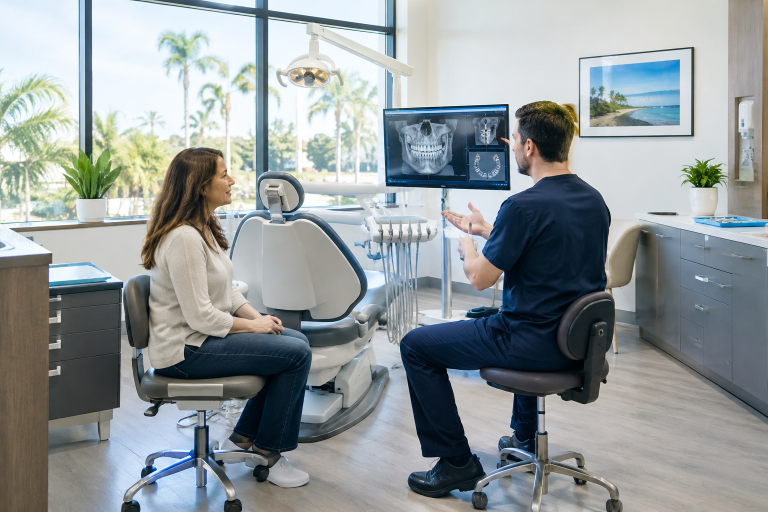
This matters because adequate bone and healthy gums are important parts of implant planning. The National Institute of Dental and Craniofacial Research explains that tooth loss remains an important indicator of oral health, even though rates of partial and total tooth loss have declined over time. If bone volume is limited, a dentist may discuss grafting or other site-preparation procedures, but imaging and an in-person evaluation are needed to assess an individual site.
Shifting Teeth and Bite Changes
How a Bite Can Change
- A tooth is lost or removed from the dental arch.
- Teeth beside the gap may no longer have the same contact and support.
- Nearby teeth may tip or drift toward the empty space.
- The opposing tooth may extend farther into the gap.
- Chewing pressure can become less evenly distributed.
Bite changes do not automatically cause jaw joint problems, and they should not be assumed to be the source of every symptom. However, some people notice muscle fatigue, discomfort with certain foods, or a sense that their teeth no longer meet in the same way.
Effects on Eating, Speech, and Confidence
The daily impact of tooth loss is personal. Someone missing a back tooth may avoid harder foods, while someone missing a front tooth may be more concerned about speech or appearance. In a community where social lunches, family gatherings, and outdoor events are part of everyday life, these small adjustments can become noticeable. Replacing a missing tooth may support function and confidence, but no treatment can promise the same result for every person.
Comparing Tooth Replacement Options
Dental Bridges
A bridge fills a gap with a replacement tooth supported by neighboring teeth or, in some cases, implants. A traditional bridge may offer a fixed option with a shorter treatment path for some patients. The health, strength, and existing restorations of adjacent teeth influence whether it is a sensible choice.
Partial or Full Dentures
Removable partial dentures can replace several missing teeth, while full dentures replace an entire upper or lower arch. They require regular cleaning and may need adjustment as oral tissues and jawbone change. Implant-supported dentures are another option that can provide retention through implants.
Dental Implants
An implant generally includes a post placed in the jawbone, a connecting abutment, and a crown, bridge, or denture. Treatment commonly involves evaluation, placement, healing, and restoration. Gum health, available bone, medical conditions, tobacco use, and healing ability all affect candidacy. Implants can be useful for many patients, but they are not automatically the right choice for everyone.
What to Ask During a Consultation
- What likely caused the tooth loss?
- Are my gums and remaining teeth healthy?
- Has the jawbone changed at the missing-tooth site?
- Would a bridge, denture, implant, or implant-supported restoration be reasonable?
- Could I need gum treatment or bone grafting first?
- What timeline and ongoing care does each option involve?
- What costs may be covered by insurance, and would a second opinion help?
Common Questions About Missing Teeth
Is it too late to replace a tooth lost years ago?
Not necessarily. Bone levels, gum health, tooth position, medical history, and the condition of nearby teeth help determine what options remain.
Does every missing tooth need an implant?
No. An implant is one option among several. The best approach depends on the specific location, oral health, goals, preferences, treatment timeline, and budget.
What happens if a person does nothing?
A gap may seem stable for a period, but tooth movement, changes in chewing habits, cleaning challenges, and bone changes can occur. A thoughtful evaluation is more useful than fear-based decisions.
The Next Step After Tooth Loss
A missing tooth is not always an emergency, but it deserves attention. Early planning may preserve more choices, and people who have waited years may still have workable treatment options. This article is educational only and does not replace an examination, diagnosis, or personalized advice from a qualified dental professional.
©2026 The Dedicated House. All rights reserved. No part of this blog post may be used or reproduced without the written consent of the copyright owner.
Click the links below for any posts you have missed:
 Before the Crew Arrives: Planning Durable Outdoor Construction Projects in Hagerstown, MD
 How to Compare a Cash Home Offer with a Traditional Sale
 How to Book End of Lease Cleaning in Melbourne Without Last-Minute Stress
 Transforming Spaces with Landscape Lighting Design
 Roof Replacement Planning: What Homeowners Should Know Before Starting
 How to Sell Your House As Is on a Timeline that Works for You
I’d love for you to join my email list! You’ll receive a notification straight to your inbox which will include links to my latest home project posts! Simply enter your address below.
Thanks for stopping by! Have a wonderful day/night depending on where you are in the world! Go with God and remember to be kind to one another!
Toodles,

Leave a Reply