Starting a new construction project, whether it’s a dream home or a commercial building, begins long before the first brick is laid. It all starts with careful site development and excavation.

This crucial initial phase sets the foundation for everything that follows. It ensures safety, stability, and compliance. Without proper groundwork, even the most ambitious plans can crumble.
Understanding the fundamentals of robust excavation and site development is key to any successful build. In this guide, we’ll explore the essential stages, from initial assessments to the heavy machinery involved. We’ll also delve into important considerations like budgeting and risk management. This will help you understand the complex world beneath your construction project.
Before any structure can rise, the ground must be prepared. This involves several critical stages, each contributing to the overall success and longevity of the project. When it comes to something as vital as your home’s sewer line, these stages become even more pronounced, especially if a replacement is on the horizon.
One of the first steps in any site development project, including those necessitated by a failing sewer line, is identifying the problem. What are the main signs that your sewer line needs to be replaced? Homeowners should be vigilant for several indicators. Persistent and multiple clogged drains throughout your home, sewage backing up into sinks, toilets, or bathtubs, and unusual gurgling noises coming from your plumbing fixtures are common red flags. Outdoors, watch for foul odors in your yard, unusually lush or wet spots on the lawn, or even indentations or sinkholes where the sewer line runs. A sudden, unexplained increase in your water bill could also signal a leak in your sewer line, prompting the need for professional assessment.
Once signs of a problem emerge, what is involved in a sewer line replacement? It’s a comprehensive process that typically begins with a professional sewer camera inspection. This allows technicians to pinpoint the exact location and nature of the damage without extensive digging. Following diagnosis, the method of replacement is determined, which can range from traditional trenching to less invasive trenchless techniques. The actual replacement involves excavating the old pipe (if traditional), installing the new pipe, connecting it to your home’s plumbing and the municipal sewer system, and finally, restoring the disturbed area.
Delaying sewer line replacement carries significant risks. Beyond the immediate inconvenience of plumbing backups, a compromised sewer line can lead to structural damage to your home’s foundation, contaminate your property with sewage, and create serious health hazards. The longer you wait, the more extensive and costly the damage can become, potentially turning a contained issue into a widespread environmental and structural nightmare.
Key Phases in Site Development and Excavation Projects
Every site development project, regardless of scale, follows a structured approach. For sewer line replacement, these phases are tailored to address the specific challenges of underground infrastructure.
The initial phase often involves obtaining necessary permits and conducting preliminary surveys. This may include environmental testing to assess soil conditions or identifying the presence of hazardous materials. For sewer line work, understanding the local regulations and obtaining appropriate permits is crucial, as sanitary and biohazard considerations are paramount.
Next comes the physical preparation of the site. This often starts with topsoil stripping, where the uppermost layer of soil is carefully removed and set aside. This is particularly relevant for traditional sewer line replacement, where a trench must be dug. Following this, rough grading may occur to establish the approximate contours of the land for proper drainage, especially important for ensuring the new sewer line has the correct slope.
For a deeper dive into the intricacies of preparing a site for construction, including detailed information on land clearing, grading, and foundation work, you can explore resources on excavation and site development. These comprehensive guides provide valuable insights into the various stages involved in getting a plot ready for any building project.
Finally, structural trenching is performed to create the precise channels for the new sewer pipes. This phase requires meticulous planning to ensure correct depth and alignment. Throughout all these phases, site drainage and erosion control measures are critical to manage water flow and prevent soil displacement, safeguarding the integrity of the work area.
Heavy Machinery and Site Development and Excavation Techniques
The success of any excavation project, especially one involving the delicate task of sewer line replacement, relies heavily on the right equipment and techniques. The choice of machinery and method significantly impacts efficiency, cost, and the extent of property disruption.
For traditional sewer line replacement, which involves digging an open trench, heavy machinery like hydraulic excavators and backhoes are indispensable. These powerful machines are used to dig the trench, remove debris, and backfill the soil once the new pipe is in place. The size and type of excavator depend on the depth, length, and accessibility of the sewer line. In some cases, specialized equipment for trench shoring may be necessary to prevent trench collapse, ensuring worker safety, particularly in unstable soil conditions or deep excavations.

However, traditional methods are highly disruptive, requiring extensive digging across your yard, driveway, or even landscaping. This is where trenchless replacement methods offer a compelling alternative. These techniques minimize excavation, often requiring only small access points.
There are several primary trenchless methods:
- Pipe Bursting: This method involves pulling a new pipe through the old one, simultaneously fracturing the old pipe outward. It requires minimal excavation at the entry and exit points.
- Cured-in-Place Pipe (CIPP) Lining: A resin-saturated felt tube is inserted into the existing damaged pipe and then inflated and cured, creating a new pipe within the old one. This method is ideal for pipes that are still structurally sound but have cracks or leaks.
- Spin-Casting: A centrifugal application of a resin or cementitious material to the interior of the pipe, creating a new, seamless lining.
While trenchless methods may not always reduce the per-foot cost of the pipe replacement itself, they can lead to substantial savings on yard restoration and landscaping expenses. This is a unique insight; often, the cost savings come from avoiding the significant effort and expense of repairing driveways, patios, or extensive landscaping that traditional trenching would destroy.
When considering which approach is best, it’s helpful to compare the two main options:
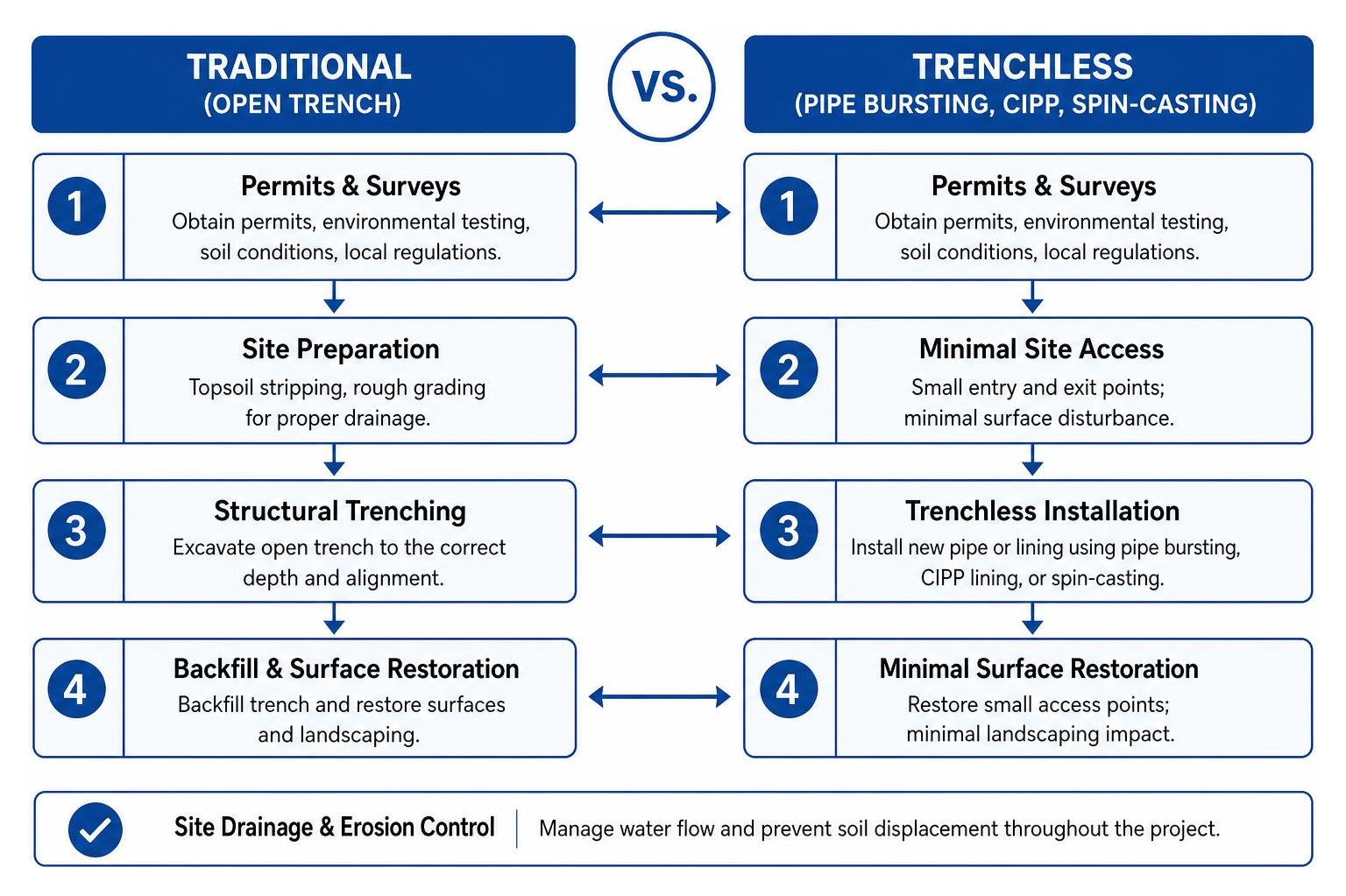
Pros and Cons of Trenchless vs. Traditional Sewer Line Replacement:
Feature Traditional (Open Trench) Trenchless (Pipe Bursting, CIPP, Spin-Casting) Pros – Often simpler for complex pipe layouts – Minimal landscape disruption – Can address severely collapsed pipes – Faster completion times – Direct visual inspection of new pipe installation – Can be more cost-effective overall due to reduced restoration – Environmentally friendlier due to less digging Cons – Significant disruption to yard, driveway, landscaping – May not be suitable for all pipe conditions (e.g., fully collapsed) – Longer project duration – Can have a higher initial per-foot cost for the pipe work itself – Higher restoration costs (landscaping, concrete, etc.) – Limited visibility during installation – Potential for damage to other underground utilities The choice between traditional and trenchless methods is a key factor influencing the total cost and overall impact on your property. We always recommend discussing both options thoroughly with your contractor to determine the most suitable and cost-effective solution for your specific situation.
Infrastructure Integration, Budgeting, and Risk Management
Beyond the immediate excavation, a critical aspect of site development, particularly for sewer line replacement, is the seamless integration of new infrastructure and careful financial planning. This stage addresses how the new sewer line connects to existing systems and how to manage the associated expenses and potential risks.
When a sewer line needs replacement, homeowners often face the decision of whether to repair a section or undertake a full replacement. How much does it cost to repair versus fully replace a sewer line? While a repair might seem less expensive initially, it’s crucial to consider the age and overall condition of the pipe. For older pipes, especially those made from materials like Orangeburg (wood fiber sealed with coal tar, phased out by the 1970s), a repair might only be a temporary fix, with other sections likely to fail soon. In such cases, full replacement, though a larger upfront investment, can be more cost-effective in the long run by preventing future issues and repeated repair expenses. A professional camera inspection is vital here, as it provides a clear picture of the pipe’s overall health, guiding the decision toward repair or full replacement.
Underground Utilities and Sewer Infrastructure Installation
The installation of new sewer infrastructure is a specialized task that requires precision and adherence to strict safety and regulatory standards. It involves not just laying pipe, but ensuring proper connections, materials, and long-term functionality.
The choice of pipe material significantly impacts the durability and longevity of your new sewer line, as well as its overall cost. How does the cost vary by pipe material (e.g., PVC, cast iron, copper)? Modern sewer lines are commonly made from PVC (polyvinyl chloride) or ABS (acrylonitrile butadiene styrene) due to their durability, corrosion resistance, and relative affordability. PVC, in particular, can last a century or more under ideal conditions. Older homes might have cast iron, clay, or even copper sewer lines. While cast iron is known for its strength, it can corrode over time. Copper, though highly durable and long-lasting, is a much more expensive material for sewer applications. The material selected will influence both the material cost and potentially the labor cost, as some materials are more challenging to install.
Traditional excavated replacement involves digging an open trench, removing the old pipe, and laying the new one. This method is straightforward but highly disruptive to the property. Trenchless methods, such as pipe bursting or CIPP lining, are designed to minimize excavation. Pipe bursting involves pulling a new pipe through the old one, while CIPP lining creates a new pipe within the existing one. While trenchless methods often have a comparable or sometimes higher per-foot cost for the pipe work itself, they can lead to substantial savings by avoiding extensive yard, sidewalk, or roadway restoration.
Are there additional costs for roadway, sidewalk, or yard restoration? Absolutely. If your sewer line runs under a driveway, patio, or public sidewalk/roadway, the cost of demolishing and then restoring these surfaces can add a significant amount to the overall project. For example, repairing an asphalt driveway or resodding a lawn after trenching can represent a considerable expense. This is where trenchless methods often shine, as they can bypass much of this ancillary restoration work.
Labor and permit costs are also substantial components of the total expense. Labor typically accounts for more than half of the total project cost, reflecting the specialized skills, equipment operation, and physical effort involved. Permit fees are almost universally required for sewer line work due to public health and safety regulations. These fees ensure the work adheres to local codes and is inspected properly.
Finally, proper backflow prevention and the installation of municipal cleanouts are crucial for the long-term health and accessibility of your sewer system. These components protect your home from sewage backups and allow for easier maintenance and inspection.
Project Cost Factors and Site Assessment Estimates
Understanding the various factors that influence the total cost of sewer line replacement is essential for effective budgeting. While we cannot provide specific pricing information, we can detail the drivers that make these projects a significant investment.
The total cost of sewer line replacement is influenced by a multitude of factors:
- Length of the Pipe: Naturally, a longer sewer line requires more material and labor, increasing the overall expense.
- Pipe Material: As discussed, the choice of material (e.g., PVC, ABS, cast iron, copper) has a direct impact on material costs and can affect labor.
- Replacement Method: Traditional trenching versus trenchless methods (pipe bursting, CIPP lining) dramatically alters the scope of work and associated restoration costs. Trenchless often saves on post-project property repair.
- Accessibility: If the sewer line is buried under structures, dense landscaping, a driveway, or a public roadway, accessing it becomes more complex and labor-intensive, driving up costs.
- Depth of Burial: Sewer lines are typically buried deeper in colder climates to prevent freezing, requiring more extensive excavation. Deeper lines mean more earthmoving.
- Soil Conditions: Rocky soil, clay, or the presence of bedrock can significantly increase excavation time and require specialized equipment, adding to labor and equipment costs.
- Geographic Location: Regional differences in labor rates, material costs, and local regulations can cause wide variations in project expenses.
- Permit and Inspection Fees: These are mandatory expenses to ensure compliance with local codes.
- Restoration Costs: The expense of repairing landscaping, driveways, sidewalks, or roadways after the work is complete can be substantial, particularly with traditional methods.
- Obstacles: Removing large trees, boulders, or other underground obstructions further complicates the project and adds to the cost.
How can homeowners save money on sewer line replacement?
- Get Multiple Estimates: Always obtain detailed, written estimates from at least three qualified contractors. This allows for comparison and negotiation.
- Consider Trenchless Methods: While the per-foot cost for the pipe work might be similar or slightly higher, the savings on restoration can make trenchless methods more economical overall.
- Prepare the Site (Carefully): If your contractor allows, you might be able to reduce labor costs by clearing plants, small trees, or other surface obstructions from the work area. However, always consult with professionals before attempting any DIY excavation.
- Annual Inspections: Regular sewer line inspections can catch minor issues before they escalate into costly full replacements.
- Insurance Endorsements: Check with your homeowners insurance provider. While standard policies typically don’t cover wear-and-tear sewer line issues, some offer endorsements for sudden, accidental damage or specific sewer line coverage that could help offset costs.
Is sewer line replacement covered by homeowners insurance? Standard homeowners insurance policies generally do not cover sewer line replacement caused by normal wear and tear, aging, or neglect. However, some policies or specific endorsements might cover damage caused by sudden, accidental events, such as a tree root intrusion that suddenly fractures a pipe, or damage from a covered peril like a vehicle driving over and crushing the line. It is crucial to review your policy and speak with your insurer to understand your coverage options.
How long does a typical sewer line last before needing replacement? The lifespan of a sewer line varies significantly based on its material and environmental factors. Modern PVC lines can last 100 years or longer. Cast iron and clay pipes typically last 50-100 years. Older materials like Orangeburg pipes, however, had a much shorter lifespan and often require replacement sooner. Factors like aggressive tree root intrusion, ground shifting, and corrosive soil can shorten any pipe’s lifespan.
When is the city responsible for the sewer line versus the homeowner? Generally, homeowners are responsible for the sewer line from their house to the property line or to the point where it connects to the municipal main sewer line. The city or municipality is typically responsible for the main sewer line in the street. However, this can vary by local jurisdiction, so it’s always best to check with your local public works department or utility provider to understand the exact demarcation of responsibility in your area.
Should you attempt a DIY sewer line replacement or hire a professional? Sewer line replacement is a complex, hazardous, and labor-intensive project that requires specialized equipment, expertise, and adherence to strict safety and plumbing codes. Attempting a DIY replacement can lead to serious health risks from exposure to sewage, property damage, costly mistakes, and potential fines for non-compliance with local regulations. We strongly advise against DIY sewer line replacement. This is a job best left to licensed and experienced professionals.
What questions should you ask when hiring a sewer line replacement contractor?
- Are you licensed, bonded, and insured for this type of work?
- How long have you been in business, and do you have experience with my specific type of sewer line problem and pipe material?
- Can you provide references from previous sewer line replacement projects?
- Will you conduct a camera inspection to accurately diagnose the problem?
- What replacement methods (traditional vs. trenchless) do you recommend, and why?
- What is included in your estimate, and are there any potential additional costs?
- Who is responsible for obtaining permits and scheduling inspections?
- What is your timeline for completing the project?
- What kind of warranty do you offer on your work and the materials used?
- How will you protect my property during the work, and what is your plan for site restoration (yard, driveway, etc.)?
By understanding these factors and asking the right questions, homeowners can make informed decisions and ensure a successful sewer line replacement project.
©2026 The Dedicated House. All rights reserved. No part of this blog post may be used or reproduced without the written consent of the copyright owner.
Click the links below for any posts you have missed:
 Wholesale Beads: What to Look for When Buying in Bulk
 What Homeowners Need to Know Before Installing an EV Charger at Home
 What Is a Medicaid Waiver Budget, and How Much Control Do You Really Have?
 Late Summer Patio – New Patio Furniture
 How to Choose Cable Protection for Industrial and Home Projects
 Elevating Your Bathroom with Custom Glass Shower Enclosures
I’d love for you to join my email list! You’ll receive a notification straight to your inbox which will include links to my latest home project posts! Simply enter your address below.
Thanks for stopping by! Have a wonderful day/night depending on where you are in the world! Go with God and remember to be kind to one another!
Toodles,

Leave a Reply