When it comes to maintaining a comfortable and healthy home environment, especially in the demanding Texas climate, your HVAC system is paramount. However, the complexity of modern heating and cooling systems means that choosing just any contractor for installation, maintenance, or repair can be a costly mistake. This is where the distinct advantage of working with a certified HVAC dealer becomes clear. These dealers aren’t just contractors; they are specialists who have met rigorous standards set by leading manufacturers, ensuring a level of expertise and service that is unmatched.
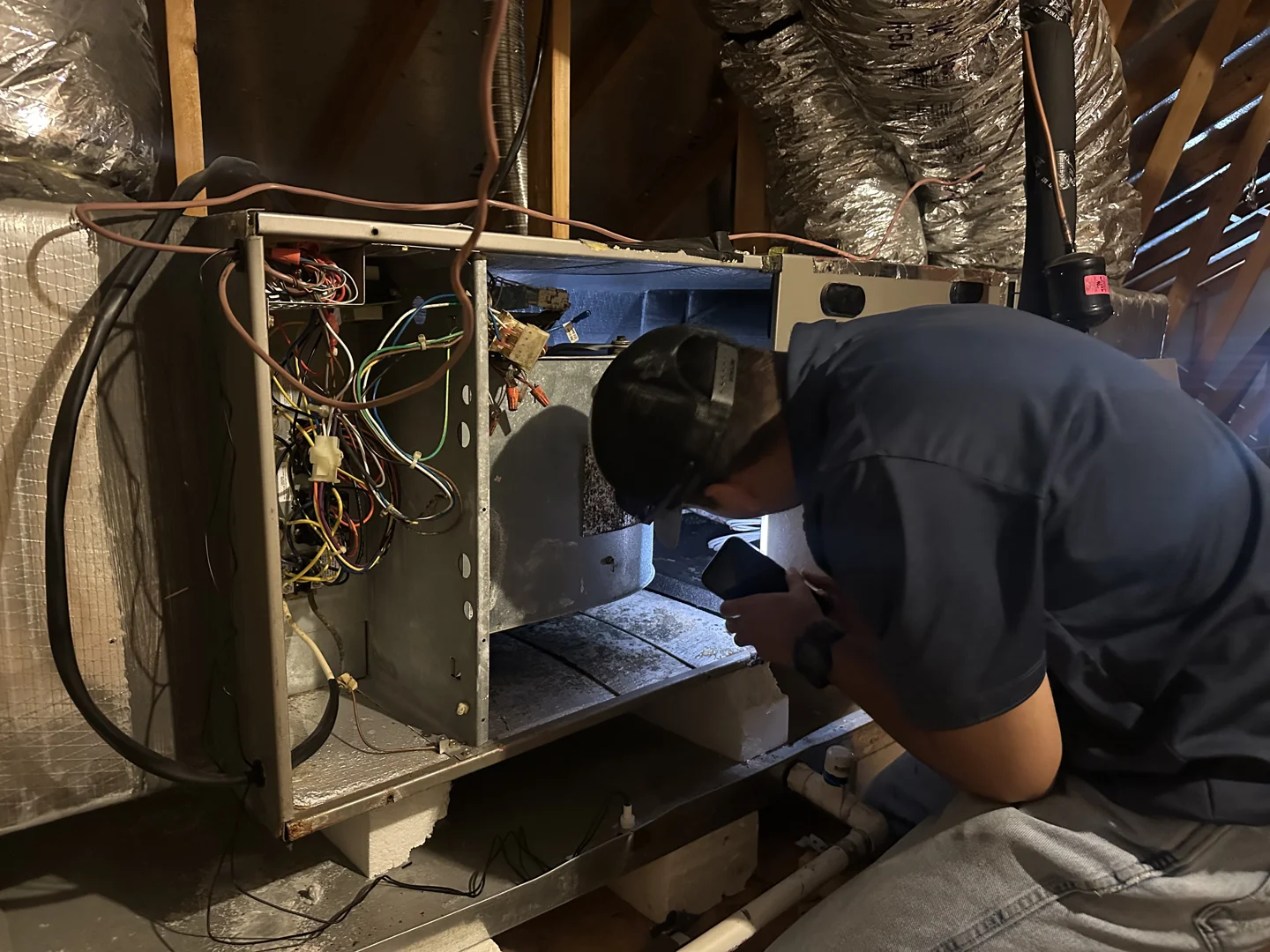
Factory authorization signifies that a dealer has undergone extensive training directly from the equipment manufacturer. This means their technicians possess deep technical expertise in specific brands and models, understanding the intricate design and operational nuances that generic contractors might miss. This specialized knowledge translates directly into superior system performance, as they are equipped to install, maintain, and troubleshoot your system with precision. Furthermore, working with an authorized dealer often ensures that your system’s warranty remains intact. Many manufacturers specify that installation and service must be performed by certified professionals to keep the warranty valid, protecting your significant investment.
The Risks of Using an Unlicensed Contractor
The temptation to save money by hiring an unlicensed or uncertified contractor can be strong, but the potential long-term costs far outweigh any initial savings. One of the most immediate risks is the voiding of your HVAC system’s warranty. Manufacturers are strict about who can work on their equipment, and unauthorized service can nullify your coverage, leaving you responsible for expensive repairs down the line.
Beyond warranties, unlicensed contractors often lack the proper training to perform accurate load calculations and system sizing. An improperly sized system, whether too large or too small, leads to inefficiency, increased energy bills, and premature system failure. In Texas, where extreme temperatures are common, an undersized AC unit will struggle to cool your home, leading to discomfort and constant running, while an oversized unit will “short cycle,” failing to adequately dehumidify the air and causing unnecessary wear and tear.
More critically, improper installations can pose significant safety hazards. This includes issues like faulty electrical wiring, incorrect refrigerant charging, or improper venting, which can lead to carbon monoxide leaks, fires, or refrigerant leaks. Poor airflow, a common consequence of amateur installation, not only reduces comfort but also strains the system, leading to higher energy consumption and a shorter lifespan for your unit. The long-term consequences of such risks can far exceed the initial savings, turning a seemingly good deal into a homeowner’s nightmare.
How a Certified HVAC Dealer Protects Your Investment
A certified HVAC dealer offers a robust shield for your home comfort investment. Their technicians undergo rigorous, ongoing training directly from manufacturers, ensuring they are always up-to-date with the latest technologies, installation techniques, and service protocols. This commitment to education means they understand your system inside and out, from the smallest component to the most complex integrated controls.
This manufacturer backing is crucial. It means certified dealers have direct access to genuine replacement parts, ensuring that any repairs are made with components designed specifically for your system, maintaining its integrity and performance. Unlike generic parts that might compromise efficiency or durability, genuine parts guarantee compatibility and longevity.
Perhaps most reassuring is the guaranteed workmanship that comes with a certified dealer. They stand behind their installations and repairs, often offering their own warranties on labor in addition to manufacturer product warranties. This commitment reflects their confidence in their team’s skills and their adherence to the highest industry standards. When you choose a certified dealer, you’re not just getting a service; you’re securing peace of mind, knowing your HVAC system is in the hands of professionals dedicated to protecting your home’s comfort and your financial investment.
Navigating Texas Climate Challenges with Professional System Design
Texas presents a unique and formidable challenge for HVAC systems. Our climate is characterized by prolonged periods of extreme heat, often coupled with high humidity, and punctuated by seasonal dust storms and intense allergy seasons. These factors place immense stress on air conditioning units and demand a professionally designed system that can not only cope but thrive. A certified HVAC dealer understands these local nuances, offering solutions tailored to combat humidity, filter out fine dust and allergens, and maintain optimal static pressure within your ductwork.
Sizing and Load Calculations for Central Texas Homes
One of the most critical aspects of professional system design in Texas is accurate sizing, achieved through meticulous load calculations. We utilize industry-standard methodologies like Manual J calculations, which take into account every factor influencing your home’s energy needs: square footage, ceiling height, insulation levels, window types and orientations, local climate data, and even the number of occupants and heat-generating appliances.
Without precise Manual J calculations, an HVAC system is likely to be improperly sized. An oversized unit, a common mistake, will “short cycle” – turning on and off too frequently. While it might seem powerful, this rapid cycling prevents the system from running long enough to effectively remove humidity from the air, leaving your home feeling clammy and uncomfortable even when the temperature is set low. It also leads to increased wear and tear on components and higher energy consumption. Conversely, an undersized unit will run constantly, struggling to reach the desired temperature, particularly during the peak of a Texas summer, leading to discomfort and exorbitant energy bills. Professional sizing ensures your system is perfectly matched to your home’s specific demands, providing consistent comfort and optimal energy efficiency.
Optimizing Indoor Air Quality and Filtration
Texas homeowners are all too familiar with the relentless assault of allergens, from the notorious cedar pollen of winter to the omnipresent oak pollen in spring, not to mention the fine dust carried by our frequent winds and dust storms. Optimizing indoor air quality (IAQ) and filtration is therefore not a luxury, but a necessity.
The key to effective filtration lies in understanding the Minimum Efficiency Reporting Value (MERV) rating system, which is the industry standard for measuring a filter’s ability to capture airborne particles. Choosing the right MERV rating is a delicate balance: you want to capture as many pollutants as possible without unduly restricting airflow, which can strain your HVAC system.
Here’s a general comparison of common MERV ratings and what they capture:
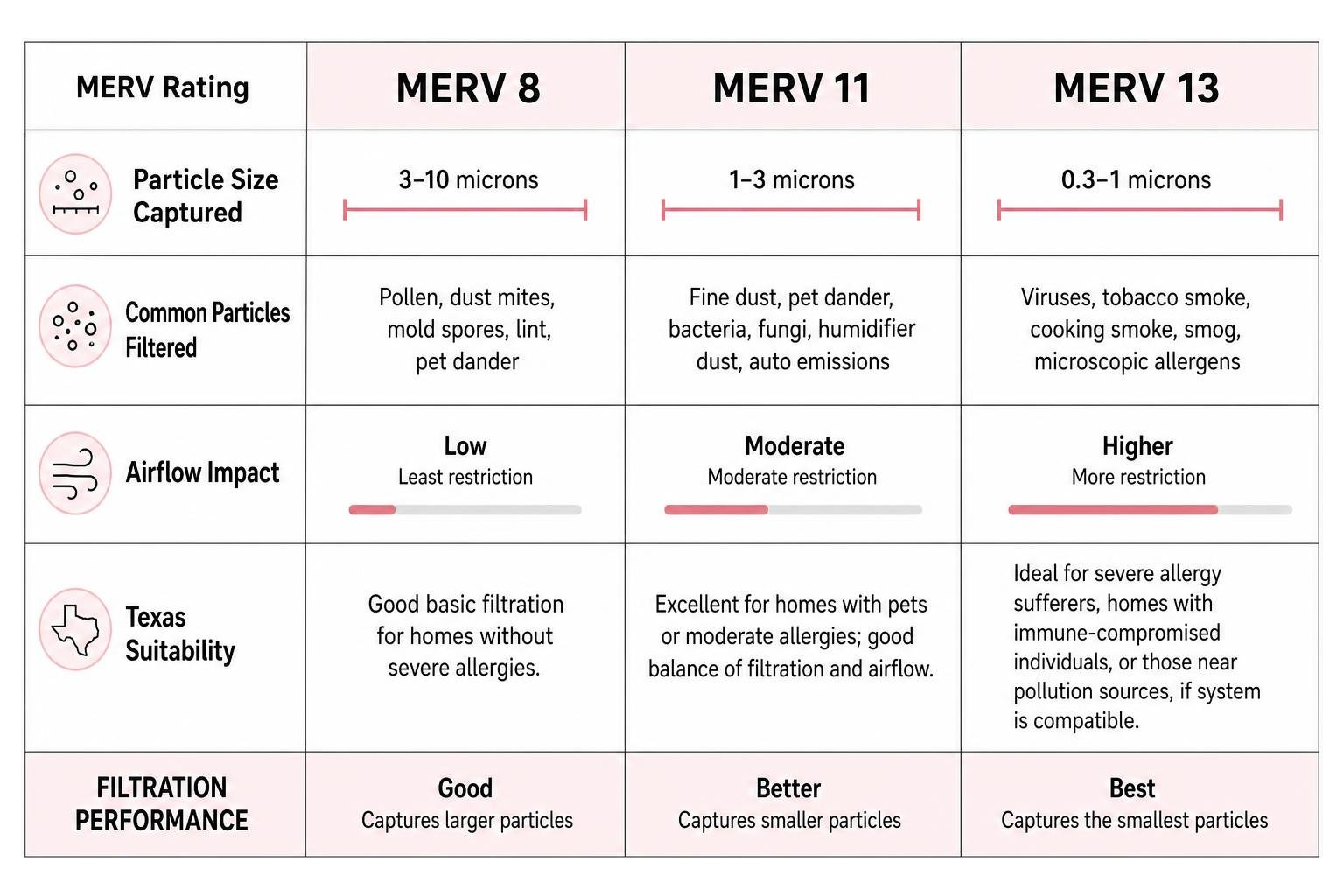
MERV Rating Particle Size Captured Common Particles Filtered Airflow Impact Texas Suitability MERV 8 3-10 microns Pollen, dust mites, mold spores, lint, pet dander Low Good basic filtration for homes without severe allergies. MERV 11 1-3 microns Fine dust, pet dander, bacteria, fungi, humidifier dust, auto emissions Moderate Excellent for homes with pets or moderate allergies; good balance of filtration and airflow. MERV 13 0.3-1 microns Viruses, tobacco smoke, cooking smoke, smog, microscopic allergens Higher Ideal for severe allergy sufferers, homes with immune-compromised individuals, or those near pollution sources, if system is compatible. For many Texas homes, a MERV 11 filter strikes an excellent balance, effectively capturing common allergens like pollen and pet dander without significantly impeding airflow. However, for households with severe allergies, asthma, or immune-compromised individuals, a MERV 13 filter offers superior protection against even smaller particles, including some viruses and smoke. It’s crucial to note that while MERV 13 filters capture particles down to 0.3-1 microns, including viruses like COVID-19 and the flu, they can also introduce higher static pressure. This means that upgrading to a high-MERV filter, especially MERV 13 or higher, requires careful consideration of your HVAC system’s compatibility and ductwork design to prevent airflow restriction and potential damage to your unit. Micro-pleat filters, while offering high filtration, can be particularly restrictive if your system isn’t designed for them. A certified HVAC dealer can assess your system’s capabilities and recommend the optimal MERV rating for your specific needs and system.
Understanding Industry Standards and Certification Ratings
In the complex world of HVAC, relying on established industry standards and certifications is paramount to making informed decisions. We adhere strictly to guidelines set by organizations like ASHRAE (American Society of Heating, Refrigerating and Air-Conditioning Engineers), which define the scientific and technical basis for HVAC system design and performance, including air filtration. Furthermore, our technicians often hold NATE (North American Technician Excellence) certification, a testament to their real-world working knowledge of HVAC systems. These certifications, alongside manufacturer-specific training, ensure that every recommendation and installation is grounded in proven science and best practices, guaranteeing system compatibility and optimal performance.
Why Proprietary Retail Ratings Fall Short
While walking the aisles of a big-box store, you’ll encounter a dizzying array of air filters adorned with various proprietary ratings like Home Depot’s FPR (Filter Performance Rating) or 3M’s MPR (Microparticle Performance Rating). These ratings, often presented on a scale of 1 to 10 or 1000+, can be incredibly misleading. We view these retail-specific numbers as little more than marketing hype, designed to differentiate products without providing truly comparable or scientifically robust information.
The fundamental flaw with these proprietary ratings is their lack of transparency regarding airflow. While they might boast high particle capture efficiency, they often fail to address the critical impact on airflow, which is the lifeblood of your HVAC system. A filter that captures everything but chokes your system is akin to putting a piece of cardboard in your air return—it might stop particles, but it will kill your HVAC unit. The MERV system, by contrast, is an objective, science-based standard developed by ASHRAE, providing a consistent and verifiable benchmark for filtration efficiency and acknowledging the importance of airflow. The Home Depot FPR system, for example, weights large particle capture at 60%, small at 30%, and lifetime at 10%, but the test results are rarely published for verification, leaving homeowners in the dark about actual performance under real-world conditions.
This marketing-driven approach can lead homeowners to purchase filters that restrict airflow to dangerous levels, potentially causing the HVAC system to work harder, consume more energy, and ultimately fail prematurely. For instance, using a 3M/Filtrete Micro-pleat filter with a very high MPR rating might seem like a good idea for air quality, but it can be detrimental to a standard home HVAC system not designed for such high static pressure. Our unique opinion is that retail filter ratings are equivalent to a bucket of hogwash when it comes to assessing true system compatibility and long-term health.
How a Certified HVAC Dealer Evaluates System Static Pressure
Understanding and managing static pressure is a cornerstone of professional HVAC system design and maintenance. Static pressure refers to the resistance to airflow through your ductwork, coils, and filters. If this resistance is too high, your blower motor has to work harder, leading to reduced airflow, decreased efficiency, increased energy consumption, and premature motor failure.
A certified HVAC dealer employs specialized tools and expertise to accurately evaluate your system’s static pressure. This involves measuring the pressure drop across various components, including the filter, evaporator coil, and ductwork. These measurements provide crucial insights into the health of your system and the suitability of your current filter. For example, a high-MERV filter, while excellent at particle capture, can significantly increase static pressure. If your ductwork was not originally designed for such a high-pressure drop, installing a MERV 13 or higher filter without professional assessment can severely strain your blower motor.
Our technicians can identify potential issues like undersized ductwork, clogged coils, or excessively restrictive filters. This diagnostic capability allows us to make informed recommendations, ensuring that any filter upgrade or system modification maintains optimal airflow and protects your HVAC investment. We prioritize airflow over particle capture efficiency when necessary, as restricting airflow is one of the quickest ways to damage an HVAC system. We always consult with homeowners before recommending an upgrade to a high-MERV filter, ensuring the system can handle the increased static pressure.
Advanced Home Comfort and Air Purification Solutions
Beyond standard filtration, many Texas homeowners seek advanced solutions to achieve superior indoor air quality and comfort. A certified HVAC dealer can guide you through options like whole-home air cleaners, UV air purifiers, and deep-pleat media filters, integrating them seamlessly into your existing system. These advanced systems, coupled with smart thermostats, offer a comprehensive approach to managing your home’s environment.
Integrating High-Efficiency Filtration Systems
For those requiring superior air purification, integrating high-efficiency filtration systems is a game-changer. One of the most effective upgrades is moving from standard 1-inch filters to 4-inch or 5-inch deep-pleat media filters. These thicker filters offer a significantly larger surface area for filtration, allowing them to capture more particles without creating excessive static pressure. They also tend to last much longer, often up to 6-12 months, reducing the frequency of filter changes. Some advanced systems, like Trane’s QuikBox™ Air Cleaner, are up to 20 times better at filtering pollutants than a standard 1” filter, and are designed to capture 100% of the air without reducing airflow, making them an excellent choice for homes where high filtration is needed.
We also distinguish between different types of advanced filters. While electrostatic filters use an electrical charge to attract particles, their effectiveness can wane quickly. Once the surface is covered with a thin layer of particles, usually within a week or two, the electrostatic benefit disappears. For consistent, high-level filtration, mechanical deep-pleat filters are generally more reliable. For the ultimate in air purification, some homes can benefit from bypass HEPA (High-Efficiency Particulate Air) systems. True HEPA filters remove at least 99.97% of airborne particles with a size of 0.3 microns, offering hospital-grade air quality. However, these are typically installed as a bypass system because their extreme density would severely restrict airflow if placed directly in the main ductwork. A certified HVAC dealer can assess your home’s unique needs and system compatibility to recommend the most suitable high-efficiency filtration solution.
Long-Term Maintenance and System Care
Optimal filter performance and overall HVAC longevity in Texas’s demanding climate hinge on consistent, long-term maintenance and system care. One of the most critical aspects is adhering to a regular filter replacement schedule. During peak allergy seasons or periods of heavy dust, Texas homeowners may need to change their filters more frequently than the standard 30-90 days, sometimes even monthly, especially if they have pets or severe allergies. Neglecting filter changes can lead to reduced airflow, decreased efficiency, increased energy costs, and strain on your HVAC system.
Beyond filters, seasonal tune-ups are indispensable. These preventative maintenance visits allow our technicians to inspect, clean, and adjust your system, ensuring all components are operating efficiently. This includes checking refrigerant levels, cleaning coils, inspecting electrical connections, and lubricating moving parts. Regular tune-ups not only extend the lifespan of your unit but also contribute significantly to energy savings by keeping your system running at peak efficiency. For example, a customer’s ‘Paul Harvey’ cleanable filter accumulated almost 10 ounces of dirt despite monthly cleaning, highlighting that even seemingly clean filters can harbor significant debris and impede performance. Preventative care helps catch minor issues before they escalate into costly breakdowns, providing peace of mind and consistent home comfort throughout the scorching Texas summers and mild winters.
Frequently Asked Questions About Certified HVAC Dealers
What is the difference between a certified HVAC dealer and a standard contractor?
The primary difference lies in the level of training, manufacturer backing, and adherence to specific brand standards. A certified HVAC dealer has undergone rigorous, factory-direct training from specific equipment manufacturers. This means their technicians possess an in-depth understanding of particular systems, ensuring precise installation, maintenance, and repair using genuine parts. Standard contractors, while licensed, may have broader knowledge across various brands but lack the specialized, manufacturer-specific expertise and direct support that certified dealers offer. This specialized training often translates to better system performance, longer equipment life, and valid warranties for homeowners.
Will upgrading to a high-MERV filter void my HVAC warranty?
Upgrading to a high-MERV filter, such as a MERV 13, generally does not automatically void your HVAC warranty. However, it can potentially cause issues if your HVAC system and ductwork are not designed to handle the increased static pressure that these denser filters create. Excessive static pressure forces your blower motor to work harder, which can lead to premature motor failure, reduced airflow, and decreased system efficiency. While the filter itself might not void the warranty, any damage to the system directly caused by improper airflow or strain due to an incompatible filter could be attributed to improper maintenance or component selection, potentially impacting warranty claims. It is always recommended to consult with a certified HVAC professional to assess your system’s compatibility before making a significant MERV upgrade.
How do I know if my ductwork can handle a MERV 13 air filter?
Determining if your ductwork can handle a MERV 13 filter requires a professional assessment by a certified HVAC technician. They will perform static pressure measurements across your system, including the return and supply ducts, and across the filter itself. These measurements indicate the resistance to airflow. If your existing ductwork is undersized, poorly designed, or has significant leaks or obstructions, a MERV 13 filter will likely create excessive static pressure, straining your system. A technician can also inspect your blower motor’s specifications to ensure it can handle the increased load. Without this professional evaluation, installing a MERV 13 filter could lead to reduced system efficiency, higher energy bills, and potential damage to your HVAC unit, especially in the demanding Texas climate.
Conclusion
Choosing the right AC filter for your Texas home is a critical decision that impacts not only your indoor air quality but also the longevity and efficiency of your entire HVAC system. With the unique challenges presented by our climate – from extreme heat and humidity to pervasive allergens and dust storms – relying on expert guidance is not just beneficial, it’s essential. A Factory Authorized HVAC Dealer provides professional diagnostics, ensuring your system is perfectly sized and equipped to handle Texas conditions. They offer tailored home comfort solutions, balancing superior filtration with optimal airflow to protect your investment. By prioritizing industry standards like MERV over misleading proprietary ratings, and by committing to expert installation and long-term maintenance, a certified dealer ensures your HVAC system delivers reliable performance and healthy indoor air for years to come.
©2026 The Dedicated House. All rights reserved. No part of this blog post may be used or reproduced without the written consent of the copyright owner.
Click the links below for any posts you have missed:
 Upgrading Home Access and Energy Efficiency
 4 Aspects You Should Look at When Choosing a Plumbing Service for Yourself
 Exposed Aggregate Pros and Cons for Homeowners
 The Growing Popularity of Wall Cladding for Homes and Businesses in Ireland
 Comprehensive HVAC Installation and Maintenance
 Maintaining Home Comfort with Expert HVAC and Plumbing
I’d love for you to join my email list! You’ll receive a notification straight to your inbox which will include links to my latest home project posts! Simply enter your address below.
Thanks for stopping by! Have a wonderful day/night depending on where you are in the world! Go with God and remember to be kind to one another!
Toodles,

Leave a Reply