The transformation of a standard concrete garage floor into a resilient, aesthetically pleasing surface is a testament to advancements in polymer science. Modern garage floor coatings, at their core, are typically thermosetting resins, meaning they undergo an irreversible chemical curing process once mixed and applied. This process forms a dense, cross-linked molecular structure that bonds tenaciously to the prepared concrete substrate.
This strong substrate bonding is crucial for the coating’s longevity, providing exceptional impact resistance against dropped tools, abrasion resistance from vehicle traffic, and even thermal shock resistance against rapid temperature changes. Unlike mere paints, these specialized coatings create a protective barrier that integrates with the concrete, preventing common issues like dusting, staining, and moisture penetration. The layered approach of these systems significantly enhances the concrete’s inherent properties, offering a robust shield against the demanding environment of a garage.

Comparing Epoxy, Polyurea, and Polyaspartic Garage Floor Coatings
When considering an upgrade for your garage floor, understanding the differences between the primary coating types—epoxy, polyurea, and polyaspartic—is essential. Each offers distinct advantages in terms of performance, application, and durability.
Epoxy Resin coatings are perhaps the most well-known. They are revered for their strength, hardness, and ability to create a thick, durable build. Epoxy systems typically consist of a resin and a hardener that, when mixed, initiate a chemical reaction. They offer excellent adhesion to concrete and are highly resistant to chemicals, oils, and grease. However, epoxy has a longer curing speed, often requiring several days before the floor can be fully used. Traditional epoxies can also be susceptible to UV degradation, leading to yellowing or chalking over time if not protected by a suitable topcoat.
Polyurea coatings represent a more advanced technology. Known for their rapid curing speed, polyurea systems can often be installed and returned to service within a single day. This makes them ideal for situations where minimal downtime is critical. Polyurea boasts superior flexibility and elongation properties compared to epoxy, making it more resistant to impacts and concrete movement without cracking. It also offers excellent tensile strength and is highly resistant to abrasion and chemicals. Polyurea coatings are often UV stable, meaning they won’t yellow or fade when exposed to sunlight.
Polyaspartic coatings are a specific type of polyurea, often considered a “sister” technology. They share many of polyurea’s benefits, including fast cure times, high flexibility, and UV stability. Polyaspartics are particularly noted for their extended pot life (the working time before the coating hardens), which can make them slightly more forgiving for applicators compared to some faster-curing polyureas, especially in warmer climates. They also excel in low-temperature applications, allowing for installations in cooler conditions that would be challenging for traditional epoxies. Both polyurea and polyaspartic coatings can achieve impressive total coating thicknesses, with Polyurea 2-Coat Garage Floor Coating Kits typically providing 10-12 mil and Polyurea 3-Coat Full Broadcast Kits offering 15-18 mil, providing substantial protection.
In summary, while epoxy offers a robust and cost-effective solution with a thick build, polyurea and polyaspartic provide faster installation, enhanced flexibility, superior scratch resistance, and UV stability, making them excellent choices for those seeking quicker turnaround and advanced performance.
Formulations: 100% Solids vs. High Solids vs. Water-Based Garage Floor Coatings
Understanding the “solids content” of a coating is crucial, as it directly impacts the dry film thickness, durability, and overall performance of your garage floor. This refers to the percentage of material that remains on the surface after the solvents (or water) have evaporated.
100% Solids Epoxy contains virtually no solvents, meaning that what you apply is what remains on the floor. This formulation provides the thickest build depth, resulting in the most durable and long-lasting finish. Because there are no volatile organic compounds (VOCs) evaporating, 100% solids epoxy typically has very low odor, though proper ventilation is still crucial during application. These kits, starting around $639.99, are often recommended for professional use due to their shorter pot life and rapid curing, which requires experienced application. The superior build and chemical resistance make them a top choice for demanding environments.
High Solids Epoxy formulations contain a reduced amount of solvents, typically ranging from 60% to 90% solids. While not as thick as 100% solids, they still offer a significantly thicker and more durable coating than water-based options. High solids epoxies provide a good balance of performance and workability, making them a popular choice for both experienced DIYers and professionals. They offer a thicker build than many polyurea systems and are available in kits starting from $491.99. Their VOC levels are lower than solvent-based paints but higher than 100% solids epoxies.
Water-Based Epoxy coatings use water as the primary carrier for the resin. These are generally the easiest to apply for DIY enthusiasts due to their longer pot life, lower odor, and easier cleanup. However, water-based epoxies have the lowest solids content, resulting in a thinner dry film thickness. While they offer better protection than standard concrete paints, they are less durable and have a shorter lifespan compared to high solids or 100% solids options. They are best suited for light-duty garages or as an entry-level option where extreme durability isn’t the primary concern.
The choice among these formulations depends on your budget, desired durability, application skill level, and environmental considerations (VOCs).
Coating Formulation Solids Content Dry Film Thickness VOC Levels Build Depth Durability Application Difficulty 100% Solids Epoxy 100% Very High Very Low Very Thick Excellent Professional High Solids Epoxy 60-90% High Low-Medium Thick Very Good Moderate-Professional Water-Based Epoxy 30-50% Low Very Low Thin Good Easy-Moderate The Protective Role of Aliphatic Urethane Topcoats
While epoxy and polyurea base coats provide the bulk of the floor’s strength and adhesion, an aliphatic urethane topcoat plays a critical role in maximizing its longevity and aesthetic appeal. This final layer acts as a sacrificial barrier, designed to protect the underlying coating from the most common forms of wear and tear.
One of the primary benefits of an aliphatic urethane topcoat is its UV stability. Unlike many traditional epoxies, which can yellow or chalk when exposed to sunlight (especially in garages with windows or open doors), aliphatic urethanes are non-yellowing. This ensures that the vibrant color and flake patterns of your floor remain true for years to come.
Beyond UV protection, these topcoats significantly enhance scratch resistance and chemical shielding. They create a harder, more abrasion-resistant surface that can withstand scuffs, scrapes, and the daily abuse of tools, vehicles, and foot traffic. Furthermore, urethane topcoats offer superior resistance to a wider range of chemicals, including automotive fluids, cleaners, and other common garage spills, preventing them from penetrating and staining the base coat.
Another advantage is the ease of cleaning. The smooth, dense surface created by a urethane topcoat makes spills easy to wipe up and prevents dust and debris from adhering, contributing to a cleaner garage environment. For those seeking high-quality epoxy floor coatings that stand the test of time, the inclusion of a robust urethane or moisture-cured polyurethane (MCU) topcoat is non-negotiable. MCU, in particular, can offer superior performance in terms of chemical resistance and durability, making it an excellent choice for protecting your investment.
Surface Preparation: The Foundation of Long-Lasting Garage Floors
The most critical factor determining the success and longevity of any garage floor coating system is proper surface preparation. Even the highest quality materials will fail prematurely if applied to an inadequately prepared substrate. Think of it as building a house on a weak foundation; eventually, it will crumble.
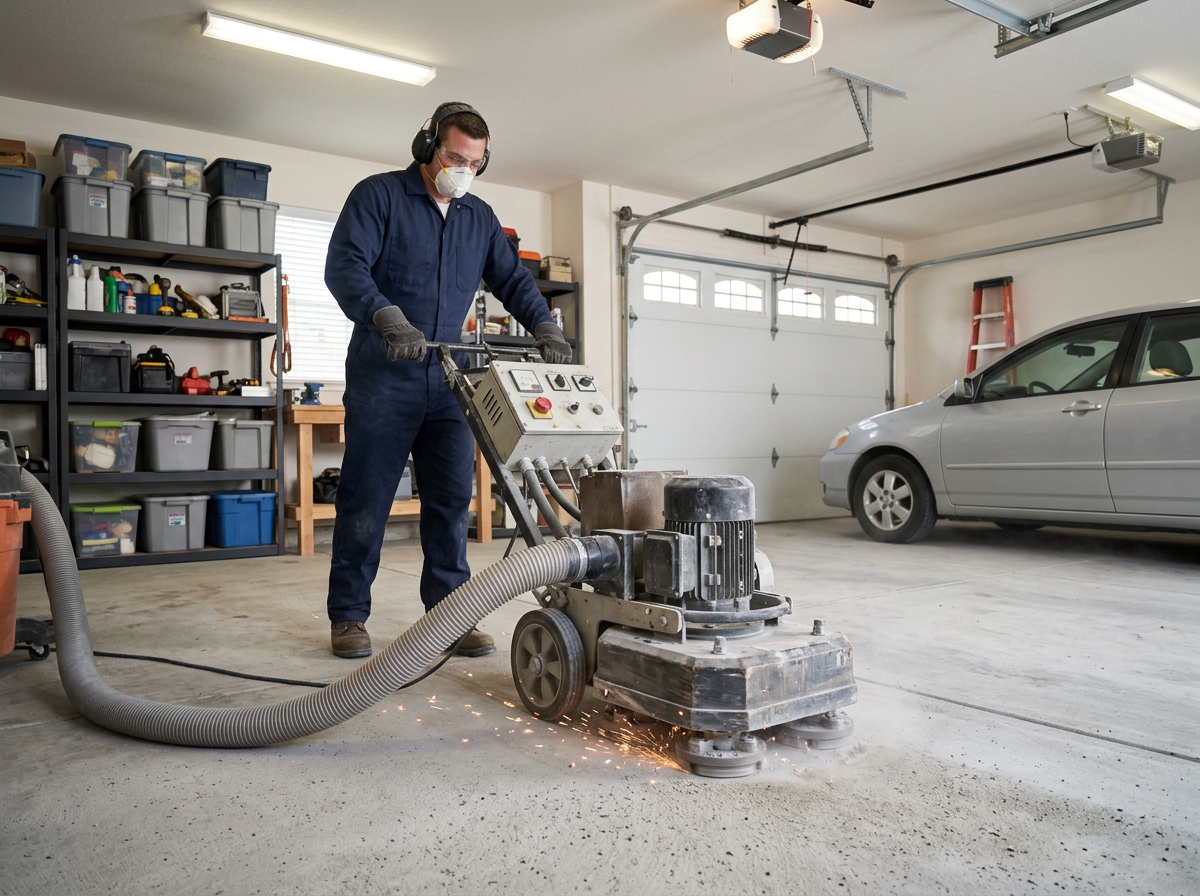
The goal of surface preparation is to create a clean, porous, and structurally sound concrete surface that allows for optimal mechanical adhesion. This typically involves mechanical grinding using heavy-duty diamond grinding machines or shot blasting. These methods effectively remove existing sealers, paints, contaminants, and the weak, laitance layer of the concrete, exposing a fresh, absorbent surface. For epoxy floors, a properly prepared concrete surface requires a CSP2 (Concrete Surface Profile) or better, which creates a texture similar to medium-grit sandpaper, providing an ideal anchor for the coating.
While acid etching can be used for very light preparation, its limits are significant. It doesn’t remove contaminants as effectively as mechanical methods, can leave behind salts that hinder adhesion, and often fails to achieve the necessary CSP profile for professional-grade coatings. It’s generally not recommended for anything beyond very thin, water-based systems.
Beyond cleaning and profiling, addressing underlying concrete issues is vital. This includes testing for hydrostatic pressure and moisture content. Excessive moisture within the slab can lead to blistering and delamination of moisture-sensitive coatings. Specialists use moisture meters and calcium chloride tests to determine moisture levels, and may recommend epoxy primers or vapor barriers to mitigate moisture issues before applying the main coating system. Neglecting these steps is a common cause of coating failure, regardless of the quality of the product used.
Preventing Hot Tire Pickup and Delamination
One of the most frustrating and common failures homeowners experience with garage floor coatings is “hot tire pickup.” This phenomenon occurs when the hot rubber of vehicle tires, especially after a drive, softens the coating and causes it to delaminate or peel away from the concrete surface. As one industry expert humorously puts it, “hot tire pickup is Latin for poor floor prep,” highlighting that it’s almost always a symptom of inadequate adhesion rather than a flaw in the coating itself.
The root cause often lies in the interaction between the tire’s plasticizers (chemicals that keep rubber flexible) and the coating, particularly when the coating’s bond to the concrete is weak. When a hot tire rests on a poorly adhered coating, the heat and pressure, combined with the plasticizers, can create a thermal bonding effect that pulls the coating up.
To prevent hot tire pickup and general delamination, epoxy primers are often employed. These primers are specifically formulated to penetrate deeply into the concrete’s pores, creating a stronger, more tenacious bond than a topcoat alone. They fill microscopic voids and seal the surface, enhancing the overall adhesion of the subsequent layers. Proper surface preparation, achieving the correct CSP profile, and ensuring the concrete is clean and dry are the first lines of defense. A high-quality, multi-coat system, especially one incorporating a polyurea or polyaspartic topcoat known for its resistance to tire plasticizers, further minimizes this risk.
Restoring Heavily Damaged and Uneven Concrete Slabs
Not all garage floors start as a perfect canvas. Many older or heavily used concrete slabs suffer from significant damage, including cracks, spalls, and unevenness. Fortunately, epoxy garage floor specialists are equipped with the materials and expertise to restore these surfaces, creating a smooth, durable foundation for the coating system.
For larger, deeper damage, epoxy mortar is an excellent solution. This mixture of epoxy resin and aggregate can be used to fill substantial holes, divots, and spalls, providing a repair that is often stronger than the surrounding concrete. Smaller cracks can be addressed with crack injection techniques, using specialized epoxy or polyurethane resins that penetrate and seal the crack, preventing further propagation and moisture intrusion.
Uneven concrete slabs can be leveled using self-leveling slurry or epoxy patching compounds. These materials flow to create a smooth, flat surface, eliminating trip hazards and ensuring a uniform appearance for the final coating. For minor divots or surface imperfections, simple patching compounds can be feather-edged to blend seamlessly. It’s also crucial to properly address expansion joints, which are designed to allow concrete to move. These are typically respected, cleaned, and often filled with a flexible joint filler before coating to maintain their function while creating a cleaner look. Addressing these repairs thoroughly before coating ensures a smooth, long-lasting, and aesthetically pleasing finish.
Comparing Garage Floor Solutions: Coatings, Coverings, and Sealers
When it comes to protecting and enhancing your garage floor, a variety of options exist beyond traditional paints. Understanding the differences between specialized coatings, coverings, and penetrating sealers is key to making the right choice for your needs.
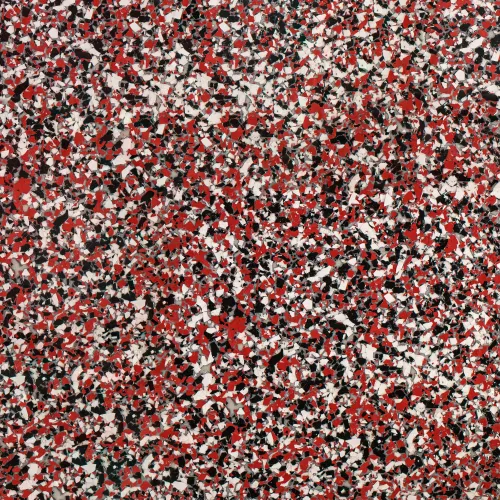
Epoxy and Polyurea/Polyaspartic Coatings (as discussed) form a seamless, durable barrier directly on the concrete. They bond mechanically and chemically to the surface, offering superior resistance to chemicals, abrasion, and staining. These systems are known for creating a high-performance, attractive finish, often with decorative flakes or quartz. They provide a truly seamless barrier, preventing liquids from reaching the concrete below.
Garage Floor Tiles are a popular alternative, particularly interlocking tiles made from PVC or polypropylene. These are easy to install, can be removed or replaced, and offer excellent impact absorption. They come in various colors and patterns, allowing for customization. However, tiles are not seamless; dirt, dust, and liquids can seep through the seams and accumulate underneath, requiring periodic removal for cleaning. They also don’t provide the same chemical resistance or seamless protection as a fully bonded coating.
Penetrating Sealers, such as Ghostshield 8510, work differently. Instead of forming a film on the surface, they penetrate into the concrete’s pores, reacting chemically to create a hydrophobic barrier. This makes the concrete more resistant to water, oil, and other contaminants by reducing its porosity. They offer a natural, matte finish and are excellent for protecting the concrete itself from freeze-thaw cycles and efflorescence. While they protect from oil and most spills, chemicals will eventually break through and stain the concrete if not cleaned quickly. They do not offer the same aesthetic appeal, chemical resistance, or wear layer as a film-forming coating.
Single-Part Concrete Paint is often the cheapest option, but it’s widely considered by epoxy garage floor specialists to be a “horrible idea” for garage floors. These paints offer minimal protection, poor adhesion, and quickly peel, chip, and wear away under garage conditions. They lack the durability, chemical resistance, and aesthetic longevity of true coating systems.
Here’s a quick comparison of performance differences:
Performance Differences Across Garage Floor Finishes:
- Seamlessness: Coatings (Excellent), Tiles (Poor/Gapped), Penetrating Sealers (Excellent, but no film), Paints (Good initially, poor long-term)
- Chemical Resistance: Coatings (Excellent), Tiles (Varies by material, seams vulnerable), Penetrating Sealers (Limited, prevents absorption), Paints (Poor)
- Abrasion Resistance: Coatings (Excellent), Tiles (Good), Penetrating Sealers (Poor, protects concrete, not surface), Paints (Poor)
- Aesthetic Customization: Coatings (Excellent – flakes, colors), Tiles (Good – patterns, colors), Penetrating Sealers (Natural look only), Paints (Limited colors)
- Maintenance: Coatings (Easy to clean), Tiles (Requires cleaning under seams), Penetrating Sealers (Low, but stains can occur), Paints (High, due to frequent reapplication)
For a truly durable, high-performance, and low-maintenance garage floor, specialized coatings offer a superior solution compared to tiles, paints, or even standalone penetrating sealers.
Professional Installation vs. DIY Garage Floor Kits
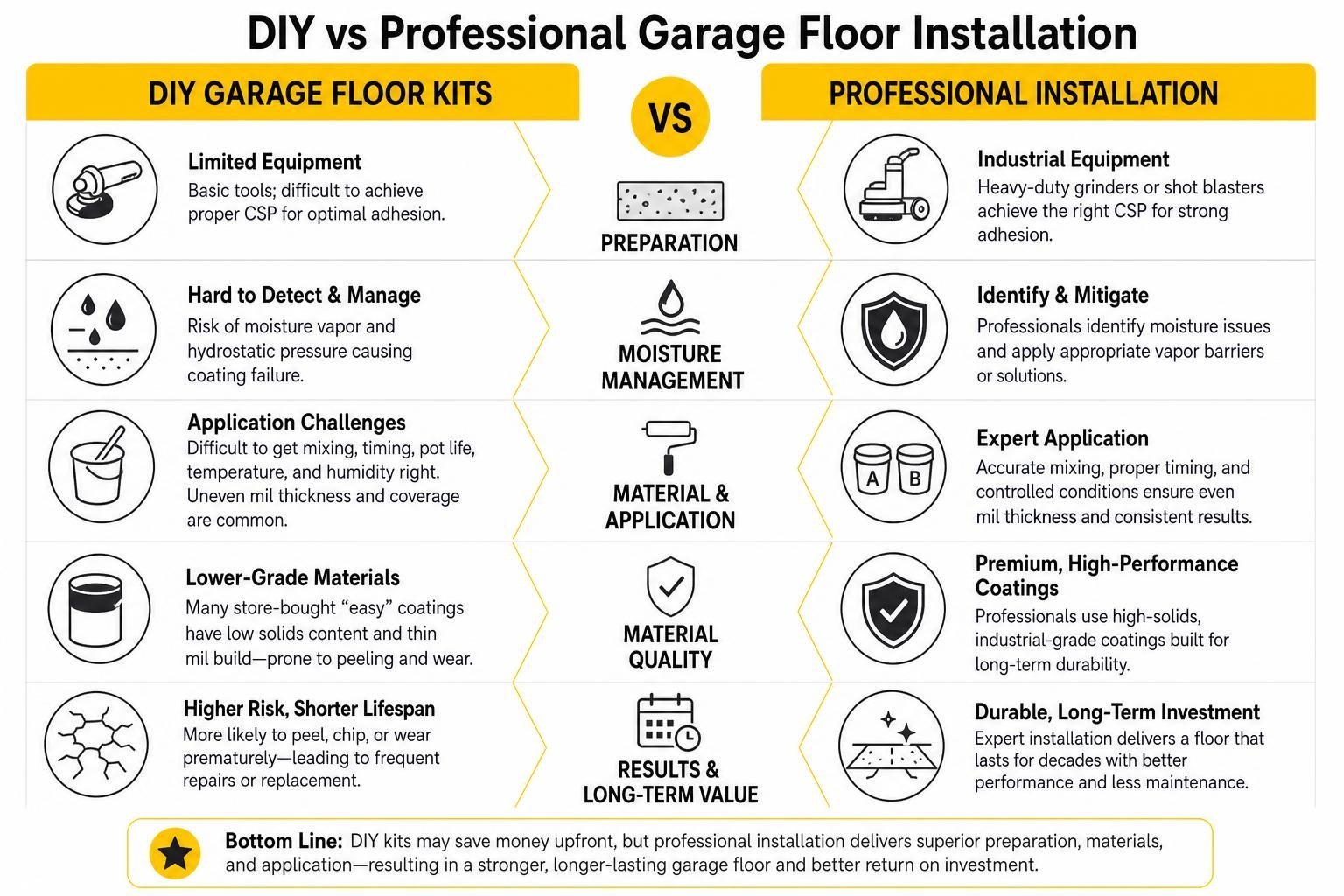
The allure of a DIY garage floor kit can be strong, promising cost savings and a sense of accomplishment. However, the decision between tackling the project yourself and hiring epoxy garage floor specialists often boils down to balancing initial cost with long-term performance and durability.
Professional installation brings a wealth of expertise and specialized equipment that is simply not available in a typical DIY kit. Specialists utilize industrial equipment like heavy-duty diamond grinders or shot blasters to achieve the precise CSP (Concrete Surface Profile) necessary for optimal adhesion. They have the knowledge to properly identify and mitigate issues like moisture vapor barriers and hydrostatic pressure, which are common causes of DIY coating failure.
Furthermore, professionals are skilled in application timing and mixing accuracy, crucial elements for two-part (or more) coating systems. They understand the nuances of pot life, ambient temperature, and humidity, which all impact the curing process and final outcome. Achieving a consistent mil thickness across the entire floor is also challenging for DIYers, whereas professionals ensure an even, robust build that maximizes the coating’s lifespan.
Many store-bought “easy” coatings are not recommended for quality results due to their low solids content and thin mil build, leading to premature peeling and wear. While some high-solids DIY epoxy kits and polyurea kits are available, they still require a significant level of preparation and careful application to succeed. Polyurea kits, with their easier installation and better adhesion, can be more forgiving for DIY users than some epoxy systems, but they still demand attention to detail.
While a DIY kit might save money upfront, the long-term durability and performance achieved by epoxy garage floor specialists often provide a better return on investment. Their expertise in surface preparation, material selection, and application techniques ensures a floor that will last for decades, transforming your garage into a truly functional and attractive space.
Frequently Asked Questions About Garage Floor Coatings
As of September 2026, homeowners continue to seek reliable answers regarding the longevity, performance, and application of garage floor coatings. Here, we address some of the most common inquiries.
How long does a professionally installed epoxy garage floor last?
A professionally installed epoxy garage floor, when applied over a properly prepared substrate and finished with a high-quality, UV-stable topcoat, can last indefinitely with appropriate care. While the base epoxy itself is incredibly durable, the lifespan is heavily influenced by several factors: the quality of the materials used, the thoroughness of the surface preparation, the presence of a protective topcoat, and the level of traffic and abuse the floor endures.
For residential use, a well-installed system can easily last for 15-20 years or more without significant issues. Routine maintenance, such as regular cleaning and periodic re-application of the topcoat (perhaps every 5-10 years depending on wear), can extend this longevity even further. High-traffic commercial or industrial floors might require more frequent maintenance or specific heavy-duty systems. The key is the initial investment in quality materials and, critically, expert installation.
Why do store-bought DIY garage floor kits frequently peel?
The frequent peeling of store-bought DIY garage floor kits is a common frustration and is almost always attributable to a combination of factors, primarily inadequate preparation and the inherent limitations of the products themselves.
Firstly, many DIY kits promote simplified surface preparation, often relying solely on acid etching. As discussed, acid etching rarely achieves the necessary CSP profile for strong mechanical adhesion. This leads to a poor mechanical bond between the coating and the concrete.
Secondly, these kits typically contain low solids content (often water-based epoxies) and result in a very thin mil build. This thin layer offers minimal durability and is easily compromised by vehicle traffic, impacts, and chemicals. When combined with the heat and plasticizers from vehicle tires, this thin, poorly adhered coating becomes highly susceptible to hot tire pickup.
Finally, DIY kits often lack the specialized primers and robust topcoats that professionals use. Without these, the coating is more vulnerable to UV damage, chemical attack, and general wear, leading to premature failure and peeling. The convenience of “easy” kits often comes at the cost of long-term performance.
When should polyurea or polyaspartic be selected over standard epoxy?
While epoxy remains a robust choice, polyurea and polyaspartic coatings offer distinct advantages that make them the preferred option in specific scenarios:
- Rapid Turnaround and Single-Day Installation: If minimizing downtime is crucial, polyurea/polyaspartic systems are ideal. Their fast cure times mean a garage floor can often be installed and returned to light service within 24 hours, and full service within 72 hours, a significant advantage over epoxy’s multi-day curing process.
- Extreme Temperature Application: Polyaspartic coatings, in particular, can be applied in a wider range of temperatures, including colder conditions that would be unsuitable for traditional epoxies. This flexibility extends the installation season.
- UV Exposure: For garages with significant sun exposure (e.g., south-facing doors, large windows), polyurea and polyaspartic are superior due to their inherent UV stability. They will not yellow or chalk like unprotected epoxies, maintaining their aesthetic appeal over time.
- Flexibility and Impact Resistance: Their greater flexibility and elongation properties make polyurea/polyaspartic coatings more resistant to impacts and concrete movement, reducing the likelihood of cracking or delamination.
- Superior Scratch and Chemical Resistance: These advanced polymers generally offer better scratch resistance and a broader spectrum of chemical resistance compared to standard epoxies, making them excellent for high-demand environments.
For homeowners seeking the quickest installation, maximum durability, and UV stability, especially in environments with temperature fluctuations or direct sunlight, polyurea or polyaspartic coatings often present a superior choice over traditional epoxy systems.
Conclusion
Upgrading your garage floor with a specialized coating system is more than just an aesthetic improvement; it’s an investment in concrete preservation and enhanced functionality. From protecting against stains and chemicals to reducing dust and increasing property value, the benefits are undeniable.
As we’ve explored, garage floor coatings is diverse, offering solutions tailored to various needs and budgets. However, the consistent thread running through all successful installations is the paramount importance of proper surface preparation and the quality of the materials chosen. While DIY kits can be tempting, the expertise, industrial-grade equipment, and comprehensive understanding that epoxy garage floor specialists bring to the table are often the decisive factors in achieving truly long-lasting and high-performing results.
By understanding the key differences between epoxy, polyurea, and polyaspartic, appreciating the critical role of surface preparation, and recognizing the value of professional installation, you can make an informed decision that ensures your garage floor remains a durable, attractive, and functional asset for many years to come, well into September 2026 and beyond. This transformation not only protects your concrete but also elevates your entire garage space, offering significant long-term value and a truly functional transformation.
©2026 The Dedicated House. All rights reserved. No part of this blog post may be used or reproduced without the written consent of the copyright owner.
Click the links below for any posts you have missed:
 Who Pays When Tree Work Goes Wrong
 Where Can I Buy Floor Scrubber Pads, Brushes, and Replacement Parts?
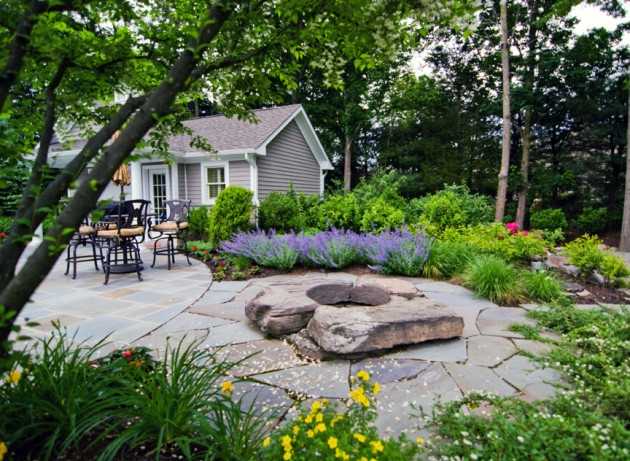 Designing Premium Outdoor Spaces and Hardscapes
 The Remarkable Rise of Attic Conversions in Dublin: Understanding a Booming Industry
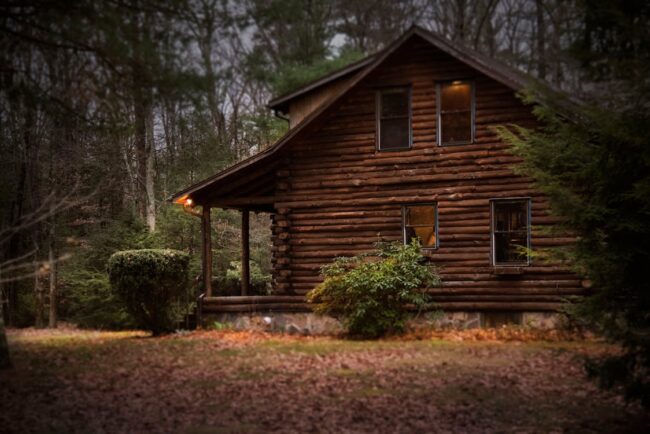 A Practical Guide to Comparing Mountain Homes Before You Buy in Vail, Colorado
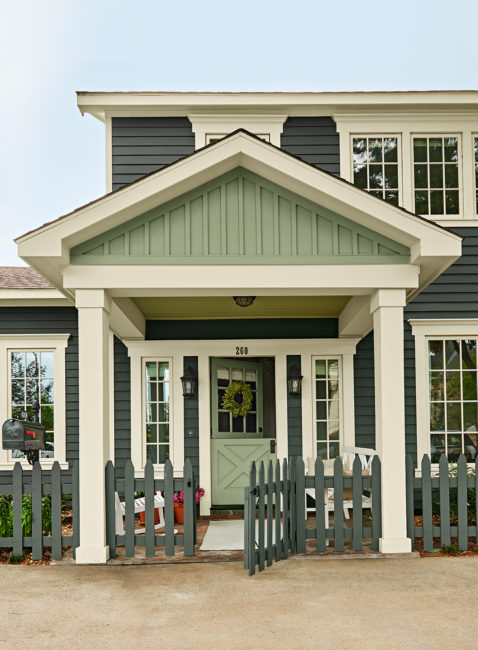 Revitalizing Your Home with Professional House Painting Services
I’d love for you to join my email list! You’ll receive a notification straight to your inbox which will include links to my latest home project posts! Simply enter your address below.
Thanks for stopping by! Have a wonderful day/night depending on where you are in the world! Go with God and remember to be kind to one another!
Toodles,

Leave a Reply