Moving is often cited as one of life’s most stressful events, but with a structured approach, it can be a smooth and even enjoyable experience. Our extensive research and experience suggest that adequate preparation is the cornerstone of a successful relocation. We recommend starting your planning process at least two to three months in advance, giving you ample time to manage all the moving parts without feeling rushed.
Effective planning begins with understanding the financial implications. Moving costs can vary significantly, from basic hourly help ranging from $45-$80 per hour to full-service moves that can easily run into several thousand dollars, depending on distance and the volume of items. It’s wise to create a comprehensive moving budget that accounts for these expenses, packing supplies, potential storage, and even unexpected costs. We always advise setting aside an emergency fund, ideally 10-15% of your total moving budget, to cover any unforeseen challenges that may arise. For more general advice on creating a budget and managing your finances during this period, exploring various Happy home transition tips can provide broader financial guidance.
Beyond finances, understanding the legal and logistical requirements for your new location is crucial. For those moving within or to Illinois, this includes familiarizing yourself with state-specific residency requirements for driver’s licenses, vehicle registration, and voter registration. Spatial planning is another key element; visualizing how your furniture and belongings will fit into your new home using 2D or 3D floor plans can prevent costly mistakes and unnecessary stress on moving day.
Strategic Planning and Timelines for Your Moving and Home Transition
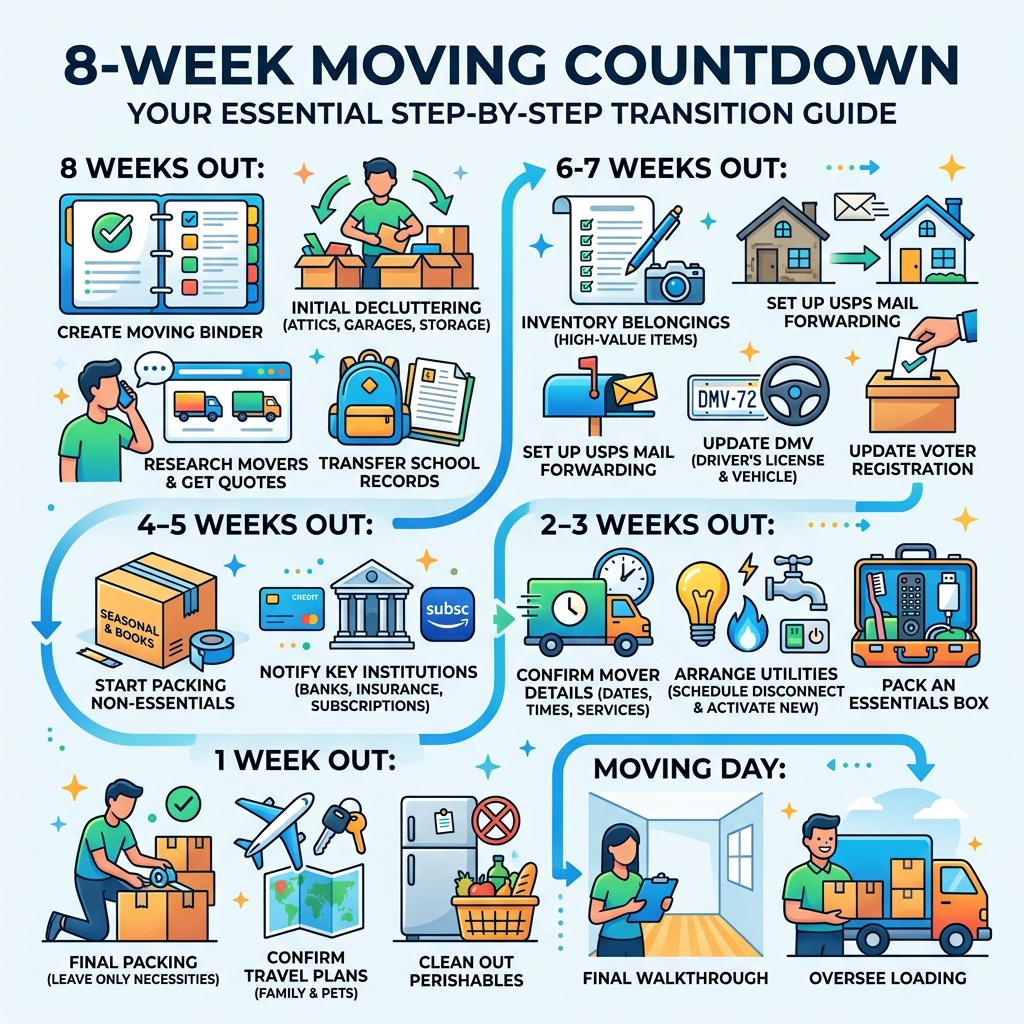
A detailed timeline is your best friend during a move. We’ve found that an 8-week schedule, working backward from your moving date, provides a robust framework.
8 Weeks Out:
- Create a Moving Binder: This central hub will store all quotes, contracts, checklists, utility contacts, and important documents.
- Initial Decluttering: Begin sorting through non-essential items in storage areas like attics, basements, and garages.
- Research Movers: Obtain quotes from at least three reputable moving companies.
6-7 Weeks Out:
- Inventory Management: Start a detailed inventory of your belongings, especially high-value items. This helps with insurance and unpacking.
- School Records: If moving with children, arrange to transfer school records to their new institutions.
- USPS Mail Forwarding: Initiate your change of address with the USPS. While mail forwarding lasts up to 3 months, setting it up early ensures a seamless transition.
- DMV Updates: Research Illinois DMV requirements for updating your driver’s license and vehicle registration. Many states require these updates within 10 to 90 days after moving.
- Voter Registration: Update your voter registration for your new Illinois address.
4-5 Weeks Out:
- Start Packing Non-Essentials: Begin packing items you won’t need until after the move, such as seasonal decorations, books, and seldom-used kitchenware.
- Notify Key Institutions: Inform banks, credit card companies, insurance providers, and subscription services of your upcoming address change.
2-3 Weeks Out:
- Confirm Mover Details: Reconfirm dates, times, and services with your chosen moving company.
- Arrange Utilities: Schedule disconnect dates for your current utilities and activation dates for your new home’s services (electricity, gas, water, internet, cable).
- Pack an Essentials Box: Prepare a box with items you’ll need immediately upon arrival (more on this below).
1 Week Out:
- Final Packing: Complete all remaining packing, leaving out only immediate necessities.
- Confirm Travel Plans: Finalize transportation for yourself, your family, and any pets.
- Clean Out Perishables: Begin consuming or donating perishable food items.
Moving Day:
- Final Walkthrough: Do a thorough check of your old home to ensure nothing is left behind.
- Oversee Loading: Be present to answer questions and ensure proper handling of your belongings.
Decluttering and Packing for a Seamless Home Transition
Decluttering is arguably the most crucial step before packing, as it can significantly reduce moving costs and simplify the entire process. We advocate for a systematic approach, sorting items into “Keep,” “Donate,” “Sell,” and “Trash” categories. Utilize online platforms for selling unwanted items, and consider local charities for donations.
- Room-by-Room Strategy: Tackle one room at a time to avoid feeling overwhelmed. Start with areas you use least frequently and gradually move to daily-use spaces.
- Labeling Systems: Invest in sturdy boxes and a clear labeling system. Label each box with its destination room and a brief description of its contents. This will be invaluable during unpacking.
- Color-Coding: For an extra layer of organization, consider color-coding boxes by room. Assign a different colored sticker or marker to each room in your new home.
- Essentials Box: This box is your lifeline for the first 24-48 hours in your new home. It should include:
- Toiletries (toothbrush, toothpaste, soap, shampoo)
- Change of clothes for each family member
- Basic kitchen items (coffee maker, mugs, snacks, paper plates/cutlery)
- Medications
- Pet food and supplies
- Important documents (passports, birth certificates, moving contracts)
- Chargers for electronics
- Basic tools (screwdriver, hammer)
- Cleaning supplies (all-purpose cleaner, paper towels)
- First-aid kit
- Fragile Item Handling: Use plenty of packing paper, bubble wrap, and sturdy boxes. Mark these boxes clearly as “FRAGILE” and indicate “THIS SIDE UP.” For extremely valuable or delicate items, consider professional packing services.
- Inventory Verification: As you pack, cross-reference items with your inventory list. This ensures everything is accounted for before and after the move.
Logistics: Professional Movers vs. DIY in the Chicago Area
Deciding whether to hire professional movers or undertake a DIY move is a significant choice, often influenced by budget, time, and the complexity of your relocation.
Professional Movers:
- Cost: Basic moving help (loading/unloading) can cost $45-$80 per hour, while full-service moves (packing, transportation, unpacking) can range from $1,000 to several thousand dollars.
- Benefits: Professionals offer expertise, efficiency, and peace of mind. They are trained in proper lifting techniques, packing fragile items, and navigating logistical challenges. Many offer transit insurance, covering potential damages.
- Full-Service Options: Some companies provide comprehensive services, including packing, unpacking, and even furniture assembly/disassembly. This can be a lifesaaver for busy individuals or families.
- Specialized Services: For unique items or complex projects, such as moving offices or commercial spaces, specialized movers are invaluable. For instance, companies handling Bernard Movers commercial relocation projects have the specific equipment and expertise required for such endeavors.
- Local Expertise: For moves within the Chicago area, local movers are familiar with city regulations, traffic patterns, and building requirements in places like Melrose Park, ensuring smoother logistics.
DIY Moving:
- Cost Savings: Renting a truck and enlisting friends can significantly reduce costs, especially for local moves.
- Control: You have complete control over the packing process and schedule.
- Physical Demands: Be prepared for strenuous physical labor. Loading and unloading heavy furniture and countless boxes require careful planning to prevent injury.
- Equipment Rental: You’ll need to rent moving equipment like dollies, furniture pads, and straps.
- Insurance: Your homeowner’s or renter’s insurance might not cover items damaged during a DIY move, so check your policy carefully.
Regardless of your choice, prioritizing loading safety is paramount. When loading a truck, place heavier items at the bottom and distribute weight evenly. Secure items with straps to prevent shifting during transit. If hiring professionals, clearly communicate any specific instructions or concerns you have regarding your belongings.
Settling In: Post-Move Essentials for Illinois Residents
The moving truck has pulled away, and your new Illinois residence is filled with boxes. While the hardest part might seem over, the “settling in” phase is crucial for transforming a house into a home. This period involves a mix of practical tasks and emotional adjustments.
We recommend tackling deep cleaning before you start unpacking. A fresh, clean slate makes the unpacking process more enjoyable and hygienic. Consider professional cleaning services or dedicate time to thoroughly clean all surfaces, floors, and appliances. If you’re planning any home improvements, starting from the “floor up” (e.g., new flooring before furniture) can save you headaches later. For energy efficiency, a professional energy audit, typically costing between $200 and $700, can identify areas for improvement and potentially save you money on utility bills in the long run.
Responsible waste management also becomes a priority. You’ll likely have a mountain of cardboard boxes, packing paper, and other moving debris. Research local recycling programs and bulk pickup services in your new Illinois community to dispose of these materials responsibly.

Essential Day-One Safety and Utility Setup
The first 24-48 hours in your new home are critical for establishing safety and functionality. We prioritize these immediate tasks:
- Lock Rekeying: For your security, immediately change or rekey all exterior door locks. You never know who might still have old keys.
- Smoke and CO Detectors: Test all smoke and carbon monoxide detectors to ensure they are in working order. Replace batteries if necessary.
- Emergency Shut-Offs: Locate the main water shut-off valve, electrical circuit breaker box, and gas shut-off valve. Knowing their locations could prevent significant damage in an emergency.
- Utility Transfers: Confirm that all scheduled utilities (electricity, gas, water) are active. Having a printed list of utility contacts is helpful.
- Internet Installation: Get your internet and essential communication services set up as soon as possible.
- Smart Home Setup: If you have smart home devices, begin setting them up to enhance convenience and security.
- HVAC Filter Replacement: Replace the HVAC air filters. This ensures better air quality and system efficiency.
- Meter Readings: Take photos of utility meters upon arrival to establish your baseline and avoid billing disputes.

Easing the Transition for Families, Pets, and Seniors
Moving can be particularly challenging for vulnerable family members. We believe in a compassionate approach to ease their emotional transition.
For Families with Children:
- Emotional Resilience: Acknowledge and validate your children’s feelings about the move. It’s okay for them to feel sad or anxious.
- Special Time: Dedicate “Special Time” with your children, allowing them to lead play and conversation. This provides reassurance and strengthens your bond during uncertainty.
- Involve Them: Let children decorate their own “special moving boxes” for their most treasured items. Involve them in unpacking their rooms to foster a sense of ownership.
- Neighborhood Mapping: Explore your new neighborhood together, identifying parks, schools, and local attractions.
- Routine Restoration: Re-establish routines as quickly as possible. Predictability helps children feel secure.
For Pets:
- Pet Routines: Maintain your pet’s feeding and walking schedules as much as possible.
- Familiar Items: Keep their favorite toys, beds, and blankets accessible to provide comfort.
- Safe Space: Designate a quiet, secure room for them to acclimate before exploring the entire house.
- Identification: Ensure their tags and microchip information are updated with your new address and contact details.
For Seniors:
- Senior Downsizing: This can be an emotionally charged process. Approach it with patience and respect, allowing them to participate in decisions about what to keep, donate, or sell.
- Compassionate Relocation: Services like Caring Transitions specialize in senior relocation, offering support with sorting, packing, space planning, and resettling. They understand that routine, memory, and comfort are crucial for making a new space feel like home.
- Spatial Planning: Utilize 2D/3D floor plans to help seniors visualize their new space and decide which furniture will fit, reducing anxiety about the unknown.
- Recreating Comfort: Focus on recreating familiar routines and comfort in their new home, going beyond just moving boxes.
Aspect Children Pets Emotional Impact Anxiety, sadness, excitement, sense of loss Stress, confusion, fear, changes in behavior Key Needs Reassurance, routine, involvement, play Familiarity, routine, safe space, attention Preparation Tips Special Time, visit new home, pack own box Vet check, updated tags, familiar items, calm Post-Move Support Re-establish routine, explore neighborhood Designate safe zone, maintain routine, monitor Long-Term Maintenance and Community Integration
Once the initial chaos subsides, focus on long-term home maintenance and integrating into your new community.
- Home Warranties: Consider purchasing a home warranty plan, which typically costs $400-$1000 per year. These plans can cover repairs or replacements of major home systems and appliances, providing peace of mind. File all new appliance warranties and keep them organized.
- Maintenance Checklists: Create a seasonal home maintenance checklist. This proactive approach helps prevent minor issues from becoming costly problems.
- Meeting Neighbors: A small housewarming gathering or simply introducing yourself to neighbors can be a great way to start building connections. Explore local community resources, join local social media groups, or participate in neighborhood events to integrate into your new Chicago community.
- Responsible Waste Disposal: Continue to be mindful of waste. Many Illinois communities offer specific guidelines for recycling and bulk pickups.
- Personalizing Decor: Start making your new house feel like home by arranging furniture, hanging art, and adding personal touches. This process is not just aesthetic; it’s psychological, helping you establish a sense of belonging.
- Illinois Property Tax Updates: Ensure your property tax records are updated with your new address. Contact your local county assessor’s office for guidance.
Making your next move seamless and stress-free is entirely achievable with careful planning, strategic execution, and a thoughtful approach to settling in. By following these guidelines, you can transform a potentially overwhelming experience into a positive new chapter in your life.
©2026 The Dedicated House. All rights reserved. No part of this blog post may be used or reproduced without the written consent of the copyright owner.
Click the links below for any posts you have missed:
 Odessa Lawn Care Plans that Won’t Leave You in the Weeds
 Maximizing Indoor Comfort and Air Quality
 A Practical Guide to Home Gas Bottle Sizes (and Picking the Right One for Your Place)
 7 Hidden Lawn Problems Homeowners Ignore
 TurboTenant Expands Landlord Education Through New Partnership
 Navigating Emergency Property Restoration Services
I’d love for you to join my email list! You’ll receive a notification straight to your inbox which will include links to my latest home project posts! Simply enter your address below.
Thanks for stopping by! Have a wonderful day/night depending on where you are in the world! Go with God and remember to be kind to one another!
Toodles,

Leave a Reply