The sliding glass door connecting your patio to your living room sees more wear than almost any other door in your home. Every time someone walks through it, every gust of wind, every rainy afternoon adds a little friction to a mechanism most homeowners never think about until it stops working.
By the time you notice your sliding door dragging or refusing to lock, the repair bill has often already crossed into the four-figure range. The good news is that the early warning signs show up months before total failure. Catch them early and a fix can cost $150 to $300. Ignore them and you’re looking at $800 to $1,500 in roller, track, and frame work — sometimes more for impact-rated or oversized doors common in coastal homes.
If you live anywhere humid, near the coast, or in a state with an active hurricane season, you should be paying attention. Many Florida sliding door repair specialists report seeing the same five or six failure patterns repeatedly — and 
Here are the signs to watch for, ranked roughly from easy DIY to call-someone-now.
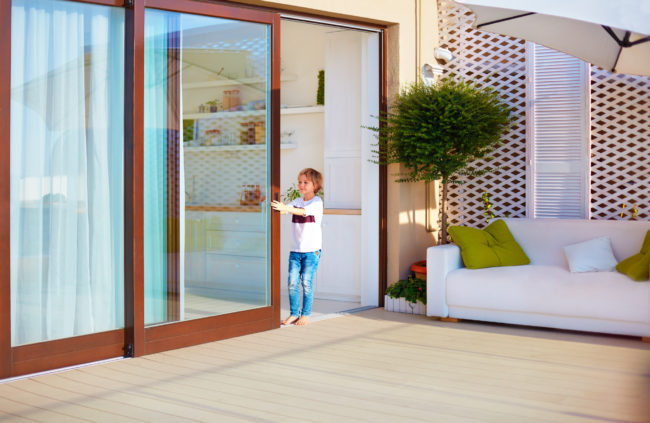
1. The Door Is Harder to Push than It Used to Be
Sliding doors are designed to glide. If you find yourself bracing a hand against the frame or using two hands where one used to be enough, the rollers underneath the door are failing. Roller bearings wear out, get clogged with debris, or simply collapse under years of weight. A new set of rollers runs $40 to $120, but the labor to remove the door panel and install them safely is what drives professional repair pricing.
DIY check: open and close the door slowly. Listen for grinding, popping, or scraping. Look at the bottom edge of the door — if it’s dragging on the track instead of rolling smoothly, the rollers are the problem.
2. You Hear a Grinding or Scraping Noise
That sound is metal-on-metal contact, which means either the rollers have worn through their housing or debris has hardened in the track. If you ignore it, the rollers will eventually score grooves into your aluminum track — and once a track is damaged, you’re not replacing rollers anymore. You’re replacing the entire bottom track, which is a much bigger job.
3. The Lock or Latch Sticks
If you have to lift, jiggle, or push the door just to get the latch to engage, the door has fallen out of alignment. This is usually a roller height adjustment issue, which is an easy fix if caught early. It can also signal that the door frame itself has shifted from settling, moisture, or hurricane racking. Lock parts also corrode silently — salt air, humidity, and even cleaning chemicals all eat at the internal mechanism.
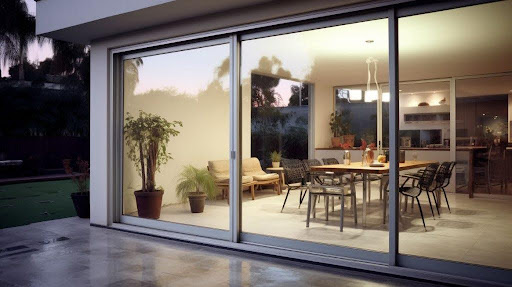
4. There’s a Draft Coming Through the Closed Door
A new or properly serviced sliding door creates a tight seal against weatherstripping at the top, bottom, and side jambs. Over time, the weatherstripping flattens or tears, and the door panel itself may warp slightly from heat exposure. The result is air leaks, water intrusion during storms, and a noticeable bump in your cooling bill.
DIY check: close the door fully and run your hand along the perimeter on a windy day. If you feel air movement, the seal is compromised.
5. Condensation Forms Between the Glass Panes
If you have a dual-pane or insulated sliding door and you see fogging or moisture trapped between the two glass layers, the seal has failed. You cannot fix this — the entire glass unit needs replacement. The good news is that it is purely a glass issue, not a structural one, so the repair is contained. The bad news is that impact-rated insulated glass panels can run $500 to $1,200 per panel.
6. The Door Has Visibly Dropped or Doesn’t Sit Square In the Frame
This is the latest-stage warning sign. If you can see daylight between the door and the top frame, or the door looks tilted compared to the jamb, the rollers have completely failed, the track is bent, or the frame itself has racked. At this point, you are not preventing a repair — you are scheduling one.
Coastal Homes Face Accelerated Wear
If you live within a few miles of the coast, every one of these warning signs accelerates. Salt-laden air corrodes roller housings, seizes lock mechanisms, and eats through aluminum framing faster than inland conditions. Homeowners along the Atlantic shore and the Gulf typically see sliding door repair needs at the 7-to-10 year mark, while inland homes can go 15 years without issue.
Hurricane seasons make it worse. Even when a storm does not damage your door directly, the cumulative pressure from sustained wind racks the frame slightly each time. Combine that with sand and debris blown into the tracks, and the months following a major storm are peak repair season for coastal contractors.
The DIY Checklist Worth Doing Twice a Year
Every spring and fall, spend ten minutes on this:
- Vacuum the entire bottom track to remove sand, dirt, pet hair, and debris
- Wipe the track with a damp cloth and let it fully dry
- Apply a silicone-based (not WD-40) lubricant to the track and rollers
- Open and close the door slowly and listen for any new sounds
- Check the weatherstripping for tears, gaps, or flattened sections
- Test the lock — does it engage smoothly without lifting the door?
If anything fails this check, you have caught the problem in the cheap-fix window.
When to Call a Professional
Some repairs are absolutely homeowner-friendly: cleaning a track, replacing weatherstripping, even swapping out a simple latch. Others — roller replacement on heavy or impact-rated doors, track replacement, glass panel work, and any frame realignment — are jobs for someone with the right tools and a partner to help maneuver doors that can easily weigh 150 pounds or more.
A reasonable rule: if the repair involves lifting the door off the track, or anything you cannot fix with a screwdriver and a vacuum, it is worth getting a quote. Most reputable contractors offer free estimates, and catching the issue while it is still a $200 fix beats waiting until it is an $800 one.
The Bottom Line
Sliding doors do not fail suddenly. They tell you for months that something is wrong. Listen for the grind, watch for the drag, and when you notice it, act early. The repair cost difference between “I noticed it last week” and “I have been ignoring it for six months” is usually five times.
Your patio door is one of the most-used moving parts in your house. Treating it like it matters — twice-yearly maintenance and a quick response to warning signs — keeps it functional for decades. Ignore it, and it will eventually demand your attention in the most expensive way possible.
©2026 The Dedicated House. All rights reserved. No part of this blog post may be used or reproduced without the written consent of the copyright owner.
Click the links below for any posts you have missed:
 How to Tell if Wall Cracks Are Serious
 Upgrading to Energy-Efficient Windows: A Smart Choice for Homeowners
 Backyard Fire Pit Ideas that Still Work During Cooler Months
 Fitting Saunas Into Sleeping Dog Properties’ Victorian Walls
 Essential Home Maintenance: HVAC and Roofing Solutions
 A Comfortable Home at Every Age: Designing Spaces for Changing Needs
I’d love for you to join my email list! You’ll receive a notification straight to your inbox which will include links to my latest home project posts! Simply enter your address below.
Thanks for stopping by! Have a wonderful day/night depending on where you are in the world! Go with God and remember to be kind to one another!
Toodles,

Leave a Reply