Strong wind, heavy rain, hail, and falling limbs can damage a roof in ways that are easy to miss at first. A roofing contractor may be able to assess areas that cannot be safely viewed from the ground, but homeowners can take several useful steps before arranging an inspection.
The goal after severe weather is not to diagnose every issue alone. It is to protect people, record what happened, limit additional damage where safe, and make decisions based on evidence rather than pressure or guesswork.
Why Fast Action Matters
A small opening around a shingle, vent, flashing joint, or roof valley can allow rainwater into the structure. Moisture may wet insulation, stain ceilings, affect drywall, and create conditions for mold growth before a visible leak appears. Wind can also lift shingles or loosen seals without removing materials completely, so a roof may look normal from the yard while still being vulnerable during the next rainfall.
Prompt action does not mean rushing into permanent work. It means making a record of the property’s condition, watching for new symptoms, and getting appropriate help if concerns arise. Homeowners comparing inspections or arranging needed roofing services should keep written findings and photos with their storm records.
Check Safety First
Do not climb onto a wet, damaged, or unstable roof. Wait until rain, lightning, and strong winds have passed, and stay well away from downed electrical lines, uprooted trees, and hanging limbs. The National Weather Service advises people to seek enclosed shelter when thunder is audible and to remain inside for 30 minutes after the last thunder is heard during thunderstorm conditions.
- Do not enter a room with a sagging ceiling or an active electrical hazard.
- Keep children and pets away from broken glass, nails, and debris.
- Use a flashlight rather than an open flame if power is out.
- Call emergency services when there is major structural damage, a fire risk, or a downed power line nearby.
- Do not attempt to remove a large branch from the roof without trained help.
Ground-Level Roof Checks Homeowners Can Make
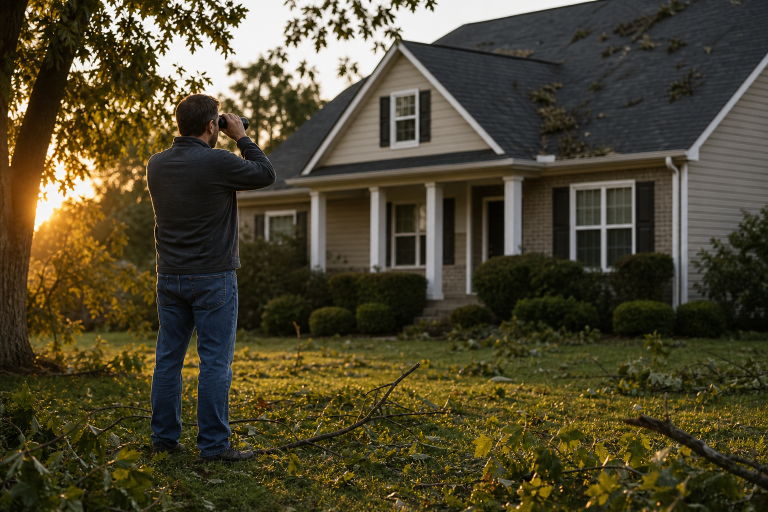
Once conditions are safe, walk around the property slowly and inspect from the ground. Binoculars can help, but a ladder is not necessary for an initial check. The absence of obvious damage does not prove the roof is undamaged, especially after high winds or hail.
Warning Signs to Look For
- Shingles, ridge-cap pieces, or unusual debris in the yard or driveway.
- Lifted, curled, cracked, or missing shingles.
- Exposed underlayment, roof decking, or displaced flashing.
- Dents in gutters, downspouts, vents, or other soft-metal components.
- Large limbs are resting on the roof or rubbing against the siding.
- Fresh water stains on ceilings, upper walls, or around attic access points.
- Drips, damp insulation, or daylight visible from inside the attic.
- Shingle granules are collecting near downspouts.
Common Types of Roof Damage
Wind Damage
Wind may remove shingles outright, but it can also break adhesive seals, bend flashing, loosen ridge caps, or blow debris onto the roof. A lifted shingle can allow water below the surface even if it settles back into place.
Hail Damage
Hail can leave dents in metal vents and gutters and may bruise, crack, or fracture asphalt shingles. Damage can be subtle, so an inspection should consider the roof surface along with siding, window screens, outdoor equipment, and other exposed materials.
Heavy Rain, Drainage, and Trees
Heavy rain often exposes weak points around chimneys, skylights, plumbing vents, valleys, and low-slope sections. Clogged gutters can make the problem worse by directing water where it does not belong. A fallen limb may damage more than shingles, affecting decking, framing, insulation, ceilings, and interior walls.
How to Document Damage Properly
Document the property before major cleanup begins. Take wide photos of each side of the home, then take closer images of affected shingles, gutters, siding, windows, trees, stains, and personal belongings. Record the storm date, the approximate time damage was noticed, and any steps taken to prevent additional loss.
- Save photos and videos in more than one location.
- Make a written list of damaged materials and belongings.
- Keep inspection reports, estimates, weather alerts, and receipts.
- Retain damaged materials until the insurer says they may be discarded.
- Note every call, email, and claim-related conversation.
The steps for windstorm and hail claims from the North Carolina Department of Insurance emphasize documenting losses, taking reasonable measures to prevent further damage, and avoiding permanent repairs before the insurer has inspected the property.
Temporary Protection Can Limit Further Damage
Emergency protection is different from permanent repair. If it is safe, place buckets beneath active drips, move furniture and electronics away from water, and cover belongings with plastic sheeting. A professional tarp service may be appropriate when the roof cannot be accessed safely. Keep receipts for materials and emergency work, since they may be relevant to a claim.
What to Know Before Filing an Insurance Claim
Coverage depends on the policy language, the cause of damage, exclusions, deductibles, and the insurer’s investigation. Review whether wind or hail is covered, whether the policy uses replacement cost or actual cash value, and whether a named-storm or percentage deductible applies. Contact the insurer directly before signing an assignment of benefits or agreeing to permanent work.
Choosing an Inspector or Repair Company
Post-storm urgency can make homeowners vulnerable to pressure tactics. Verify a company’s contact information, ask for proof of insurance and applicable licensing, request a written report with clear photos, and read every contract before signing. When there is no immediate threat to the home, a second opinion can help compare evidence. Be cautious of anyone who demands immediate payment or guarantees an insurance outcome.
Repair or Replacement: Questions to Ask
Replacement is not automatically the right answer for every damaged roof. Ask what damage appears recent, what may be older wear, whether the affected area can be repaired reliably, and whether matching materials are available. Roof age, previous repairs, ventilation, decking condition, water entry, and structural damage can all affect the recommendation.
Prepare Before the Next Storm
Photograph the roof and exterior once or twice a year, keep policy documents in a secure digital folder, trim overhanging branches, and clean gutters before heavy-rain seasons. Keep basic supplies such as buckets, gloves, plastic sheeting, tarps, and flashlights available. A calm, documented response after severe weather can protect the home and make the next steps easier to manage.
©2026 The Dedicated House. All rights reserved. No part of this blog post may be used or reproduced without the written consent of the copyright owner.
Click the links below for any posts you have missed:
 Property Division Mistakes to Avoid in NH
 Funding Safe Drinking Water Wells for Rural Communities
 The Connection Between Mental Health, Stress and Substance Abuse
 Why Addiction Recovery Often Requires More than Simply Stopping Drugs or Alcohol
 Common Upholstery Cleaning Mistakes and How to Avoid Them
 The Appeal of Simplified Living Without Giving Up Comfort
I’d love for you to join my email list! You’ll receive a notification straight to your inbox which will include links to my latest home project posts! Simply enter your address below.
Thanks for stopping by! Have a wonderful day/night depending on where you are in the world! Go with God and remember to be kind to one another!
Toodles,

Leave a Reply